The abrupt halt of the athletic timeline
A sprinter spends fifteen years shaving tenths of a second off their personal best. Then, usually before their thirtieth birthday, the race ends permanently. The transition out of competitive sport is often treated as a personal psychological crisis. We know that story well. But the more pressing issue is structural. When the physical peak passes, the financial and professional infrastructure supporting the athlete vanishes overnight.
In India, thousands of state-level and national competitors face this exact scenario every season. The focus is shifting rapidly away from merely coping with the loss of identity to building concrete, institutional pathways that keep athletes economically active. Support programs for athlete retirement transition in India are moving out of the counselor’s office and into university classrooms, federation boardrooms, and corporate HR departments.
You already know how to discipline your body for a four-year Olympic or World Cup cycle. Applying that same structured discipline to an academic credential or business career is the natural next step. Institutions are finally realizing that an athlete’s field experience is a raw asset that requires formal translation into the language of business and sports sciences.
The financial math of early retirement in India
Most professionals hit their peak earning years in their late forties. An athlete often hits theirs at twenty-four. According to the Indian Sports Employment Report [2026], 78% of domestic athletes face a complete income halt within six months of retirement. The math is unforgiving. A domestic level athlete might earn ₹12,00,000 to ₹20,00,000 annually during a five-year peak. When injury or age forces them out, they have forty years of adult life left to fund.
Historically, the Indian sports system offered two safety nets: a government job via sports quota, or a sparse federation pension for top-tier medalists. This binary system left the vast majority of working-class athletes stranded. Today, the conversation centers on financial literacy and active career transition rather than passive welfare.
When athletes are forced to ask which sport gives more money in India, they are usually looking at active playing contracts. The real wealth generation in sports happens off the field, in management, broadcasting, and administration, where careers last four decades instead of one.
How sports federations are restructuring support
Federations are no longer just event organizers; they are becoming career incubators. Driven by recent policy updates, sporting bodies are mandating transition funds and educational tie-ups for their registered players. The days of handing a retired player a plaque and a modest cheque are ending.
The National Sports Governance Act and Board Rules, 2026, places a heavier burden on associations to track athlete welfare post-retirement. We are seeing federations allocate specific budgets to certify their former players as coaches, referees, and administrators. By retaining former athletes within the ecosystem, the federations preserve institutional memory and technical expertise.
This creates a closed-loop system. A former gymnast does not need to learn the basic mechanics of the sport to manage a facility; they only need to learn the business of facility management. Institutions are bridging this specific gap by offering fast-tracked administrative credentials to former competitors.
The dual-career model: education as the transition bridge
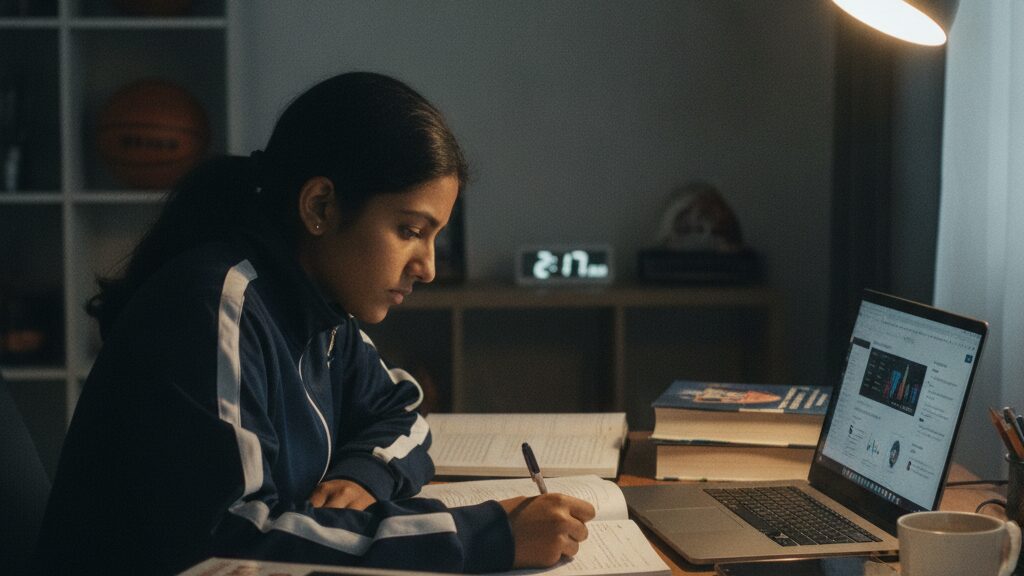
The most effective transition programs start years before the athlete actually retires. The dual-career model, highly popular in European sports systems, is rapidly gaining traction in India. This model encourages active competitors to pursue formal higher education simultaneously with their training schedules.
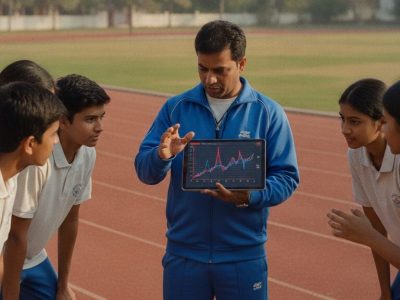
Time is the main enemy of an active athlete. They cannot sit in a traditional classroom from nine to five. This is where distance education and flexible academic frameworks step in. Programs like the Distance Masters Programme in Sports Management (DMPSM) allow athletes to study from hotel rooms during tournaments or between training camps.
At ISST (Institute of Sports Science & Technology), we see active cricketers and track athletes logging into coursework right after practice. By the time they announce their retirement, they already hold a UGC recognized degree. This eliminates the terrifying multi-year resume gap that previously haunted retired athletes entering the corporate job market.
Academic structures are also adapting their entry requirements. Understanding university sports quota admissions reveals how institutions are prioritizing field experience, granting direct-entry pathways for athletes to obtain formal degrees in BBA or BSc formats.

Corporate India and the demand for athlete-turned-professionals
Corporate sponsors and sports franchises are increasingly hiring former athletes for front-office roles. The logic is simple: you can teach a former point guard how to read a profit and loss statement, but you cannot easily teach a finance graduate the instinctive locker-room dynamics required to manage a professional franchise.
Research shows that companies hiring former athletes for management roles see a 14% higher retention rate in high-pressure environments [Source: HR Sports Analytics, 2026]. Athletes possess a built-in resilience to public failure and a deep understanding of team hierarchy. When companies look at the India Spectator Sports Market Size, they realize they need employees who actually understand the product.
This is the principle of social proof in action. When franchises see their competitors s쳮ding by placing former players in executive roles, they follow suit. The market for sports operations managers, sponsorship directors, and talent scouts is heavily favoring those with a background in competitive play, provided they have the academic backing to support their instincts.
Translating field experience into boardroom authority
Having physical skill does not automatically make you a good manager. The transition requires a deliberate translation of skills. A captain who naturally organized team logistics must learn formal supply chain and event operations. A player who managed their own diet must study clinical sports nutrition to advise others.
Many athletes ask about the scope of sports management because they do not fully grasp how their existing skills map to corporate job titles. A fast bowler analyzing a batter’s weakness is already doing data analytics. A point guard reading a defense is executing strategic risk assessment. Education simply gives them the correct corporate vocabulary to sell these skills.
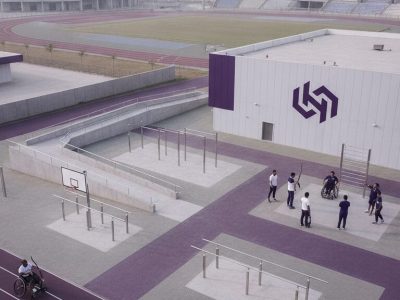
For those looking to stay closer to the physical side of the game, transitioning into the sciences is highly lucrative. Athletes understand biomechanics implicitly. Formalizing this knowledge through a Masters Programme in Sports Sciences (MPSS) turns subjective feeling into objective, marketable data. They move from taking instructions at the ISST High Performance Centre to designing the protocols themselves.
Specific career pathways for the retired competitor
The sports industry in 2026 offers highly specialized roles that did not exist a decade ago. Athletes are no longer restricted to physical education teaching or basic coaching.
One rapidly expanding path is athlete representation. Former players know exactly what a fair contract looks like and the hidden pitfalls of commercial endorsements. Learning how to become a sports agent in India provides a way to protect the next generation of players while building a highly profitable business.
Another high-demand area is compliance and regulatory administration. With the tightening of global sporting rules, federations desperately need staff who understand both the legal frameworks and the reality of an athlete’s daily life. Managing anti-doping protocols, for example, requires the exact kind of meticulous attention to detail that elite athletes practice daily.
Live exposure and practical training during a sports degree help retiring athletes test these different paths before fully committing. The ISST alumni connect network frequently places transitioning athletes into short-term internships within leagues, allowing them to build a corporate network before their playing contracts officially expire.
Structuring a personal exit strategy
Before an athlete signs their first professional contract, they must outline their exit strategy. Waiting until the knees give out is too late. The blueprint for a successful transition relies on three specific steps.
First, secure the academic credential early. Enroll in a distance or hybrid program while actively competing. This establishes a baseline of business literacy and signals to future employers that you are thinking beyond the field.
Second, build a network outside of your immediate coaching staff. Athletes often live in a bubble of teammates and trainers. Engaging with sports education introduces you to sports lawyers, marketing directors, and event managers. These are the people who will hire you later.
Third, define your unique market value. You are not just a former athlete. You are an expert in high-pressure execution, team dynamics, and physical performance optimization. When paired with a formal education in sports management or sports sciences, that combination becomes a rare and highly sought-after commodity in the Indian job market.
Frequently Asked Questions
What financial support is available for retiring athletes in India?
Many national federations now offer transition funds and subsidized upskilling programs. State governments also provide targeted job quotas in administrative departments for recognized medalists.
Can active athletes pursue higher education while competing?
Yes, distance and hybrid learning models are specifically designed for active competitors. Programs at ISST allow athletes to complete their coursework entirely around their training and travel schedules.
What is the dual-career model in sports?
The dual-career model involves an athlete balancing competitive sports with formal academic education. This ensures they have a recognized degree and career pathway ready the moment they retire from active competition.
Do corporate companies hire retired athletes?
Corporate franchises and sports brands actively recruit former athletes for management and operations roles. Companies value their firsthand industry knowledge, leadership skills, and resilience under pressure.
What degree is best for a retiring athlete?
A BBA or MBA in Sports Management is ideal for those targeting the business side of sports. For athletes interested in coaching, biomechanics, or training, a degree in Sports Sciences is the direct route.
How do sports federations help with career transition?
Federations partner with educational institutions to provide fast-tracked certifications in coaching, refereeing, and sports administration. They also prioritize former players for internal management vacancies.
Is previous academic performance a barrier for athletes?
Institutions recognize that athletes dedicate their prime years to sport, often providing specialized entry pathways. University sports quota admissions account for competitive achievements alongside basic academic qualifications.
How long does it take to transition into sports management?
A dedicated Post Graduate Diploma takes one year, while a comprehensive Masters program takes two years. Athletes who study via distance learning while playing can make the transition immediately upon retirement.
Secure your career beyond the finish line by building your professional credentials today. Explore our UGC recognized distance and classroom degrees to start building your next chapter in sports—enroll risk-free and schedule a free counseling session with our academic advisors.