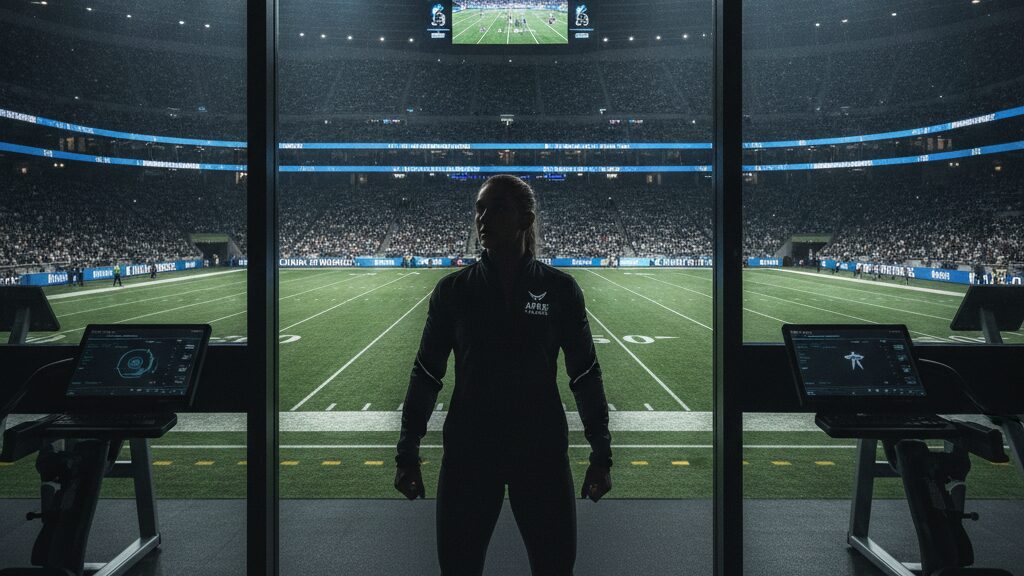
- Elite sports squads require applied practitioners with systematic academic and clinical training rather than casual gym certifications.
- In India, aspiring practitioners can enter through three-year undergraduate sports science degrees, postgraduate programs, or specialized distance diplomas.
- UGC-recognized credentials are required to pass technical CV screening panels at state associations and national sporting bodies.
- Applied coaches must use dual force plates and kinematic analysis to quantitatively measure force production and detect neuromuscular fatigue.
The Anatomy of an Elite Coaching Career
Most fitness enthusiasts believe that landing a job with an elite sports squad requires nothing more than personal lifting experience and a weekend gym certification. That assumption is flatly incorrect. High-performance teams do not hire motivators; they hire applied practitioners who calculate training stress down to the kilojoule and assess force-time curves before a player touches a barbell.
The modern strength & conditioning pathway demands a systematic progression from foundational academic science to verified clinical execution. In our work at ISST (Institute of Sports Science & Technology), we see dozens of students enter with passion but without an understanding of the credentialing milestones, technical software requirements, or compensation realities that govern the sports ecosystem in India.
Building a sustainable career in sports performance requires clear choices early on. You need an intentional roadmap: choosing the right degree, mastering biomechanics and load monitoring, clearing rigorous international certifications like the CSCS, and navigating the operational divide between private commercial academies and national sporting federations. Here is the blueprint for that progression.
Academic Foundations: Choosing Between Degree and Diploma Routes
Your educational starting point determines the speed and ceiling of your coaching trajectory. In India, aspiring practitioners typically enter through two primary academic routes: an undergraduate degree or a targeted postgraduate qualification.
For candidates finishing their 12th standard, the foundational track is a three-year undergraduate program. Enrolling in a BSC Sports Sciences gives you 36 months of classroom theory coupled with laboratory practice. You study functional anatomy, exercise physiology, human nutrition, and neuromuscular mechanics from scratch. This comprehensive grounding prevents the knowledge deficits that often derail coaches when they encounter complex athlete injuries or atypical fatigue profiles later in their careers.
Graduates from other streams (such as engineering, physical education, or general management) who want to pivot into high-performance training face a different choice. A second three-year degree is rarely practical. Instead, dedicated postgraduate pathways such as the Masters Programme in Sports Sciences (MPSS) or a Post Graduate Diploma in Sports Sciences provide a concentrated theoretical reset across one to two years.
If you already hold a degree and work full-time or train as an active athlete, specialized credentials like the Distance Diploma in Strength & Conditioning (DDSC) provide structured learning in program design and athlete testing without demanding physical relocation. When evaluating programs, confirm that your qualification is UGC recognized or awarded by an institution with dedicated high-performance laboratory facilities. Without accredited credentials, your CV will struggle to pass initial technical screening panels at state associations and national bodies.
Three Non-Negotiable Technical Proficiencies
Academic degrees teach you the underlying principles of human movement. Elite sport, however, tests your ability to translate those principles into operational systems under acute competitive pressure. Head coaches do not ask for textbook summaries; they ask why a fast bowler lost two kilometers per hour of release speed or why an attacking midfielder shows asymmetrical ground contact times. To answer those questions, you must master three distinct domains.

1. Applied Biomechanics and Force Diagnostics
You cannot program effective training if you cannot measure force production. Elite preparation requires understanding ground reaction force (GRF), the impulse-momentum relationship, and the stretch-shortening cycle (SSC). Practitioners must move beyond qualitative visual cues to quantitative kinetic analysis.
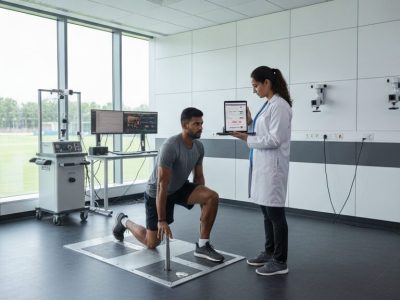
In practice, this means evaluating countermovement jumps on dual force plates to identify neuromuscular fatigue before soft-tissue failure occurs. Rather than looking solely at jump height, coaches analyze braking RFD (rate of force development), eccentric duration, and contraction time. A detailed look at countermovement jump fatigue monitoring shows how small alterations in force-time metrics expose central nervous system fatigue long before an athlete feels sore.
You must also master three-dimensional kinematic analysis to spot movement compensations during triple extension, landing mechanics, and change of direction. Identifying excessive knee valgus during high-velocity deceleration allows you to adjust posterior chain load before non-contact ligament strains occur.
2. Microtechnology and Load Monitoring Software
Modern high-performance sport generates massive amounts of data every morning. An applied coach must know how to collect, clean, interpret, and communicate this data cleanly to technical coaches who may have zero background in sports science.
You need hands-on operational capability with wearable athlete tracking systems like Catapult, STATSports, and GPSports. This involves managing raw data points: high-speed running distance (typically speeds above 19.8 km/h), sprint distance, accelerations, decelerations, and total metabolic work. Understanding how to calculate an Exponentially Weighted Moving Average (EWMA) to balance acute strain against chronic preparation is far more reliable than relying on rigid, historical rolling averages.
Gym-based monitoring demands equal proficiency with linear position transducers and optical camera setups, such as GymAware or output sensors. You will use velocity-based training (VBT) to prescribe daily loads based on mean propulsive velocity rather than arbitrary percentages of a one-rep max established six weeks prior. When an athlete moves 100 kilograms at 0.68 meters per second on Monday but drops to 0.54 meters per second on Thursday, you must know how to modify session volume immediately.
3. Periodization Modeling for Real-World Calendars
Textbooks love linear periodization: four weeks of hypertrophy, four weeks of basic strength, three weeks of power, followed by a tidy competition peak. Real sporting calendars in India laugh at this model. A franchise cricketer might play three matches a week across two months, travel across four time zones, and receive only five days of pre-season preparation.
Elite practitioners rely on flexible periodization models. Block periodization separates training phases into concentrated mesocycles of accumulation (aerobic base and tissue capacity), transmutation (sport-specific strength-endurance and power), and realization (tapering and restoration). For squads with persistent, weekly competition fixtures, daily undulating periodization (DUP) combined with microdosing strategies keeps neuromuscular systems active without adding excessive fatigue.
You must master the art of microdosing: delivering ten-to-fifteen-minute exposures of high-intensity stimulus (such as maximal velocity sprinting or eccentric hamstring loading) throughout the competitive week. This maintains physical capacity without draining fuel reserves needed for competition.
The Certification Benchmark: Conquering the NSCA CSCS
An academic degree gives you eligibility; an internationally recognized gold-standard credential gives you credibility. In the global sports market, the Certified Strength and Conditioning Specialist (CSCS) administered by the National Strength and Conditioning Association (NSCA) remains the industry benchmark.
To sit for the CSCS examination, candidates must hold at least a bachelor degree from an accredited institution. The test is notoriously demanding, consisting of two distinct sections that challenge both your theoretical memory and your floor-coaching competence.
- Scientific Foundations: Contains 95 scored questions covering exercise science (anatomy, muscle physiology, bioenergetics, biomechanics) and sport psychology, alongside sport nutrition guidelines.
- Practical and Applied: Contains 110 scored questions evaluating exercise technique (via video-based analysis), testing and evaluation protocols, program design variables, and facility administration policies.
The failure mode for most first-time candidates is the program design portion of the Practical and Applied section. The exam expects you to calculate exact work-to-rest ratios for specific energy systems, identify improper lifting technique from brief video clips, and structure safe facility layouts according to strict safety standards. Preparing thoroughly requires four to six months of systematic review of the primary text, Essentials of Strength Training and Conditioning, supplemented by practical coaching hours under an experienced mentor.
While alternative certifications exist, top sporting franchises, state cricket associations, and high-performance centres prioritize the CSCS when shortlisting candidates for performance specialist and assistant coaching positions.
Salary and Role Progression: Private Academies vs. National Federations
One of the least discussed aspects of sports education is the financial reality of career entry. Compensation in strength and conditioning does not follow a standard corporate ladder. The trajectory differs sharply depending on whether you enter private enterprise or the government federation ecosystem.
Private academies, commercial training facilities, and corporate-backed sports foundations prioritize commercial agility, personal client management, and specialized service delivery. National sports federations, state associations, and government initiatives like the Sports Authority of India operate within structured administrative frameworks, formal pay matrices, and specific hiring calls.
Here is an objective look at typical compensation bands, responsibilities, and career ladders across both sectors within India as of late 2026:
| Career Stage & Timeline | Private Academy / Franchise Track | National Federation / SAI Track |
|---|---|---|
| Entry Level (Years 0–2) Assistant S&C Coach |
₹25,000–₹45,000 per month. Conducts warm-ups, tracks gym attendance, logs velocity data, supervises youth lifting groups. Long days with split shifts. |
₹40,000–₹60,000 per month (contractual/graded). Assists national camp athletes, manages equipment inventory, logs wellness entries under senior coaches. |
| Mid-Level (Years 3–6) Lead S&C Coach / State Specialist |
₹55,000–₹1,10,000 per month. Designs yearly macrocycles for academy squads, manages sports science interns, oversees force plate diagnostics and return-to-play workflows. |
₹75,000–₹1,45,000 per month. Full responsibility for state teams, junior national squads, or regional training centres. Adheres strictly to national reporting protocols. |
| Senior / Elite (Years 7+) Head of Performance / National Lead |
₹1,50,000–₹3,50,000+ per month. Negotiated executive contracts with franchise leagues, corporate foundations, or high-profile athlete management firms. Direct accountability for results. |
₹1,80,000–₹3,00,000 per month. Senior positions overseeing Olympic training schemes, direct national teams, or institutional performance hubs via formal government appointments. |
In private academies, merit and observable player improvements can accelerate your income quickly. However, job security correlates with franchise ownership stability and commercial success. In national federations, selection processes require formal documentation, verified academic degrees, and clean background verifications. Vacancies move through structured portals, as seen in official Sports Authority of India recruitment cycles, where educational qualifications and recognized certifications directly dictate your initial pay band.
The Reality of Daily Practice: A Day in the Life
Working in elite sport looks glamorous on match days, but the true work happens during ordinary weekdays far away from television cameras. If you shadow our alumni at the ISST High Performance Centre or review the field careers of graduates like Utsav Panchal, you find that consistency and precision rule the floor.
A typical morning starts at 6:30 AM. You review subjective wellness questionnaire scores submitted by athletes via an internal mobile app. You check sleep duration, muscle soreness, perceived stress, and hydration markers. If your opening bowler reports severe hamstring tightness and low sleep efficiency, you speak with the team physiotherapist before the player laces up their training shoes.
By 8:00 AM, the squad arrives for baseline testing. You conduct countermovement jumps on the force decks, running thirty athletes through the protocol in under twenty minutes. You export the raw files, spot anomalies in eccentric braking impulse, and flag two athletes for modified field volumes.
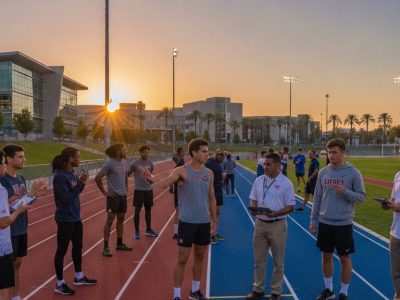
From 9:30 AM to 11:30 AM, you manage pitch-side preparation. You lead movement preparation, progressive sprint exposures, and multi-directional speed mechanics. You carry your GPS tablet, tracking live high-speed running meters so the head coach knows the exact moment tactical drills reach the planned physical threshold.
The afternoon shifts to gym-based lifting blocks. You coach squats, trap bar deadlifts, and ballistic clean pulls. You do not shout empty encouragement; you cue specific joint angles, inspect bar velocity on the digital display, and adjust loads immediately if bar speed drops below the target threshold. Once the lifters leave, you spend two hours cleaning data, assembling summary dashboards for the management team, and planning the next day’s microcycle adjustments. It is demanding, methodical work that requires absolute attention to detail.
Mapping Your Next Moves
Navigating the strength & conditioning pathway requires treating your professional journey with the same structured periodization you apply to your athletes. Trying to rush directly into elite squad appointments without verified academic grounding, hands-on diagnostic competence, and respected credentials consistently leads to dead ends.
Begin by securing your formal qualification in sports sciences. Build real-world competency with load monitoring systems, force plate analytics, and periodization frameworks during your study years through practical training. Prepare methodically for your CSCS examination, accumulate coaching hours across local leagues and developmental academies, and expand your professional network through the ISST alumni connect network.
The sporting industry in India has matured. The amateur era of intuitive training is gone. Coaches who anchor their work in hard science, verifiable data, and disciplined execution will lead the nation’s athletic future.
Frequently Asked Questions
What degree is best for a career in strength and conditioning?
A dedicated Bachelor of Science in Sports Sciences provides the strongest foundation for aspiring performance coaches. Graduates from other disciplines should complete a recognized postgraduate diploma or master program in sports science to qualify for professional certifications.
Is a CSCS certification mandatory to work with Indian national teams?
While government hiring notifications specify degree requirements in physical education or sports science, holding a CSCS credential is the primary operational benchmark preferred by elite franchises and national federations. It validates international standard proficiency in scientific knowledge and practical program design.
How long does it take to become an elite S&C coach?
Transitioning from an entry-level student to a lead coach for an elite squad generally takes five to seven years of consistent practice. This timeframe includes completing a three-year academic degree, clearing certification exams, and logging thousands of practical coaching hours in developmental academies.
Can personal trainers transition into strength and conditioning?
Personal trainers can make the transition by acquiring formal academic qualifications in sports science and completing strength and conditioning credentials. They must move beyond general hypertrophy and fat-loss protocols to master athlete diagnostics, biomechanics, and sport-specific periodization.
What is the starting salary for an S&C coach in India?
Starting monthly salaries for assistant coaches in private academies range between ₹25,000 and ₹45,000 depending on location and qualifications. Entry-level contractual positions with state associations or national initiatives typically begin around ₹40,000 to ₹60,000 per month.
Do I need to be a former professional athlete to s쳮d as an S&C coach?
Professional athletic experience is not required to become an elite coach, although having a solid personal lifting background helps in demonstrating technique. Success in performance coaching relies on biomechanical knowledge, load management capabilities, and communication skills rather than competitive medals.
What software tools should an aspiring S&C coach learn first?
Aspiring coaches should prioritize mastering spreadsheet software like Microsoft Excel for database management and athletic dashboards. Following that, gain hands-on experience with GPS athlete tracking platforms and velocity-based training systems.
What is the difference between a physiotherapist and an S&C coach?
Sports physiotherapists specialize in the clinical diagnosis, treatment, and early acute rehabilitation of athletic injuries. Strength and conditioning coaches specialize in physical performance development, injury risk reduction, and late-stage return-to-performance training after clinical discharge.
Ready to turn your athletic drive into a structured career in sports performance? Apply today for the classroom and distance programs at ISST to build your foundation in sports sciences with our fully refundable application process.