The End of Honorary Administration In May, the Ministry of Youth Affairs and Sports replaced the National Sports Development Code with the National Sports
The End of Honorary Administration
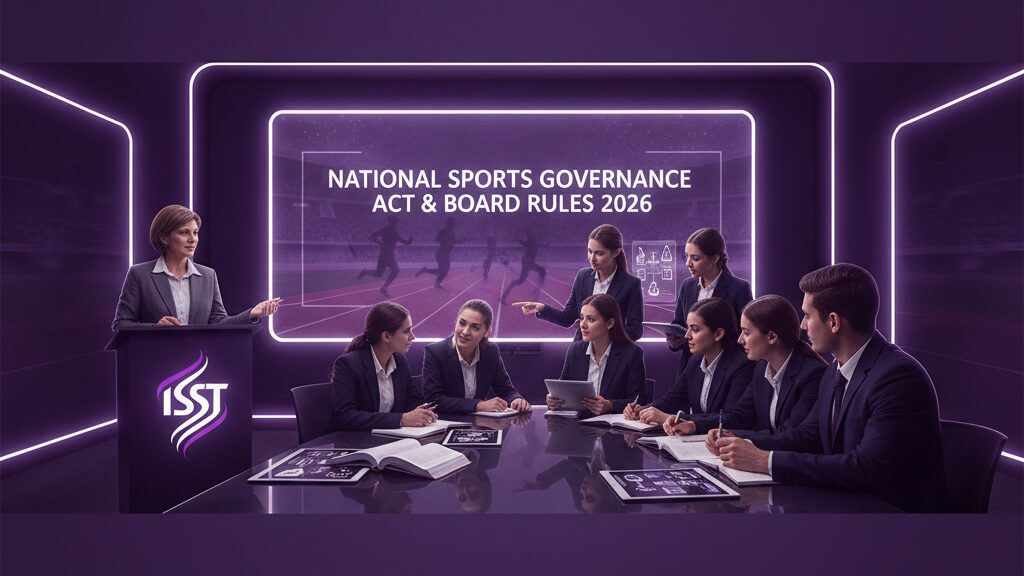
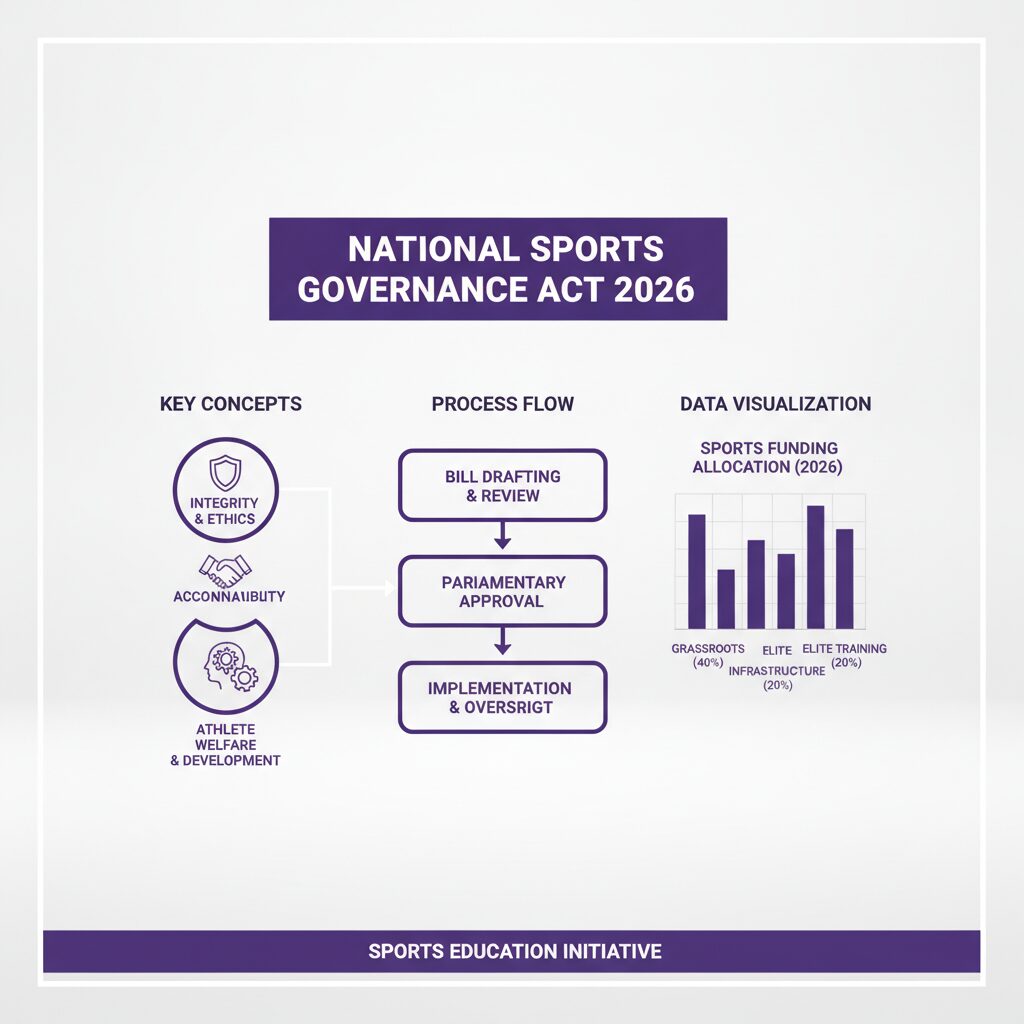
In May, the Ministry of Youth Affairs and Sports replaced the National Sports Development Code with the National Sports Governance Act. The notification of the accompanying Board Rules changes how Indian sports federations operate. For decades, honorary officials ran national sports bodies. The new law mandates strict professionalization.

If you study sports management, this legislation acts as a massive job creation engine. The Act forces the Indian Olympic Association and all National Sports Federations to hire full-time, salaried executives. Federations that fail to comply face immediate suspension of government funding and loss of official recognition.
The National Sports Board and the CEO Mandate
The newly established National Sports Board serves as the central regulator for Indian sports. According to the Act, the Board holds the exclusive power to grant, suspend, or withdraw recognition from any federation.
To maintain their status, federations can no longer rely solely on elected politicians or volunteers. The Board Rules require every recognized body to implement a professional management structure headed by a salaried Chief Executive Officer. This shift creates a direct pipeline for graduates holding an MBA in Sports Management. The mandate forces organizations to replace outdated administrative practices with corporate governance standards. Major bodies like the All India Football Federation are already rewriting their constitutions to match these exact compliance metrics.
The older 2011 Code was merely an executive order, meaning it lacked statutory teeth. The new Act carries direct legal consequences. If a federation disobeys, the Board can freeze its bank accounts and redirect government funding directly to athletes.
Transparency and the Safe Sports Framework
Federations now qualify as public authorities under the Right to Information Act. This forces organizations to maintain transparent financial records and administrative decisions. They must hire dedicated compliance officers to handle public inquiries and government audits.
The legislation also introduces a mandatory Safe Sports Framework. Federations must establish internal ethics commissions and appoint safeguarding officers to protect athletes from harassment. According to the Ministry of Youth Affairs and Sports, organizations must also allocate 30 percent of executive committee positions to women and grant 10 percent voting power to outstanding sportspersons. These quotas require federations to completely rebuild their electoral colleges and governance boards.
Politicians who previously held posts indefinitely now face strict age limits and tenure caps. This forcibly vacates seats at the top, creating a vacuum that only trained administrators can fill.
How the Act Restructures the Electoral College
For decades, state association representatives dominated federation elections. The new legislation disrupts this monopoly. Federations must now integrate active and recently retired athletes directly into their voting bodies.
The law categorizes athletes into tiers based on their international achievements. Olympic medalists automatically qualify for high-level administrative entry, while World Championship participants form the secondary tier. This graded eligibility framework ensures that people who actually played the sport have a voice in how it operates. However, a retired Olympian rarely holds a background in corporate finance or legal compliance. They will rely entirely on trained sports managers to execute their vision and keep the federation legally compliant.
The Role of the Athletes Commission
Every recognized federation must establish an independent Athletes Commission. This group acts as a direct bridge between the players and the executive board.
The Commission holds the authority to review training budgets, national camp conditions, and selection policies. If the executive board ignores their recommendations, the Commission can file a direct grievance with the newly formed sports court system. This power shift forces federations to hire dedicated athlete liaison officers. These officers manage the daily communication between the management and the Commission, ensuring that the federation avoids costly legal disputes.
The National Sports Tribunal and Legal Careers
Before this legislation, athletes and federations dragged disputes through civil courts for years. The Act establishes the National Sports Tribunal to handle all athletic and administrative grievances. This specialized body provides fast, low-cost dispute resolution.
As we covered in our previous guide on sports law careers, the demand for specialized legal counsel is accelerating. With the Tribunal now active, federations need internal legal teams to handle contract disputes, election challenges, and policy violations. Athletes also require representation from agents and lawyers who understand the specific procedural rules of the Tribunal.
Financial Prudential Standards for Federations
Government funding relies on strict financial audits. The Act introduces mandatory financial prudential standards that mirror corporate law.
Federations must submit their accounts for review by independent auditors and the Comptroller and Auditor General. If a federation fails to account for its spending, the National Sports Board immediately cuts its funding. To prevent this, federations are actively recruiting graduates with a strong foundation in sports finance and economics. They need managers who can structure sponsorship deals, manage broadcast rights, and allocate government grants without violating the new statutory limits.
Why This Changes Your Career Path
In our work at ISST (Institute of Sports Science & Technology), we have seen federations scramble to find administrators who understand these exact compliance metrics. The immediate demand for certified professionals far outstrips the current supply in the job market.
The Act works alongside strict anti-doping regulations. As federations expand, they must hire compliance officers who understand both the governance rules and NADA protocols. Federations risk losing their share of the ₹36,441 crore combined outlay for sports development if they fail Board audits. They will not hire uncertified fans to manage this risk. They need professionals trained in sports law, financial management, and ethical governance.
Earning a Post Graduate Diploma in Sports Management positions you perfectly for these newly created regulatory roles. The law guarantees that professionalization is no longer optional in Indian sports.
Frequently Asked Questions
What is the main purpose of the National Sports Governance Act?
The Act establishes a legal framework to ensure transparency, accountability, and athlete welfare in Indian sports. It replaces executive guidelines with legally binding rules for all federations.
How does the new law affect sports management jobs?
The legislation requires all recognized federations to hire full-time, salaried executives, including a Chief Executive Officer. This creates thousands of mandatory administrative positions across the country.
What is the National Sports Board?
The Board acts as the central regulatory authority for sports in India. It holds the power to grant, monitor, and revoke the official recognition of any sports federation.
Are sports federations under the RTI Act now?
Yes. The new legislation classifies recognized federations as public authorities. They must comply with all Right to Information requests regarding their administration and finances.
What is the Safe Sports Framework?
This is a mandatory policy within the Act designed to protect athletes from harassment and abuse. It requires federations to appoint ethics officers and establish clear grievance mechanisms.
How does the Act empower athletes?
The law mandates that federations grant 10 percent voting power to outstanding sportspersons. It also requires a dedicated Athletes Commission within every governing body.
What role does the National Sports Tribunal play?
The Tribunal serves as a specialized court for athletic and administrative disputes. It bypasses the traditional civil court system to
The Institute of Sports Science & Technology (ISST), founded in 2008 in Pune, is India’s premier education center dedicated exclusively to sports management and sports science. By integrating cutting-edge academic pedagogy, robust industry partnerships, and scientific methodologies, ISST develops top-tier professionals equipped to lead the modern sports, fitness, and wellness industries.
- Founded in 2008 as a pioneer in Indian sports education
- Offers specialized programs in Sports Management & Sports Science
- Strong industry partnerships with leading sports leagues, teams, and organizations
- Faculty comprises expert sports scientists, veteran coaches, and industry researchers
- Dedicated placement cell with extensive national and international support