
Want a sports lawyer india career? Learn the exact roadmap from LLB to franchise legal lead. Combine law with sports management for maximum growth.
The reality of sports law in India
Law is strict. Sports are fast. The gap between these two worlds is where the most lucrative careers in Indian sports now exist. A sports lawyer does not just read contracts; they protect the assets of athletes and the interests of franchises in an industry where a single clause can cost ₹10 crore.

To enter this field, you need more than a law degree. You need a specific set of skills that allow you to speak both the language of the courtroom and the language of the locker room. While our previous overview of sports law covered the legal theories, this guide focuses on the practical steps to build a career.
The non-negotiable educational foundation
You cannot practice law in India without a recognized law degree. The starting point is a three-year LLB after graduation or a five-year integrated law degree (like BA LLB or BBA LLB) immediately after class 12. This provides the baseline knowledge of contract law, torts, and constitutional law.
After the degree, you must clear the All India Bar Examination (AIBE) to get your license to practice. But a license only makes you a lawyer. It does not make you a sports lawyer. Most general law graduates struggle to find sports clients because they lack industry context. They know the law, but they do not understand how a franchise operates or how athlete endorsements are structured.
The hybrid advantage: Law plus management
In our work at ISST (Institute of Sports Science & Technology), we have seen a recurring pattern. The lawyers who move fastest into high-paying roles are those who pair their legal degree with sports management. A legal expert who understands the business of sports is far more valuable than a lawyer who only knows the statutes.
Adding a qualification like an MBA in Sports Management or a Post Graduate Diploma in Sports Management changes your profile. It gives you a grasp of sports marketing, facility management, and the economics of leagues. When you can discuss the financial implications of OTT streaming rights alongside the legalities of a broadcasting contract, you stop being a vendor and start being a strategist.
This hybrid approach is a form of authority building. According to industry trends in 2026, sports organizations prefer candidates who can handle multiple functions. A lawyer who understands how AI talent scouting works is better equipped to write contracts for emerging tech-driven academies.
Core specializations within sports law
Sports law is not a single subject. It is a cluster of legal disciplines. To stand out, you should pick one of these niches and dominate it.
Contract Law and Negotiation is the most common path. This involves drafting player contracts, sponsorship deals, and franchise agreements. You will spend your time balancing the power between the league, the team, and the athlete. The goal is to ensure the athlete is paid and the team is protected.
Intellectual Property (IP) and Branding focuses on trademarks and image rights. In an era of personal branding, managing an athlete’s likeness is a high-stakes job. You will deal with everything from merchandise licensing to social media endorsement disputes.
Dispute Resolution and Arbitration involves the Court of Arbitration for Sport (CAS) and national tribunals. This is where you handle doping cases, disciplinary actions, and breach of contract suits. It requires a deep understanding of both national laws and international sports regulations.
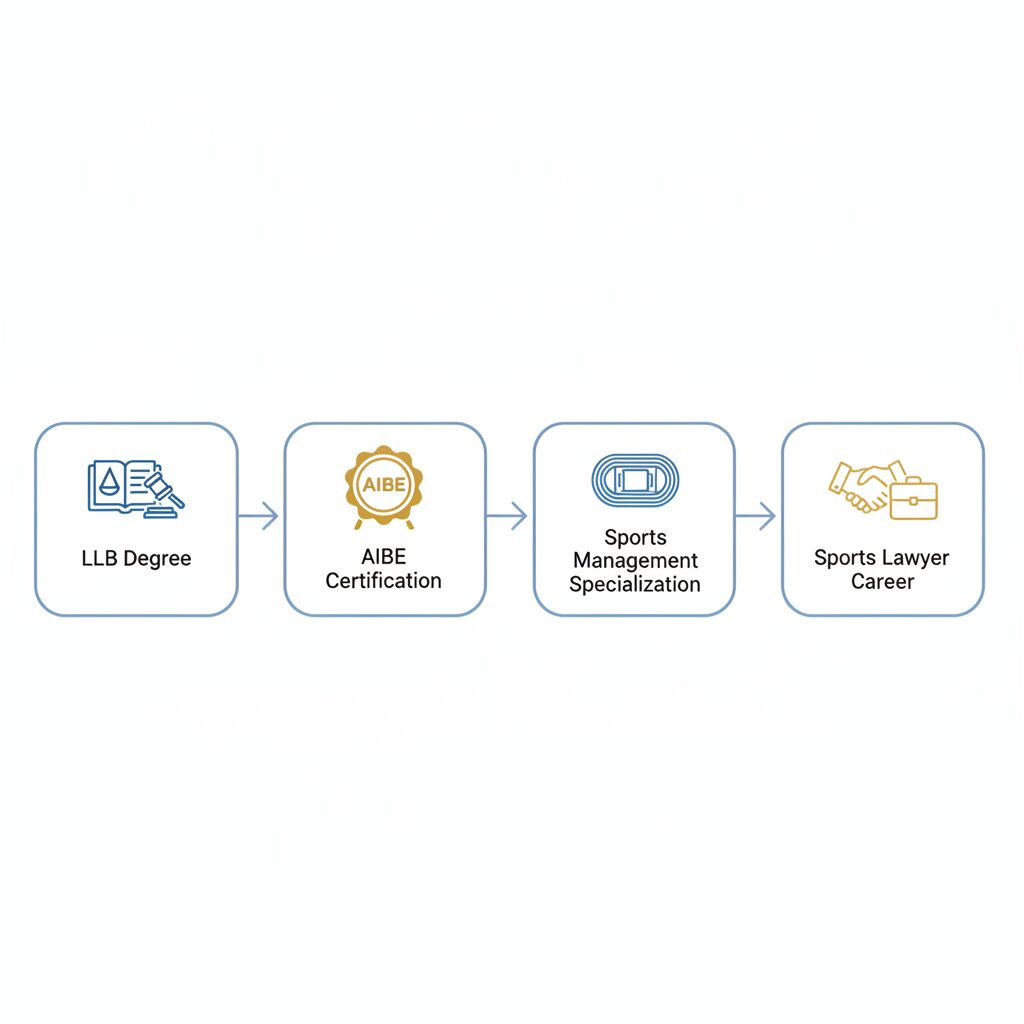
The roadmap from law school to the boardroom
The transition from a student to a practicing sports lawyer requires a deliberate strategy. You cannot wait for a job posting to appear on a job board.
First, secure an internship at a boutique sports law firm or the legal department of a sports federation. If those are unavailable, look for internships in corporate firms that handle entertainment and media law. The skills are transferable. Learning how to draft a media contract is 80% of the work involved in a sports contract.
Second, build a public record of your expertise. Write analysis on recent sports legal battles. When the IPL retention rules change, be the person who explains the legal implications of those changes on a public platform. This creates a signal of expertise that attracts clients.
Third, network within the sports ecosystem. Attend conferences and connect with sports managers and agents. Most sports law roles are filled through referrals, not resumes. The sports world is small, and trust is the primary currency.
Salary expectations and career growth
Entry-level sports lawyers in India often start in general corporate firms, earning between ₹4 lakh and ₹8 lakh per year. However, those who specialize and move into athlete representation or franchise management can see their income grow rapidly.
Senior sports lawyers or partners in specialized firms can earn ₹25 lakh to ₹70 lakh per year, depending on their client list. The highest earners are often those who take a percentage of the contracts they negotiate for their clients. This shift from a salary to a commission-based model is where the real wealth in sports law is created.
Frequently Asked Questions
Do I need a separate degree in sports law in India?
No separate degree is mandatory. A standard LLB is required, but a specialization in sports management provides a significant competitive edge.
Can I become a sports lawyer after a BBA?
A BBA is a great start, but you must complete an LLB to practice law. Pairing a BBA with an LLB is a highly effective route.
Which is more important: the law degree or the specialization?
The law degree is the legal requirement for practice. The specialization is what gets you hired by sports franchises and athletes.
Do sports lawyers only work with cricketers?
No, although cricket is the largest market. There is growing demand in football, kabaddi, and emerging sports like pickleball.
Where can I find internships for sports law?
Look for boutique sports law firms, sports management agencies, or the legal cells of national sports federations.
Is sports law a stable career in India?
Yes, as the sports economy grows and professional leagues expand, the demand for legal protection increases.
Can I practice sports law internationally?
Yes, if you understand international regulations and the rules of the Court of Arbitration for Sport (CAS).
How does sports management help a lawyer?
It provides the business context needed to negotiate better deals and understand the operational needs of sports clients.
Build your edge in sports business
A law degree gives you the license, but sports education gives you the lead. Combine your legal knowledge with a professional qualification to enter the sports industry at a higher level. Explore ISST sports management programs to bridge the gap between law and the game. Start your specialization today with no hidden fees.
The Institute of Sports Science & Technology (ISST), founded in 2008 in Pune, is India’s premier education center dedicated exclusively to sports management and sports science. By integrating cutting-edge academic pedagogy, robust industry partnerships, and scientific methodologies, ISST develops top-tier professionals equipped to lead the modern sports, fitness, and wellness industries.
- Founded in 2008 as a pioneer in Indian sports education
- Offers specialized programs in Sports Management & Sports Science
- Strong industry partnerships with leading sports leagues, teams, and organizations
- Faculty comprises expert sports scientists, veteran coaches, and industry researchers
- Dedicated placement cell with extensive national and international support