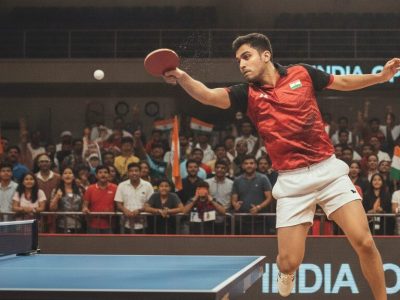
Discover what wearable sensors actually measure in Indian sports training. Learn how HRV, GPS, and load data drive elite performance. Explore ISST courses.
The shift from gadgets to metrics
Most people see a wearable as a fancy watch that counts steps. In professional sports science, the device is irrelevant. What matters is the biometric data it captures and how a coach uses that data to stop an athlete from breaking. We see this daily at the ISST High Performance Centre, where the focus is on the metric, not the brand.
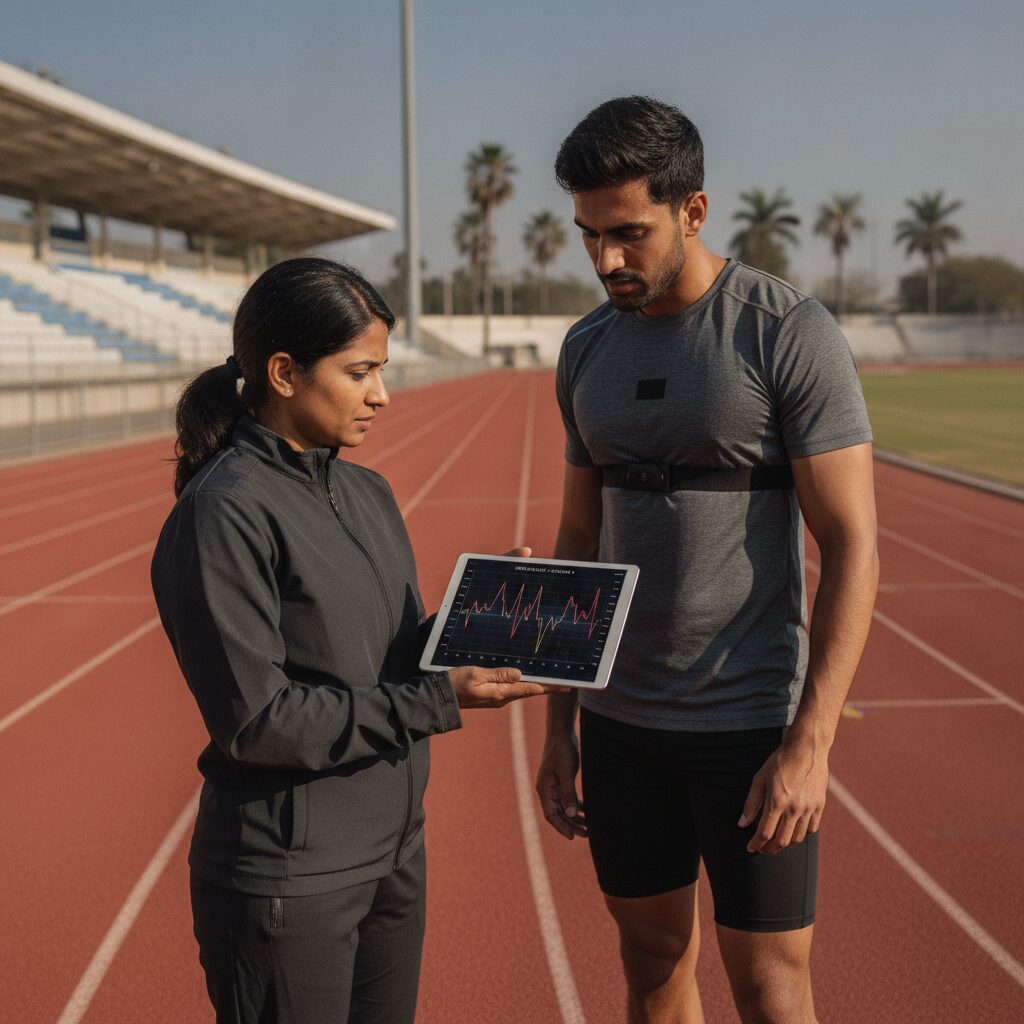
A sensor is simply a tool for objective measurement. It replaces the coach’s gut feeling with a hard number. When a sports scientist looks at a dashboard, they are not looking for ‘fitness’ in a general sense. They are looking for specific physiological markers that signal whether an athlete is ready to perform or on the verge of an injury.
What the sensors actually track
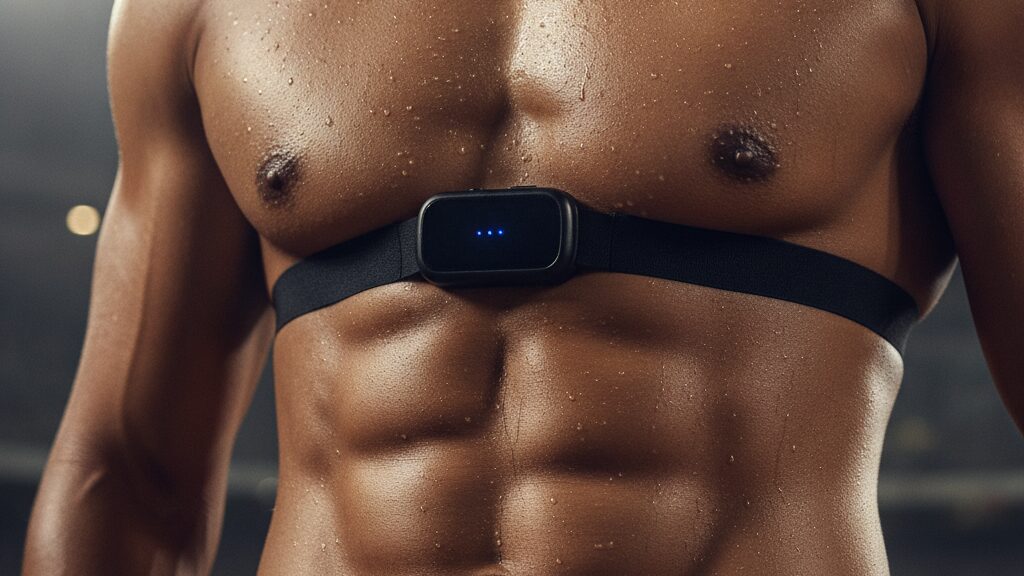
Heart Rate Variability (HRV) is the most telling marker for recovery. It measures the variation in time between each heartbeat. According to a 2026 study on athlete readiness, a drop in HRV often precedes physical fatigue by 24 to 48 hours. This allows a coach to reduce training intensity before the athlete feels the exhaustion.
Accelerometers and gyroscopes track mechanical load. These sensors measure the G-force of every jump, sprint, and change of direction. In football, this helps distinguish between a low-intensity jog and a high-intensity anaerobic burst. By tracking the total ‘player load’, teams can prevent overtraining syndrome.
GPS and Local Positioning Systems (LPS) map spatial data. They track total distance covered and the number of sprints over 25 km/h. In our work with various academies, we found that tracking the ‘intensity distribution’ is more valuable than total distance. A player might cover 10 km, but if zero of those meters were at top speed, the session failed its metabolic goal.
Applying data across different sports
The value of a sensor changes based on the sport’s demands. In endurance athletics, the focus is on VO2 Max and lactate threshold. The sensor tracks how efficiently the body uses oxygen at high intensities. This data dictates the exact pace for interval training.
In contact sports like Kabaddi or Wrestling, the focus shifts to asymmetric loading. Sensors placed on both limbs can reveal if an athlete is favoring one side. This often signals a hidden injury. Correcting this imbalance early prevents long-term joint degradation.
Even in precision sports, wearables track the nervous system. Measuring skin conductance and heart rate during high-pressure moments helps sports psychologists understand an athlete’s stress response. This is where the Distance Certificate in Sports Psychology & Mental Training (CSPMT) becomes relevant, as it teaches how to translate this data into mental cues.
The Indian context and environmental stress
Training in India introduces a variable that European models often ignore: extreme heat. Wearables now track core body temperature and sweat rate. According to the National Institute of Sports (2025), heat stress can reduce an athlete’s cognitive function by 15% during late-afternoon sessions.
By monitoring the ‘thermal load’, Indian coaches can adjust hydration schedules in real-time. We no longer guess when an athlete needs water. We use the data to prescribe precise fluid and electrolyte intake based on the sweat loss measured by the sensors.
This integration of technology is why more professionals are seeking a BSc in Sports Science. The industry has enough coaches who can shout instructions. It does not have enough scientists who can interpret a CSV file of biometric data.
The gap between data and decision
Data without interpretation is noise. A wearable might show that an athlete’s sleep quality dropped. A novice coach might tell them to sleep more. A sports scientist, however, looks at the correlation between that sleep drop and the previous day’s mechanical load.
The failure mode in many Indian academies is ‘data hoarding’. They collect thousands of data points but never change the training plan based on them. True performance gains happen when the data creates a feedback loop. This is the core of Distance Diploma in Sports Technology (DDST) training.
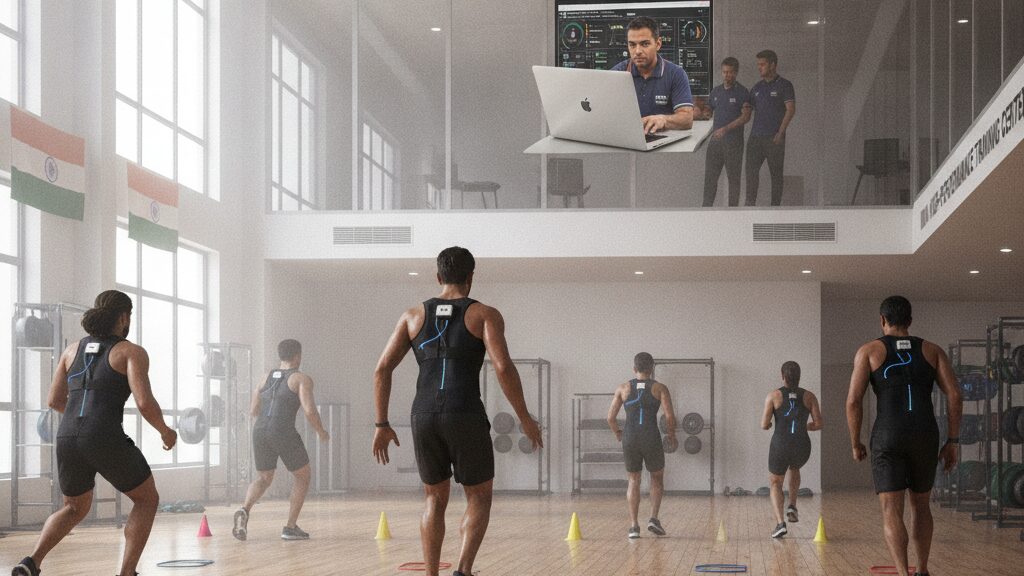
High-performance environments now employ dedicated analysts. These professionals use the data to create ‘individualized load profiles’. Instead of a team-wide workout, each athlete gets a target based on their current physiological state. This precision is what separates medal winners from participants.
Building a career in sports tech
The demand for people who can bridge the gap between hardware and human performance is growing. Most graduates in India focus on general management. However, the real growth is in the technical side of sports science.
Understanding how to use Distance Diploma in Sports Analytics (DDSA) tools allows a practitioner to move from a gym setting to a professional franchise. The ability to prove a training intervention worked using data is the strongest currency in the modern sports job market.
Professional teams in India are now hiring based on technical competency. They want to see that you can manage a fleet of wearables and turn that data into a weekly performance report. This technical skill set increases the market value of a sports science graduate significantly.
Frequently Asked Questions
Do wearables replace the need for a coach?
No, they provide the evidence the coach needs to make better decisions. The sensor identifies the problem, but the coach provides the solution.
Which is more important: GPS or Heart Rate?
Neither is superior because they measure different things. GPS tracks external load (what the athlete did), while heart rate tracks internal load (how the body responded).
Are these sensors affordable for small academies?
Entry-level sensors now cost under ₹15,000 for basic tracking. The real cost is the expertise required to analyze the resulting data.
Can wearables predict injuries?
They cannot predict the future, but they identify risk factors. A sudden spike in mechanical load combined with low HRV is a strong indicator of injury risk.
How often should biometric data be collected?
Baseline data should be collected daily. High-intensity session data is captured in real-time to allow for immediate adjustments.
Do athletes find wearables distracting?
Most professional athletes embrace them because the data proves their hard work. Distraction is minimal when the device is integrated into the kit.
Is data privacy a concern in Indian sports?
Yes, athlete data is sensitive medical information. Professional organizations must use encrypted platforms to store and share biometric profiles.
Which degree is best for learning this technology?
A specialized degree in sports science or a diploma in sports technology provides the necessary foundation. These programs teach the physiology behind the sensor.
Advance your career in sports science
Stop guessing and start measuring your path to professional success. Explore our specialized certifications to master the tools of elite performance with no upfront commitment. Browse our course catalog for free.
The Institute of Sports Science & Technology (ISST), founded in 2008 in Pune, is India’s premier education center dedicated exclusively to sports management and sports science. By integrating cutting-edge academic pedagogy, robust industry partnerships, and scientific methodologies, ISST develops top-tier professionals equipped to lead the modern sports, fitness, and wellness industries.
- Founded in 2008 as a pioneer in Indian sports education
- Offers specialized programs in Sports Management & Sports Science
- Strong industry partnerships with leading sports leagues, teams, and organizations
- Faculty comprises expert sports scientists, veteran coaches, and industry researchers
- Dedicated placement cell with extensive national and international support