- The IUSCA found that academic degrees teach theoretical mechanisms without live coaching agility, while board certifications lack foundational biological principles.
- University sports science degrees provide theoretical foundations, laboratory research training, and biomechanical analysis over several years of study.
- Practical board certifications focus on gym safety, rapid exercise execution, coaching vocabulary, and supervised floor hours under accredited mentors.
- International data shows entry-level athletic positions accept accredited board certifications, whereas director-level roles mandate postgraduate sports science degrees.
- Indian sports academies and public recruitment channels increasingly screen out job applicants who possess only private weekend certifications.
Aspiring physical preparation coaches in India often face a divisive career question: should you spend three to five years earning a formal university sports science degree, or can you bypass academia with a targeted vocational certification from an accredited board? The answer dictates your financial investment, the caliber of athlete you can coach, and your long-term viability in elite sport.
Neither a university degree nor a vocational certification alone is sufficient for an elite strength and conditioning career. Degree vs S&C Certification: The Expert Myth refers to treating these two pathways as rival options. Academic degrees teach theoretical mechanisms, while practical certifications provide gym-floor coaching competency.
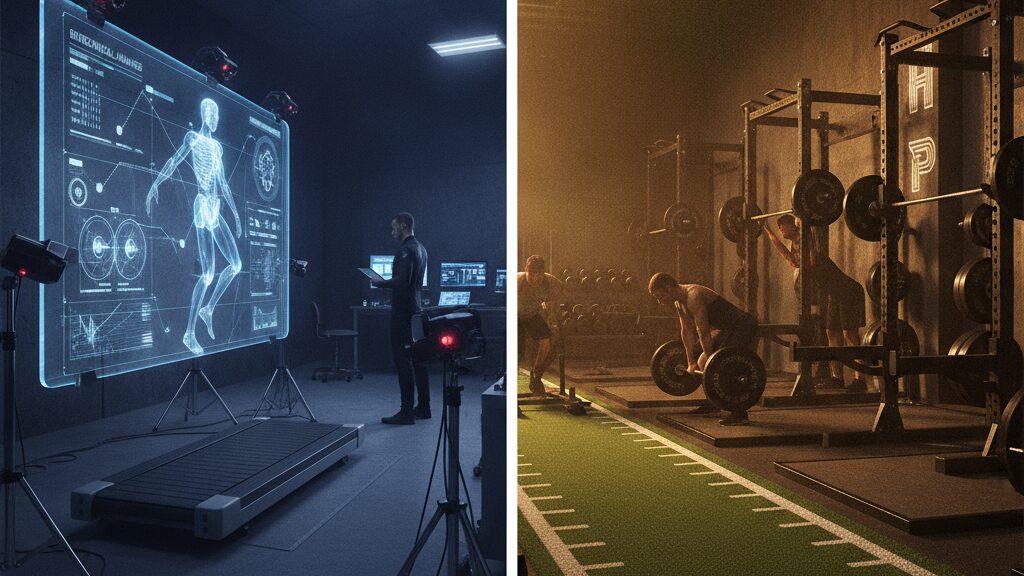
This debate reached a definitive turning point when the International Universities Strength and Conditioning Association (IUSCA) published a comparative evaluation on 2026-09-30 regarding academic qualifications versus vocational credentials. Their findings confirm what performance directors have whispered for years: academic degrees teach theoretical mechanisms without delivering live coaching agility, while weekend board certifications provide coaching cues without teaching the biological principles needed to manage complex fatigue states. Navigating a modern strength and conditioning career requires dissecting these competing paths to build a hybrid credential profile.
The High-Performance Dilemma: Scientific Theory vs Gym-Floor Competency
Head coaches and technical directors evaluate applicants through two lenses: scientific literacy and gym-floor commanding presence. When an athlete presents with recurring posterior chain tightness during maximum-velocity sprinting, a coach must diagnose the underlying neuromuscular deficits. Theoretical biomechanics explains the lever arms, force-vector orientations, and motor-unit recruitment thresholds involved.
That exact understanding comes through rigorous academic study in sports sciences. However, scientific theory alone does not teach you how to manage thirty hostile, fatigued field-sport athletes during a rainy monsoon morning session. When bar speed drops and training intent wanes, an academic textbook cannot teach voice modulation, visual scanning, or rapid exercise regressions. Those execution skills belong to practical coaching certifications and supervised floor hours.
In our work at ISST (Institute of Sports Science & Technology), we see candidates stumble when they treat these pathways as rival options. A coach holding only a commercial gym certification frequently prescribes volume loads that trigger chronic patellar tendinopathy. Conversely, an honours graduate with zero floor time often hesitates when cueing an Olympic lift, losing the room’s respect within seconds.
University Degree Syllabi: Theoretical Rigour and Foundational Biomechanics
A university degree—such as a UGC recognized BSc in Sports Sciences or a postgraduate qualification like the Masters Programme in Sports Sciences (MPSS)—constructs an intellectual bedrock over several years. Students spend hundreds of laboratory hours dissecting physiology, motor learning, statistics, tissue mechanics, and biochemistry.
Consider the difference in analytical depth. In a formal university syllabus, neuromuscular adaptation is not reduced to generic sets and reps. You calculate joint moments, evaluate electromyography data, and interpret blood biomarker shifts like the testosterone-to-cortisol ratio. You learn how to run testing protocols, whether evaluating jump fatigue using force plates—as discussed in our guide on countermovement jump fatigue monitoring—or analyzing metabolic cart readouts.
Academic institutions also demand longitudinal research projects. Writing a dissertation forces you to review clinical trials, assess statistical validity, and challenge commercial fitness trends. When sports tech vendors pitch expensive devices to high-performance setups, an academically trained coach knows how to audit the product’s test-retest reliability before spending club capital.
Practical Board Certifications: Coaching Competency and On-Floor Application
Professional board certifications from bodies like the Australian Strength and Conditioning Association (ASCA), the UK Strength and Conditioning Association (UKSCA), or targeted vocational diplomas like the Distance Diploma in Strength & Conditioning (DDSC) serve an entirely different purpose. These programs focus on rapid execution, coaching vocabulary, lifting mechanics, and gym safety.
Board certifications test whether you can coach a power clean from the floor, correct hip drop in a split squat, and structure a plyometric progression without injuring the trainee. Their curriculum is tactile. Examiners evaluate your posture, the timing of your verbal feedback, and your ability to spot technical breakdown under fatigue.
These credentials bridge the immediate gap between knowing an exercise and coaching it. Board accreditations require verified practical training hours under an accredited mentor coach. This setup ensures that you accumulate flight time on the gym floor, learning the operational realities of barbell maintenance, group warm-up spacing, and session flow.
University Degree vs Practical S&C Board Certification: Which Pathway Secures High-Performance Roles?
The International Universities Strength and Conditioning Association comparative analysis from 2026-09-30 examined international employment data across Olympic bodies, franchise leagues, and university athletics. Their findings established a direct correlation between academic level and role ceilings. Entry-level athletic development positions accept accredited board certifications, but director-level positions mandate postgraduate sports science degrees.
In the Indian ecosystem, hiring patterns mirror these international standards. Leading sporting entities, state sports academies, and public recruitment channels—such as the roles detailed in the Sports Authority of India recruitment frameworks—now explicitly filter candidates by formal university credentials. A resume listing only private, weekend certifications is frequently screened out by human resources algorithms before a technical director sees it.
Take the career trajectory of Swaraj Saikia, an ISST alumnus working as a Strength and Conditioning Expert within the Khelo India scheme. Progression into state and national athletic frameworks demands the credibility of formal sports education combined with verified field hours. In national camps, high-performance managers require coaches who can communicate seamlessly with orthopedic surgeons, exercise physiologists, and team physiotherapists.
Curriculum Comparison: Academic Depth vs Applied Scope
To grasp the structural division between these educational models, examine their curricular focus areas:
Academic Degree Programs (BSc / MSc Sports Sciences):
- Cellular energy pathways, aerobic and anaerobic enzymatic flux
- Bone mineral density, connective tissue remodeling, and tendon stiffness
- Inverse dynamics, linear kinetics, vector analysis, and moment arms
- Longitudinal periodization, statistical modeling, and thesis defenses
- Research methodology, ethics, and diagnostic machinery operation
Vocational Board Certifications (ASCA / UKSCA / Practical Diplomas):
- Coaching positions for Olympic lifts: clean, snatch, jerk, and variations
- Corrective cueing, acoustic prompts, and immediate kinematic feedback
- Linear sprint mechanics, deceleration postures, and change-of-direction cuts
- Weight room safety protocols, rack arrangements, and group pacing
- Short-term mesocycle design for seasonal conditioning blocks
The vocational path teaches the physical drills; the academic degree teaches the biological cost of those drills. When managing million-rupee athlete contracts, sports franchises choose coaches who master both disciplines.
Why Indian High-Performance Centres Demand Dual Competency
India’s professional sports landscape has matured rapidly. The creation of corporate-backed Olympic training centres, franchise development academies in cricket and football, and private sports medicine clinics has raised hiring benchmarks. State institutes no longer hire general fitness trainers to manage elite squads.
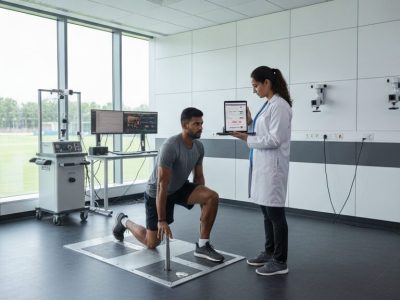
At the ISST High Performance Centre, performance testing combines dual force plates, timing gates, and linear position transducers. Interpreting this data stream requires analytical literacy that short certification courses do not teach. A coach must calculate the Dynamic Strength Index, determine whether an athlete needs eccentric strength or rate of force development, and modify training programs accordingly.
Equally, our sports science faculty recognizes that pure theory breaks down under real-world pressures. In practical training environments, coaches face limited equipment, abrupt match rescheduling, and varying recovery rates. Indian high-performance hubs demand practitioners who combine a strong academic foundation with floor-tested competency.
Mapping a Strength and Conditioning Career: Five-Stage Progression Plan
Building a successful career in physical preparation requires a calculated sequence. Rushing into advanced private workshops without basic scientific grounding wastes money and stunts career growth. Here is the field-tested roadmap for aspiring Indian practitioners:
Stage 1: Undergraduate Sports Science Degree
Enroll in an accredited three-year undergraduate program, such as a UGC recognized BSc in Sports Sciences. This phase builds your foundation in functional anatomy, muscle physiology, and physics. During these years, volunteer with local collegiate clubs, track squads, or state age-group teams to gain initial coaching experience.
Stage 2: Foundational Practical S&C Credential
Toward the end of your degree, pursue an accredited board certification or specialized qualification such as the Distance Diploma in Strength & Conditioning. This sharpens your Olympic lifting progressions, movement screening routines, and on-field speed mechanics.
Stage 3: Supervised Field Internship
Spend 12 to 18 months in an assistant role at a high-performance training center, state academy, or franchise development league. Work under a senior coach. Your focus here is tracking volume loads, managing bar speeds, and handling group logistics without making high-level programming decisions alone.
Stage 4: Postgraduate Specialization
Elevate your profile with a Master of Science in Sports Sciences or specialized training such as the Distance Masters Programme in High Performance Coaching. At this stage, master data management, biochemical monitoring, and return-to-play rehabilitation coordination with sports medical staff.
Stage 5: High-Performance Leadership
With five to seven years of mixed academic and on-field experience, step into Head of Strength and Conditioning or High-Performance Director roles across franchise teams, Olympic national federations, or corporate sports centers.
Salary Realities and Financial ROI Across Pathways
Educational choices carry financial consequences. In India, short vocational certifications cost between ₹40,000 and ₹1,20,000, promising fast market entry. However, coaches relying solely on standalone certifications face an income plateau. They typically remain restricted to commercial gyms or private personal training, earning between ₹20,000 and ₹45,000 per month.
A formal university pathway requires higher upfront investment: tuition fees for a three-year sports science degree generally range from ₹2,50,000 to ₹6,00,000 depending on the institution. Despite higher upfront costs, the long-term return on investment is substantially higher.
Data from domestic franchise setups and elite academies indicates that credentialed high-performance coaches holding formal degrees combined with practical board accreditations start at ₹50,000 to ₹80,000 per month in entry-level assistant roles. Senior coaches and departmental directors command packages ranging from ₹15,00,000 to ₹35,00,000 annually. Elite sport pays for risk mitigation, and scientific degrees provide the accountability that franchise owners demand.
Bridging the Gap: Academic Foundation Meets Practical Field Hours
The false binary between university degrees and vocational certifications has held back physical preparation coaching for too long. Winning programs do not choose between science and practical coaching; they demand both.
Academic curricula provide the intellectual framework that prevents training injuries and clarifies fatigue dynamics. Practical board accreditations provide the coaching command, interpersonal connection, and technical cueing that inspire athletes to push their physical limits. When both converge, you separate yourself from general fitness trainers and establish a durable, high-impact career.
Through the ISST alumni connect network, we regularly observe this combination in practice. Graduates who pair systematic university study with relentless floor coaching hours secure sustainable careers across domestic leagues, national associations, and world-class athletic facilities.
Frequently Asked Questions
Can I become a high-performance S&C coach with only a short certification?
Standalone short certifications allow you to work in commercial fitness clubs or private studios. Elite sporting bodies, state associations, and professional franchise leagues require formal university sports science degrees for professional roles.
What is the primary difference between a sports science degree and an S&C board certification?
A university degree delivers deep scientific grounding in biomechanics, physiology, and research analysis over several years. A board certification focuses primarily on practical exercise cueing, coaching mechanics, and weight room safety.
Is a UGC recognized degree required for government sports jobs in India?
Public organizations like the Sports Authority of India mandate formal degrees from recognized universities for their physical preparation and exercise physiologist roles. Commercial certificates without university backing do not meet basic eligibility criteria.
Which international S&C certifications carry the highest industry respect?
Credentials from the Australian Strength and Conditioning Association (ASCA) and the UK Strength and Conditioning Association (UKSCA) lead the profession globally. The National Strength and Conditioning Association (NSCA) CSCS credential also holds strong international standing.
How many practical field hours should an aspiring S&C coach accumulate during their studies?
Aspiring coaches should target a minimum of 300 to 500 supervised gym-floor coaching hours before graduating. These hours teach you how to manage group dynamics, cue complex movements, and handle real-world athletic environments.
What starting salary can an entry-level S&C coach expect in India?
Entry-level assistant coaches with dual qualifications typically earn between ₹35,000 and ₹60,000 per month in academies and professional teams. Compensation rises significantly as you gain experience and advance into head performance roles.
Can physiotherapy graduates transition into high-performance strength and conditioning?
Physiotherapy graduates have an excellent foundation in musculoskeletal anatomy and tissue healing timelines. They can complete their profile by taking specialized strength and conditioning qualifications to master power development and speed mechanics.
How does technology integration impact modern S&C educational requirements?
High-performance centres now rely heavily on GPS units, linear transducers, and force platforms to track athlete fatigue. Interpreting these complex data sets requires the statistical training and scientific literacy taught in sports science degrees.
Take the Next Step in Sports Sciences
Now that University Degree vs Practical S&C Board Certification: Which Pathway Secures High-Performance Roles? has clarified how top athletic setups recruit, build your professional foundation in sports sciences with ISST. Explore our comprehensive classroom and distance learning programs, benefit from expert faculty guidance, and tour the ISST High Performance Centre to prepare for a successful career in sports.