The real answer for aspiring female sports journalists
The best universities for female sports journalism are those that combine a mass communication degree with direct, live exposure to professional sporting events. In 2026, a theoretical degree in journalism is no longer enough to break into a male-dominated field. You need a program that offers specific mentorship for women, access to high-performance centers, and a pipeline into broadcasting agencies.

For those in India, the choice often comes down to whether a university provides a general media degree or a specialized sports education. Programs that integrate sports management and sports sciences give journalists a technical edge. This allows them to analyze a game with more authority than a generalist reporter.
Prioritize industry access over brand names
Many students chase the prestige of a university name. In practice, a mid-tier college with a strong alumni connect to the IPL or ISL is more valuable than a top-tier university with no sports ties. When evaluating programs, look for those that facilitate internships at sports broadcasting agencies.
At ISST (Institute of Sports Science & Technology), we have observed that journalists who understand the science of the game—such as biomechanics or sports nutrition—ask better questions. They move beyond the surface-level “how do you feel” questions and provide actual insight. This is why a foundation in sports education is a competitive advantage.
If your goal is to move from the sidelines to the studio, you should study the How to Become a Star Sports Anchor Female (The Roadmap). The transition from reporting to anchoring requires a different set of technical skills, specifically in voice modulation and screen presence.
Global benchmarks for sports media education
Northwestern University and Syracuse University in the US remain global leaders because they treat the campus as a lab. They don’t just teach writing; they run student-led networks that cover live games. This creates a portfolio before the student even graduates.
In India, the landscape is shifting. Universities are now integrating sports management with media. This hybrid approach is better. It teaches a journalist how a league operates, how sponsorship deals work, and how athlete management affects performance. Understanding these business layers makes a reporter indispensable to a newsroom.
Essential criteria for female journalists
Women in sports journalism often face unique hurdles, from access to locker rooms to credibility in technical discussions. The best universities address this through specific support systems.
Look for programs that offer female-led mentorship. Having a mentor who has navigated the pressures of live broadcasting is a shortcut to success. In our experience, students who have access to an ISST alumni connect find it easier to secure their first internship because they have a trusted reference in the industry.
Check if the university has a partnership with a high-performance center. For example, training at the ISST High Performance Centre allows a journalist to see how elite athletes train. This firsthand experience transforms a story from a generic report into a piece of investigative journalism.
The technical toolkit every student needs
A degree is the foundation, but the toolkit is what gets you hired. By 2026, the line between a journalist and a content creator has vanished. You must be a one-person production house.
You need to master mobile journalism (MoJo). This means knowing how to shoot, edit, and publish a high-quality clip from a smartphone during a live match. According to the 2026 Digital Media Trends report, 62% of sports fans consume highlights via short-form vertical video before watching a full game.
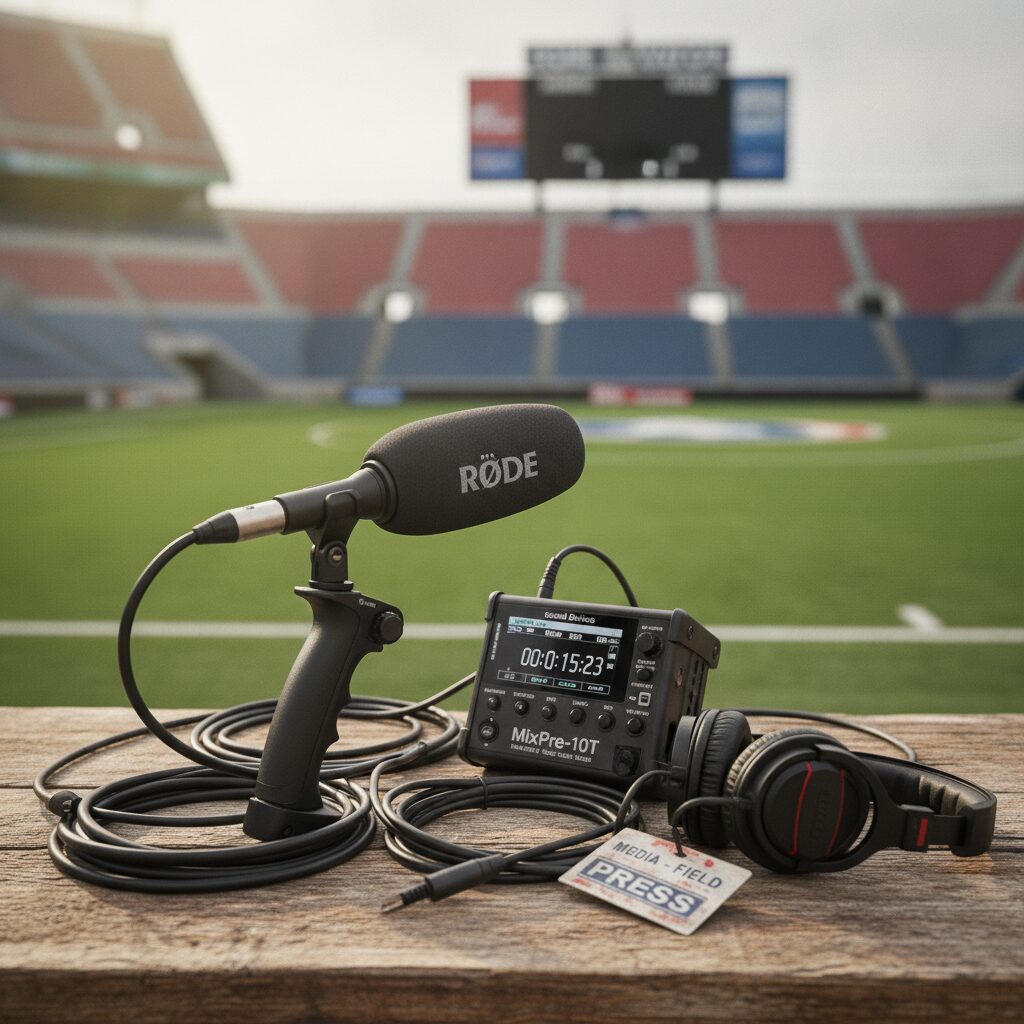
Understanding equipment is also non-negotiable. You don’t need to be an engineer, but you should know how to pick the best microphones for sports broadcasting in India to ensure your audio doesn’t clip during a loud stadium crowd. Poor audio kills a professional report instantly.
Building a portfolio while studying
Wait until graduation to build your portfolio is a mistake. The most successful female sports journalists start their ‘brand’ in the first year of college. Start by covering local college tournaments or district-level athletics.
Use a tiered approach to your portfolio. Start with written match reports, move to short-form social video, and eventually progress to long-form analysis. If you are interested in the vocal side of the industry, you might want to explore the difference between play-by-play and color commentary to decide which style fits your personality.
In one observed case, a student who spent three years documenting a local wrestling circuit ended up with a job offer from a national sports network. The employer didn’t care about the university rank; they cared about the 500 hours of footage and the deep connections the student had built with the athletes.
Evaluating the cost of sports media degrees
Tuition for specialized sports journalism or management programs in India can vary widely. Some private institutes charge between ₹3,00,000 and ₹8,00,000 for a full degree. However, the return on investment (ROI) depends on the placement record.
Do not rely on “placement assistance” claims. Instead, ask for a list of companies where alumni are currently working. If the alumni are in roles at major broadcasting agencies or sports federations, the investment is justified. If they are in generic PR roles, the program lacks the necessary sports-specific depth.
The role of distance education in 2026
Not everyone can move to a sports hub like Mumbai or Delhi. Distance education has evolved. You can now get a UGC recognized degree while continuing to work as a freelance reporter in your hometown.
The key is to balance the distance degree with practical training. If you are taking a course online, you must find a way to get on the field. Volunteer for local sports events, offer to manage the social media for a local club, or start a sports blog. The degree provides the credential, but the field work provides the skill.
Avoiding common pitfalls in university selection
Avoid universities that promise “guaranteed roles” at major sports boards. No university can guarantee a job at a body like the BCCI. These claims are a red flag. Instead, look for universities that offer internships. An internship is a trial period where you prove your value.
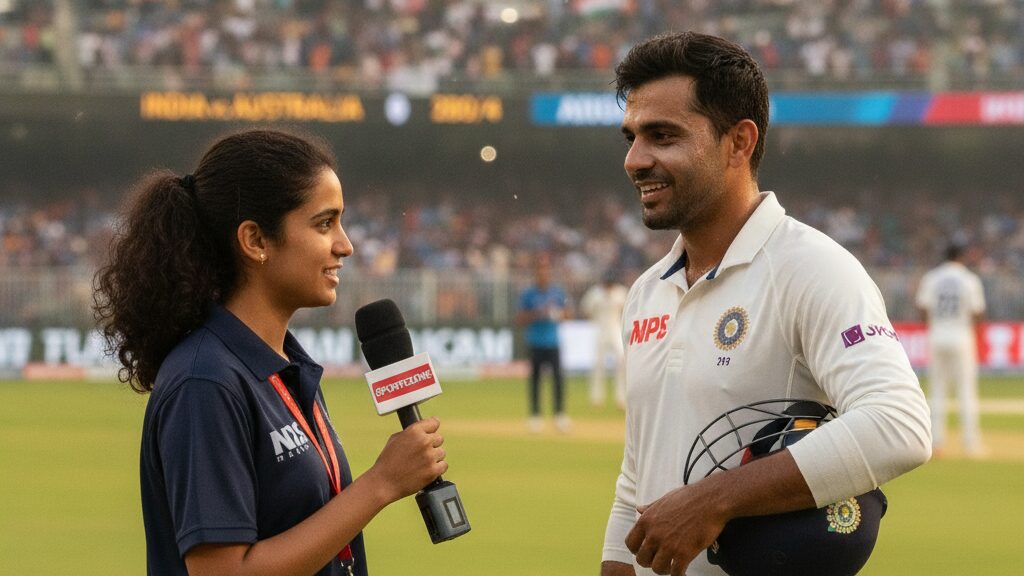
Another mistake is ignoring the faculty’s background. A professor who has only taught from a textbook cannot teach you how to handle a nervous athlete during a post-match interview. You need instructors who have spent time in the press box. In practice, the best lessons come from hearing about the failures—the missed cues, the technical glitches, and the rejected pitches.
Integrating sports science into journalism
The future of sports journalism is analytical. We are moving away from storytelling based on emotion and toward storytelling based on data. This is where sports science becomes a secret weapon.
A journalist who understands VO2 max, lactic acid thresholds, or the mechanics of a fast bowler’s action can provide a level of analysis that others cannot. This makes you a specialist. Specialists command higher salaries and more respect in the industry.
Integrating this knowledge allows you to bridge the gap between the athlete’s experience and the viewer’s understanding. When you can explain why a specific training regimen led to a gold medal, you are no longer just reporting the news—you are providing expertise.
Frequently Asked Questions
Do I need a specific degree to enter sports journalism?
While a degree in journalism or mass communication is common, a background in sports management or sports science provides a significant technical advantage. The most important factor is your portfolio of published work.
Is sports journalism a viable career for women in India?
Yes, the demand for female perspectives in sports broadcasting is growing rapidly. Major networks are actively seeking women who can provide expert analysis and engage diverse audiences.
Can I start sports journalism without a university degree?
You can start as a freelance creator, but a degree provides the theoretical foundation and networking opportunities. Most top-tier broadcasting agencies still require a formal qualification for full-time roles.
Which is better: a general journalism degree or a sports-specific one?
A sports-specific degree is better if you are certain about your career path. It saves time by removing generic modules and replacing them with industry-specific training and internships.
How important is a portfolio compared to a degree?
In the media industry, a portfolio is often more important than a degree. Your work samples prove your ability to report, edit, and analyze in real-time.
What are the best skills to learn alongside a degree?
Master video editing, social media analytics, and basic sports science. These skills allow you to produce content independently and analyze games more deeply.
Do distance learning degrees hold value in sports media?
They do, provided the degree is recognized and you supplement it with practical field experience. The industry values your ability to deliver content over your mode of study.
How do I find internships in sports journalism?
Leverage alumni networks and reach out to sports broadcasting agencies directly with a curated portfolio. Attending live events and networking with press officers is also highly effective.
Start your professional sports career today
Stop waiting for the perfect degree to start your journey. Build your expertise with a program that offers real-world application and industry connections. Explore our sports education options and get a free career counseling session to map out your path to the press box.