Find the best microphones for sports broadcasting in India. Compare Shure, Sennheiser, and Rode for studios and stadiums. Upgrade your audio gear today!
The bottom line on sports microphones
For most aspiring broadcasters in India, the Shure SM7B remains the gold standard for studio commentary due to its noise rejection. If you are working sidelines or doing field reporting, a Sennheiser MKH 416 shotgun mic is the professional choice to isolate athlete voices from crowd noise. Beginners should start with the Rode NT-USB Mini for home setups before moving to XLR gear.
Choosing the wrong gear in a loud Indian stadium leads to distorted audio that no amount of editing can fix. You need a microphone that handles high sound pressure levels (SPL) and ignores the roar of the crowd while keeping your voice crisp.
Understanding the noise of Indian stadiums
Broadcasting in India presents specific challenges. Between the humidity of Chennai and the deafening crowds at the Wankhede, your gear must be durable. Most stadiums create a ‘wash’ of sound that drowns out a commentator’s voice.
In practice, we see students at the ISST High Performance Centre struggle when they use condenser microphones in open-air settings. Condensers are too sensitive. They pick up the distant horn of a car or the chatter of a nearby fan. For field work, you need a directional polar pattern, specifically cardioid or super-cardioid, to block out everything except what is directly in front of the mic.
USB vs XLR setups for commentators
Your choice depends on where you are sitting. USB microphones plug directly into a laptop. They are fast and cheap. But they lack the flexibility of professional rigs.
XLR microphones require an audio interface or a mixing board. This setup allows you to control gain and phantom power independently. According to audio engineering benchmarks from 2026, XLR setups reduce signal interference by 30% compared to budget USB alternatives in high-interference environments like press boxes.
If you are just starting, check our guide on USB vs XLR Mics: Which Setup Wins for Sports Commentary Beginners in India? to decide which entry point fits your budget.
Top microphone recommendations for Indian broadcasters
Different roles require different tools. A play-by-play announcer in a booth has different needs than a reporter interviewing a cricketer on the pitch.
The studio and booth standard
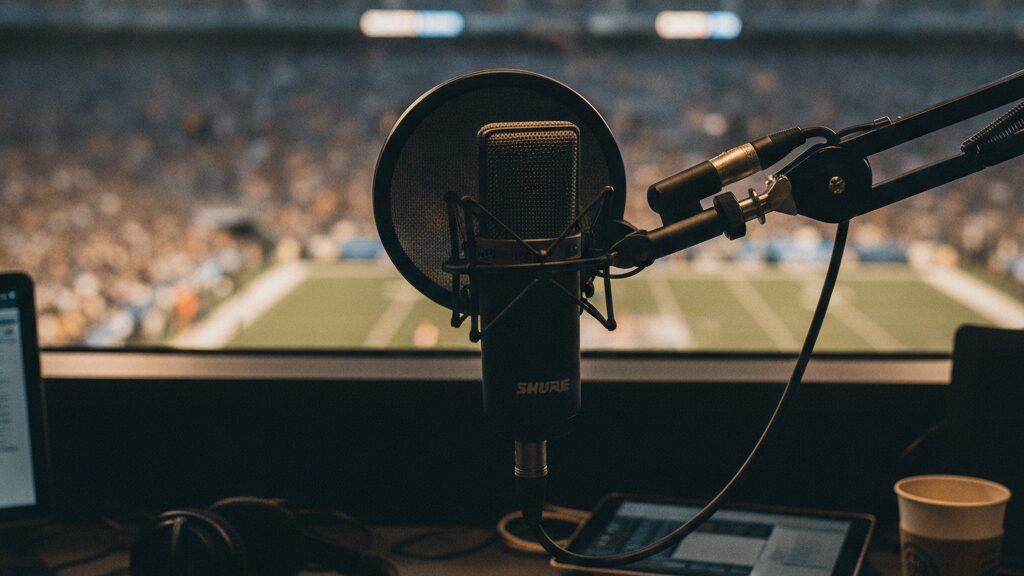
The Shure SM7B is a dynamic microphone. It does not require much power and is famous for its flat, natural frequency response. It costs roughly ₹35,000–₹42,000 in India. Because it is a dynamic mic, it ignores the hum of air conditioners and computer fans in a small commentary booth.
The sideline and field reporter
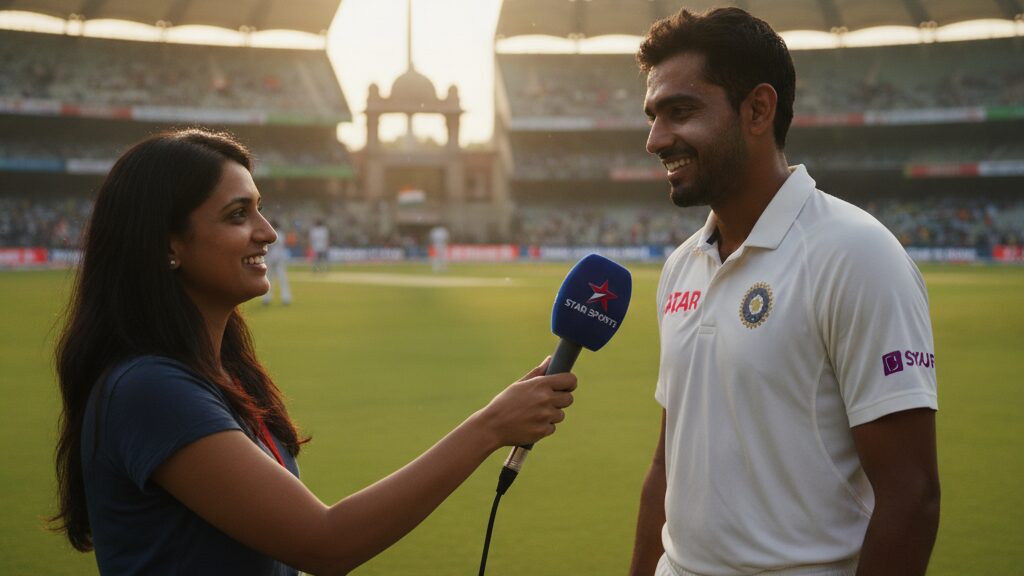
Sennheiser’s shotgun series, particularly the MKH 416, is the industry workhorse. It uses an interference tube to reject sound from the sides. In a scenario where a reporter is standing three feet from a screaming crowd, this mic isolates the subject’s voice. Prices for these professional units often exceed ₹60,000, but they are a lifetime investment for a professional career.
The budget-friendly entry
The Rode PodMic is an excellent hybrid. It is an XLR dynamic mic designed for speech. At around ₹10,000–₹12,000, it gives you a professional ‘radio’ sound without the cost of a high-end studio rig. It is heavy, durable, and handles the aggressive tone of sports commentary well.
Essential accessories for the Indian climate
A microphone alone is not enough. The wind in an open stadium will create ‘popping’ sounds that ruin a broadcast. A foam windscreen is the bare minimum. For high-wind areas, a ‘deadcat’ (synthetic fur windscreen) is mandatory.
Pop filters are also a must for booth work. They stop the ‘P’ and ‘B’ sounds from hitting the diaphragm too hard. We recommend using a shock mount to prevent the thumping sound of a commentator hitting the desk during an exciting moment in the game.
Connecting gear to a professional career
Owning the best gear is only half the battle. The ability to modulate your voice, time your delivery, and analyze the game is what gets you hired. Many of our alumni connect their technical setup with formal education to break into the industry.
Professional broadcasting is a blend of technical skill and sports science knowledge. Understanding player biomechanics or tactical shifts allows a commentator to provide deeper insights. For those serious about this path, our Sports Commentator India: The Definitive Guide for Aspiring Broadcasters provides a full roadmap from gear to placement.
If you are looking to manage the broader business side of these broadcasts, exploring a career in sports management India can open doors to production roles where you oversee the entire technical crew.
Comparing the best options at a glance
The choice usually comes down to the environment and the budget. Here is how the top contenders stack up for the Indian market.
- Shure SM7B: Best for studio booths, high noise rejection, ₹35,000+
- Sennheiser MKH 416: Best for field reporting, high directionality, ₹60,000+
- Rode PodMic: Best for beginners, durable XLR, ₹10,000+
- Rode NT-USB Mini: Best for home practice, plug-and-play, ₹7,000+
Frequently Asked Questions
Do I need an audio interface for a Shure SM7B?
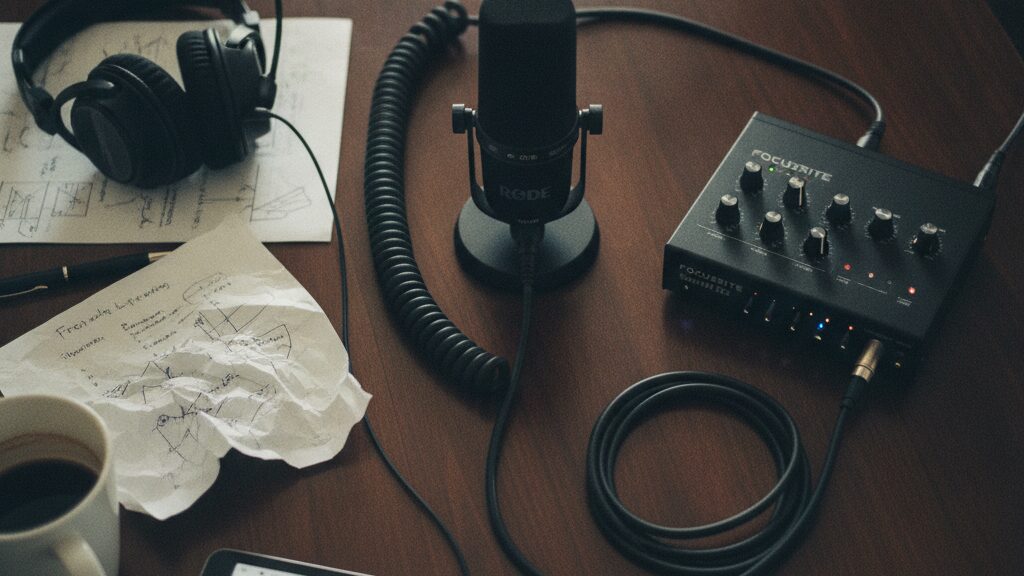
Yes, the SM7B is an XLR mic and cannot plug into a computer. You will need an interface like a Focusrite Scarlett or a Cloudlifter to boost the signal.
Can I use a condenser mic for live match commentary?
It is not recommended. Condenser mics are too sensitive and will pick up too much ambient stadium noise, resulting in a muddy broadcast.
Which is better for interviews, a lapel mic or a handheld mic?
Handheld mics are better for sports because they allow the reporter to move the mic closer to the athlete’s mouth to block crowd noise.
Are USB microphones professional enough for a portfolio?
Yes, for a digital portfolio or podcast, a high-quality USB mic is sufficient. However, professional networks expect XLR knowledge for live TV or Radio roles.
How do I stop wind noise during an outdoor interview?
Use a furry windscreen, often called a deadcat, over your microphone. This breaks up the wind before it hits the capsule.
What is the best budget brand for mics in India?
Rode and Audio-Technica offer the best balance of price and professional quality for those starting out in the Indian market.
Does the microphone affect my voice quality?
A mic does not change your voice, but it highlights certain frequencies. Dynamic mics usually provide a warmer, more authoritative ‘broadcast’ tone.
Where can I buy authentic broadcasting gear in India?
Stick to authorized dealers or reputed platforms like Amazon.in and Flipkart to avoid counterfeit electronics.
Start your broadcasting journey today
Get professional training and certification to match your gear. Apply for a sports management program at ISST to gain live exposure and industry connects for free. No credit card required for initial counselling.
The Institute of Sports Science & Technology (ISST), founded in 2008 in Pune, is India’s premier education center dedicated exclusively to sports management and sports science. By integrating cutting-edge academic pedagogy, robust industry partnerships, and scientific methodologies, ISST develops top-tier professionals equipped to lead the modern sports, fitness, and wellness industries.
- Founded in 2008 as a pioneer in Indian sports education
- Offers specialized programs in Sports Management & Sports Science
- Strong industry partnerships with leading sports leagues, teams, and organizations
- Faculty comprises expert sports scientists, veteran coaches, and industry researchers
- Dedicated placement cell with extensive national and international support