
Explore the sports nutrition career scope in India: franchise roles, metabolic testing skills, supplement brand jobs, and elite consulting opportunities.
A decade ago, athletic diets in India operated on folk wisdom: two litres of raw buffalo milk, handfuls of almonds, and whatever the team mess cooked that morning. That era is dead. Today, modern athletic programmes evaluate athletes on respiratory exchange ratios, urine specific gravity tests, and precise sodium replenishment. If you want to build a rewarding career in sports, the opportunities in this field have outpaced the supply of genuine practitioners who understand both exercise physiology and clinical biochemistry.
The sports nutrition career scope across India spans high-performance academies, multi-crore league franchises, clinical athlete recovery centres, and fast-growing supplement brands. The supply side remains crowded with general clinical dietitians who write hospital meal charts, but teams and elite academies run short on practitioners who can interpret indirect calorimetry or calculate sweat-rate sodium losses under match stress. When you bridge that technical gap, you enter an industry ready to value professionals for measurable physical output.
The demand split: high-performance centers, league franchises, and brands
Employment demand divides into three primary corporate and institutional buckets. Each has distinct entry requirements, working rhythms, and commercial incentives.
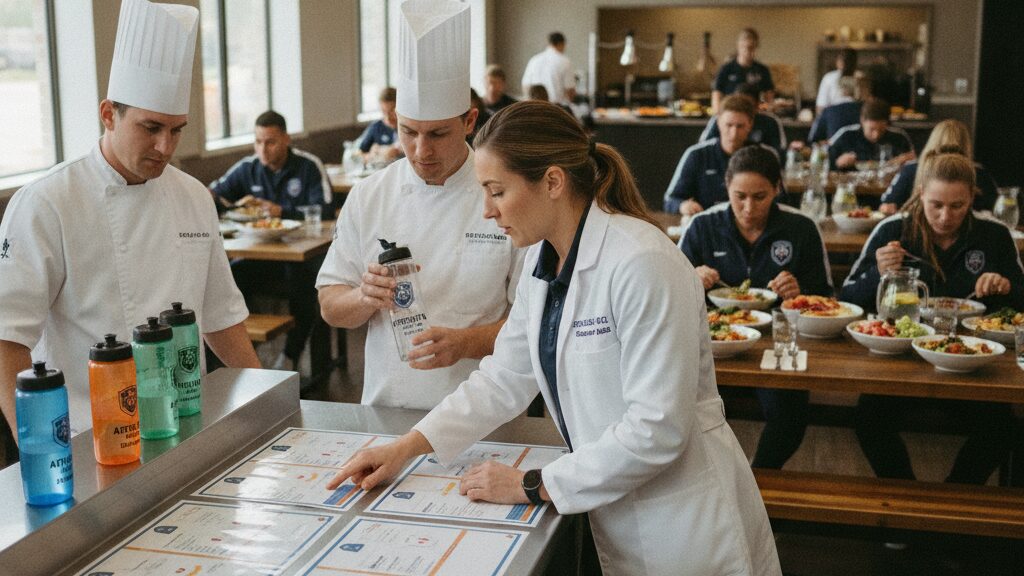
First, high-performance training centres. National training hubs, private academies, and state Olympic centres employ resident sports nutritionists on annual contracts. In these setups, you work side-by-side with strength coaches and physical therapists. At modern facilities like the ISST High Performance Centre, the daily workflow involves managing continuous nutritional intake for dozens of developing athletes across different disciplines. You run baseline anthropometry on Monday, sync with the head coach on weekly training blocks on Tuesday, and balance daily kitchen rations to meet specific metabolic loading demands throughout the week.
Second, franchise leagues. Teams in the Indian Premier League (IPL), Indian Super League (ISL), and Pro Kabaddi League (PKL) operate on intensive tournament cycles. Working inside a franchise setup means dealing with rapid travel schedules, irregular match timing, extreme climate changes, and complicated catering logistics at five-star hotels. For an inside look at how these organizations run their day-to-day sporting setups, our review of PKL franchise operations career roles breaks down team support requirements. In these roles, the nutritionist oversees acute glycogen recovery, anti-inflammatory protocols, and travel hydration strategies, often relying on core sports management principles to execute plans flawlessly.
Third, commercial sports supplement and sports food companies. The sports nutrition product sector in India represents a major employer that many candidates ignore. Brands manufacturing whey protein, electrolyte formulations, creatine monohydrate, and intra-workout carbohydrates recruit sports nutritionists for three clear jobs: scientific regulatory documentation, product formulation, and athlete education. These roles offer corporate stability, regular work hours, and direct exposure to consumer health data.
Clinical dietetics vs sports nutrition: the technical divide
The biggest career error young graduates make is treating sports nutrition as a sub-branch of standard clinical dietetics. The two fields have opposing primary goals.
Clinical dietetics focuses on disease management, symptom stabilization, and risk reduction. In a hospital, a dietitian works with sedentary patients recovering from cardiac incidents, managing renal failure, or controlling Type 2 diabetes. The goal is homeostasis: normal blood lipid ranges, controlled blood glucose, and manageable caloric deficits for gradual weight management.
Sports nutrition focuses on performance capacity, rapid glycogen restoration, muscular adaptation, and tissue repair under extreme physiological stress. An elite athlete does not train in homeostasis; they routinely push their metabolic systems into severe deficits. Prescribing a standard clinical diet to an endurance runner or a middle-order batsman during a tournament will degrade their power output and cause lean tissue loss.
Consider the daily carbohydrate requirements. A clinical dietitian often caps daily carbohydrate intake between 130 to 200 grams to prevent insulin spikes in sedentary individuals. A sports nutritionist working with a midfielder running 11 kilometres in a match must prescribe between 6 to 10 grams of carbohydrate per kilogram of body weight per day. During two-a-day training camps, that can mean planning diets with more than 500 grams of carbohydrates while minimizing gastrointestinal distress. If your education stopped at standard hospital dietetics, you will inevitably under-fuel high-output athletes.
Metabolic testing proficiencies that separate professionals from amateurs
To win roles in professional setups, your value depends on your ability to operate diagnostic equipment and translate raw test numbers into nutritional actions. Anyone can calculate calories on an app; teams hire professionals who master laboratory testing protocols.
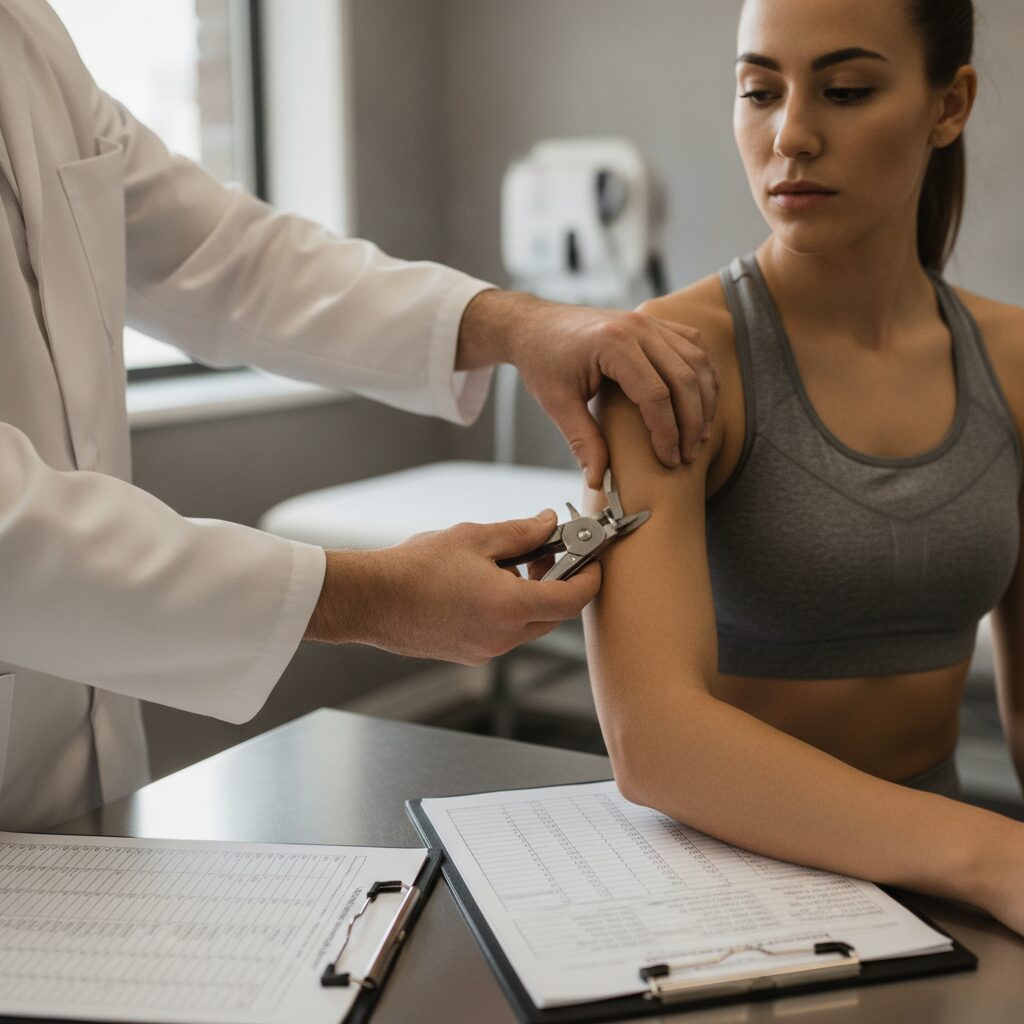
The International Society for the Advancement of Kinanthropometry (ISAK) certification represents the global standard for body composition profiling. When an academy hires a nutritionist, they expect you to execute standard 8-site skinfold tests using calibrated calipers. You calculate somatotypes, measure muscle mass variations across limbs, and track fat mass changes without relying on inconsistent bioelectrical impedance scales.
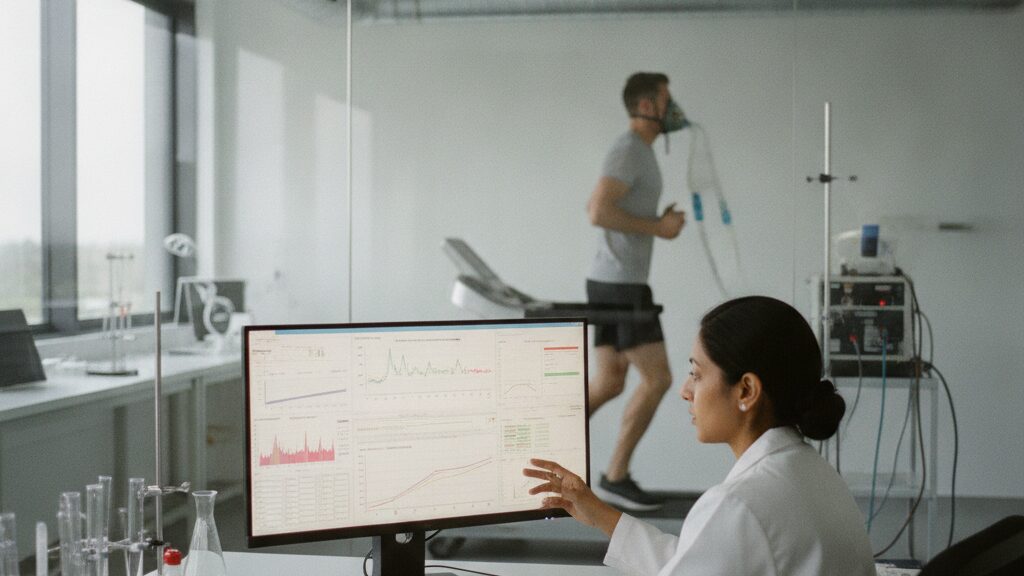
Indirect calorimetry is the second critical skill. By measuring oxygen consumption (VO2) and carbon dioxide production (VCO2), you calculate resting metabolic rate (RMR) and identify an athlete’s respiratory exchange ratio (RER). When an athlete exercises on a treadmill while hooked up to a metabolic cart, the RER score tells you the exact training intensity where their body shifts from burning fats to burning carbohydrates. If you can pinpoint that crossover threshold, you can prescribe the exact amount of intra-workout carbohydrates required to spare muscle glycogen during competition.
Hydration assessment rounds out your laboratory responsibilities. You calculate whole-body sweat rates by measuring pre-exercise and post-exercise bare body mass, factoring in fluid consumption and urine volume during training. You use optical or digital refractometers to read urine specific gravity (USG), guaranteeing that an athlete enters training with USG values below 1.020. You also evaluate sweat sodium concentrations using absorbable skin patches, calculating exact electrolyte loss numbers so you can build customized sodium hydration bottles for match conditions.
Certifications and academic pathways for India
Navigating the credential ecosystem requires filtering out short online courses that lack practical science. Quality sports education values credentials that combine rigorous biochemical foundations with hands-on practical training.
If you come from a life science, food technology, or physical education background, structured postgraduate training gives you institutional credibility. Programmes like the Distance Masters Programme In Sports And Exercise Nutrition (DMPSEN) give working professionals the live exposure and scientific foundation needed to handle advanced athletic fueling. For candidates wanting a shorter, intensive specialization to supplement an existing degree, the Distance Diploma in Sports & Exercise Nutrition (DDSEN) builds immediate competencies in match-day planning and supplement vetting.
Beyond academic diplomas, global certifications act as strong signals on your resume. The International Olympic Committee (IOC) Diploma in Sports Nutrition stands at the summit of the discipline. The Sports Nutritionist certification (CISSN) from the International Society of Sports Nutrition (ISSN) provides recognized validation across private fitness chains and corporate supplement teams. Pairing one of these certifications with a formal degree from accredited sports sciences courses makes your candidate profile stand out during hiring cycles.
Supplement safety knowledge forms another vital credential pillar. Sports nutritionists working with national squad athletes must understand the World Anti-Doping Agency (WADA) Prohibited List. You must know how to audit third-party testing databases such as Informed-Sport, NSF Certified for Sport, and the Cologne List to protect athletes from accidental contamination and career-ending doping bans.
The money breakdown: salaries and private consulting revenue
Let us look at the financial realities. Compensation in sports nutrition splits across three clear operational stages: early institutional employment, senior franchise contracts, and private consultation practices.
Entry-level institutional roles at private academies, fitness chains, and state sports schools typically offer competitive starting salaries. In these positions, you build your portfolio, collect baseline client case studies, and refine your day-to-day communication skills with athletes and parents. Candidates holding formal qualifications, such as an on-campus UGC recognized degree or a specialized qualification from the Masters Programme in Sports Sciences (MPSS), naturally command the higher end of this entry bracket.
Mid-level practitioners with three to five years of proven field experience earn advanced remuneration packages working inside elite private academies or as full-time nutritionists for state associations. When you secure seasonal contracts with professional franchises in major athletic leagues, compensation often combines fixed monthly fees with tournament performance bonuses. Through the ISST alumni connect network, professionals frequently source these competitive high-level team support roles.
Private independent consulting offers excellent financial upside, though it requires distinct commercial acumen and personal brand credibility. Successful independent practitioners structure their revenue through three specific channels: First, athlete retainers, providing dedicated monthly support for competitive junior or professional athletes. Second, supplement brand consulting, formulating products or serving as a scientific advisory board member. Third, executive performance coaching for corporate leaders and endurance runners requiring metabolic assessments and diet blueprints. Elite practitioners running mature private consulting practices can generate substantial gross annual billings through these diversified streams.
The daily routine of a franchise sports nutritionist
To understand whether this career fits you, you need to see what the job actually looks like on match day. The reality involves little office sitting and immense logistical coordination.
At 07:30, your day begins in the team hotel kitchen. You inspect food preparations with the executive chef, verifying that cooking oils match team guidelines, proteins meet exact portion weights, and carbohydrate options exclude heavy dairy sauces that slow gastric emptying. You oversee the hydration station, testing batch concentrations of hypotonic electrolyte drinks.
By 10:30, athletes assemble for morning activations. You run rapid spot checks on urine specific gravity test strips. If two players show readings indicating dehydration, you adjust their pre-training fluid plans immediately. During the afternoon technical session, you monitor real-time carbohydrate intake, distributing energy chews and isotonic fluids during designated drill intervals.
Post-training recovery requires rapid execution. Within 30 minutes of session completion, you provide customized recovery shakes containing optimal ratios of protein and fast-digesting carbohydrates per kilogram of body mass. You review individual sleep-support nutrition plans before dinner, coordinating tart cherry juice supplements and magnesium glycinate doses for players showing elevated central nervous system fatigue.
Building your competitive edge in a growing market
The sports nutrition landscape in India is transitioning from unstructured recommendations to strict, evidence-driven science. The professionals who will build lasting careers over the next decade are those who master diagnostic tools, ground their practice in human exercise physiology, and communicate complex biochemical data with clarity.
If you want to move beyond general clinical dietetics and step into the high-performance sports sciences ecosystem, start by building verifiable credentials. Combine academic coursework with hands-on kinanthropometry training. Spend time in testing laboratories, understand the physiological demands of specific sports, and learn how to manage athletic kitchen logistics under pressure. The demand for qualified practitioners is ready and waiting for those who put in the targeted work.
Frequently Asked Questions
Can a clinical dietitian work as a sports nutritionist without extra training?
Clinical dietetics training covers disease management but lacks deep instruction in exercise biochemistry, glycogen periodization, and athletic sweat analysis. Practitioners must complete specialized sports nutrition coursework to safely handle high-performance athletic loads.
What is the starting salary for a sports nutritionist in India?
Fresh graduates entering private academies or fitness centres earn competitive entry-level salaries that align with broader allied health roles. Compensation scales upward significantly as practitioners gain franchise experience or build independent consulting rosters.
Is ISAK certification mandatory to work with professional sports teams?
While not legally mandatory, most top-tier academies and national franchises demand ISAK Level 1 or Level 2 accreditation. The certification proves your ability to measure body fat and muscle distribution with standardized accuracy.
Which industries hire sports nutritionists besides sports teams?
Commercial supplement brands, corporate executive wellness firms, and high-end fitness clubs recruit sports nutritionists regularly. Practitioners in these sectors manage product development, regulatory documentation, and client physiological assessments.
How do sports nutritionists prevent accidental doping violations?
Practitioners cross-reference every supplement against the World Anti-Doping Agency prohibited list and third-party testing programs like Informed-Sport. They enforce strict batch verification protocols before clearing any product for competitive athletes.
Do I need an MBBS or medical degree to become a sports nutritionist?
An MBBS degree is not required to practice sports nutrition in India. A formal bachelor’s or master’s degree in sports science, clinical nutrition, or food technology followed by specialized sports nutrition diplomas provides the standard professional pathway.
How much can a freelance sports nutritionist charge per client?
Freelance practitioners charge premium rates for private athletic consultations based on their expertise and diagnostic offerings. Long-term athlete retainers covering continuous diet management and competition fueling provide predictable monthly recurring revenue.
What diagnostic equipment should an aspiring sports nutritionist learn to use?
Professionals should master skinfold calipers, urine refractometers, and indirect calorimetry metabolic carts. Understanding how to interpret blood lactate meters and sweat sodium patches also provides a major advantage in the hiring market.
Take the next step in your professional journey by exploring ISST’s specialized sports and exercise nutrition courses. Download the course prospectus for free today with no financial commitment.
The Institute of Sports Science & Technology (ISST), founded in 2008 in Pune, is India’s premier education center dedicated exclusively to sports management and sports science. By integrating cutting-edge academic pedagogy, robust industry partnerships, and scientific methodologies, ISST develops top-tier professionals equipped to lead the modern sports, fitness, and wellness industries.
- Founded in 2008 as a pioneer in Indian sports education
- Offers specialized programs in Sports Management & Sports Science
- Strong industry partnerships with leading sports leagues, teams, and organizations
- Faculty comprises expert sports scientists, veteran coaches, and industry researchers
- Dedicated placement cell with extensive national and international support