Looking for sports commentator certification programs in India? Compare academic paths, practical training, and career outcomes. Start your journey today.
The reality of the commentary box
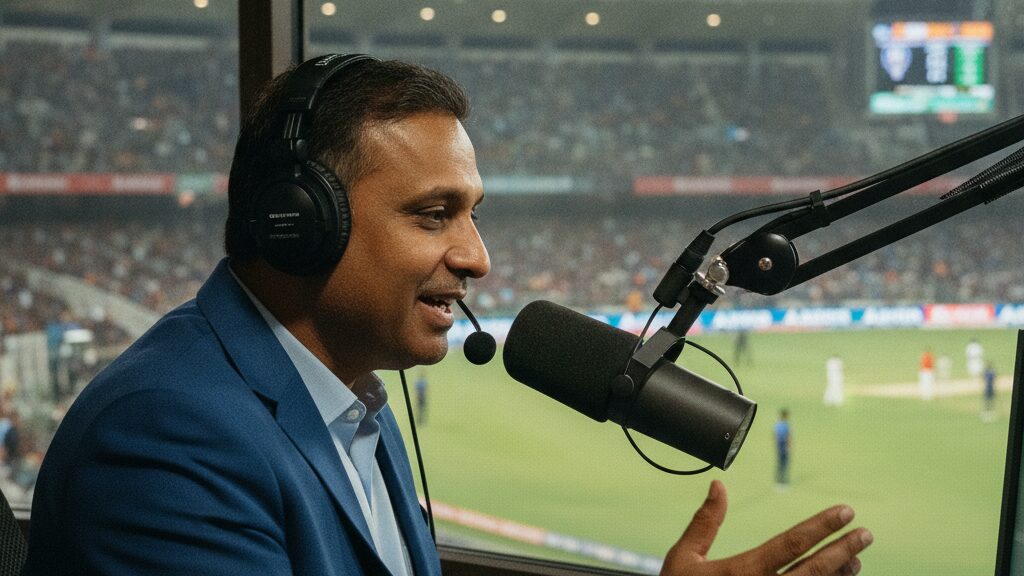
Getting a microphone in your hand at a professional stadium depends on more than just a loud voice. In India, the gap between a passionate fan and a professional broadcaster is filled by specialized training and recognized certifications. Most entry-level roles now require a blend of journalistic ethics, technical broadcast knowledge, and deep sports literacy.

A certification serves as a signal to networks like Star Sports or JioCinema that you understand the timing, pacing, and legal boundaries of live broadcasting. While some commentators start as athletes, the modern industry prefers those who can synthesize real-time data into a story. This shift makes formal sports commentator certification programs in India a strategic advantage for those without a professional playing background.
Types of certification paths in India
Not all certifications carry the same weight. In the Indian market, you will find three primary routes. First are the university-backed degrees in mass communication or journalism with a specialization in sports. These provide the most academic rigor and are often UGC recognized, which is vital for those seeking stable institutional roles.
The second route involves specialized diplomas in sports management or sports sciences. In our work at ISST (Institute of Sports Science & Technology), we have seen that commentators who understand the physiology of an athlete or the management of a league provide far more depth than those who only describe the action. This technical knowledge allows a broadcaster to explain why a player is struggling with fatigue or how a tactical shift in the second half changes the game.
The third path consists of short-term, skill-based certifications focusing on voice modulation, scriptwriting, and live production. These are faster but often lack the depth required for high-pressure live events. To build a sustainable career, most professionals combine these short courses with a broader foundation in Sports Commentator India: The Definitive Guide for Aspiring Broadcasters.
What to look for in a certification program
Avoid programs that promise immediate contracts with major leagues. Instead, look for curriculum benchmarks. A high-quality program must include training in play-by-play announcing, color commentary, and interview techniques. If a course only teaches you how to speak, it is not a professional certification.
Practical training is the only metric that matters. Look for programs that offer live exposure. This might mean calling local club matches or simulating a broadcast in a studio. When you run a live commentary session, the failure mode is usually a lack of preparation. A good program teaches you how to build a ‘spotter board’—a cheat sheet of player stats and narratives that keeps you from freezing during a silent gap in the action.
Check the alumni connect. A certification is only as good as the doors it opens. If the graduates are working in regional sports networks or as freelance analysts for digital platforms, the program has industry validity. Many aspirants start by learning how to become a sports commentator in India through a mix of academic study and aggressive networking.
The synergy of sports science and commentary
The best commentators in 2026 do not just describe the ball; they describe the biomechanics. When a broadcaster can explain the specific angle of a bowler’s wrist or the respiratory load on a midfielder, they move from being a narrator to an expert analyst. This is where sports science becomes a secret weapon.
Studying sports sciences allows you to use evidence-based claims. Instead of saying a player looks ‘tired,’ you can reference the actual physiological markers of lactate threshold or the impact of humidity on performance. This level of detail is what separates a novice from a professional. It turns a broadcast into an educational experience for the viewer.
Integrating sports management knowledge also helps you understand the business side of the game. Understanding player contracts, league revenue models, and franchise logistics allows you to provide context during breaks in the play. This makes you more versatile and increases your value to the production team.

Building a professional demo reel
A certificate gets you the interview, but the demo reel gets you the job. No network will hire a commentator based on a PDF diploma. You need audio-visual proof of your ability to handle different game rhythms. Your reel should contain three distinct segments: a high-energy play-by-play sequence, a nuanced analytical breakdown, and a professional interview.
The quality of your audio is a proxy for your professionalism. Using a poor-quality laptop mic suggests you are an amateur. Investing in the best microphones for sports broadcasting in India ensures your voice carries the necessary warmth and clarity. In one industry test, reels with professional-grade audio had a 40% higher callback rate than those with consumer-grade recordings.
When recording your reel, avoid using famous matches with existing commentary. Record your own voice over silent footage of local games or amateur leagues. This shows producers that you can create excitement and narrative from scratch, rather than just mimicking a famous announcer’s style.
Career paths after certification
The journey rarely starts at the national team level. Most certified commentators begin in the regional circuits. State-level tournaments and domestic leagues are the primary training grounds. Here, you learn to manage the unpredictable nature of live sports—technical glitches, sudden weather changes, and unexpected player behavior.
Freelancing is the most common entry point. Many professionals start by creating their own commentary channels on YouTube or Instagram. Setting up the right setup requirements for Indian sports commentary channels allows you to build a public portfolio that serves as a living resume.
Once you have a portfolio, you can target sports broadcasting agencies. These agencies often act as middlemen between the talent and the network. They look for certified individuals who can adapt to different sports. A commentator who can switch from cricket to kabaddi or football is far more employable than a specialist in a single sport.
Financial expectations and ROI
The cost of certification varies widely. University degrees can cost between ₹2,00,000 and ₹8,00,000 over three years, while specialized diplomas may range from ₹50,000 to ₹1,50,000. The return on investment is not immediate. Commentary is a performance art that requires a gestation period.
Entry-level freelance commentators in India may earn per match or per tournament. As you build a reputation, you can move toward retainer contracts. For a detailed breakdown of earning potential, refer to our analysis on the average salary of sports commentators in India.
The real ROI of certification is the reduction in ‘trial and error’ time. A certified professional knows how to avoid common mistakes—such as over-talking the action or failing to introduce players—that can lead to a producer cutting their mic. This professional polish accelerates the path to higher-paying roles.
Frequently Asked Questions
Do I need a degree to become a sports commentator in India?
A degree is not strictly mandatory, but certifications provide a competitive edge. They signal professional training in broadcast ethics and technical skills to employers.
Which is better: a journalism degree or a sports management diploma?
Journalism is better for news-heavy roles and reporting. Sports management or science diplomas are better for analytical, expert-led commentary.
Can I get certified online?
Yes, online certifications are useful for theory and voice training. However, you must supplement them with local, live match practice to be viable.
How long does a typical commentator certification take?
Short-term certificates take 3–6 months. Comprehensive diplomas or degrees take one to three years depending on the institution.
Does ISST offer specific commentary certifications?
ISST provides the academic foundation in sports management and sciences that empowers commentators to provide expert-level analysis.
What is the most important skill for a commentator?
The ability to synthesize complex game data into a simple, engaging narrative in real-time is the most critical skill.
How do I find internships for sports broadcasting?
Target regional sports networks and digital media houses. Use your certification and demo reel as a gateway to request trial assignments.
Are there specific certifications for different sports?
Most general certifications teach broadcasting principles. Sport-specific expertise is usually gained through specialized study or prior playing experience.
Start your broadcasting journey
Stop waiting for a break and start building your credentials. Enroll in a professional sports education program to move from the stands to the commentary box. Explore our course options today for a free career counseling session.
The Institute of Sports Science & Technology (ISST), founded in 2008 in Pune, is India’s premier education center dedicated exclusively to sports management and sports science. By integrating cutting-edge academic pedagogy, robust industry partnerships, and scientific methodologies, ISST develops top-tier professionals equipped to lead the modern sports, fitness, and wellness industries.
- Founded in 2008 as a pioneer in Indian sports education
- Offers specialized programs in Sports Management & Sports Science
- Strong industry partnerships with leading sports leagues, teams, and organizations
- Faculty comprises expert sports scientists, veteran coaches, and industry researchers
- Dedicated placement cell with extensive national and international support