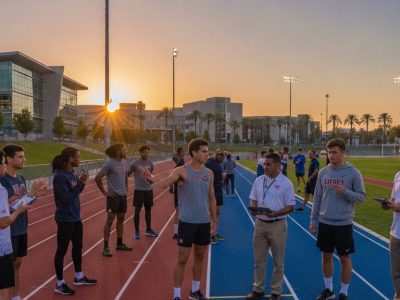

Explore the industry scope & market growth in Indian sports. Discover media rights valuations, venue operations jobs, and sports science careers today.
Today, the Indian sports market operates as an organized commercial ecosystem generating over ₹15,000 crore annually. This commercial engine runs on multi-year media rights deals, multi-sport franchise expansion, and formal corporate investment that extends far past seasonal cricket matches.
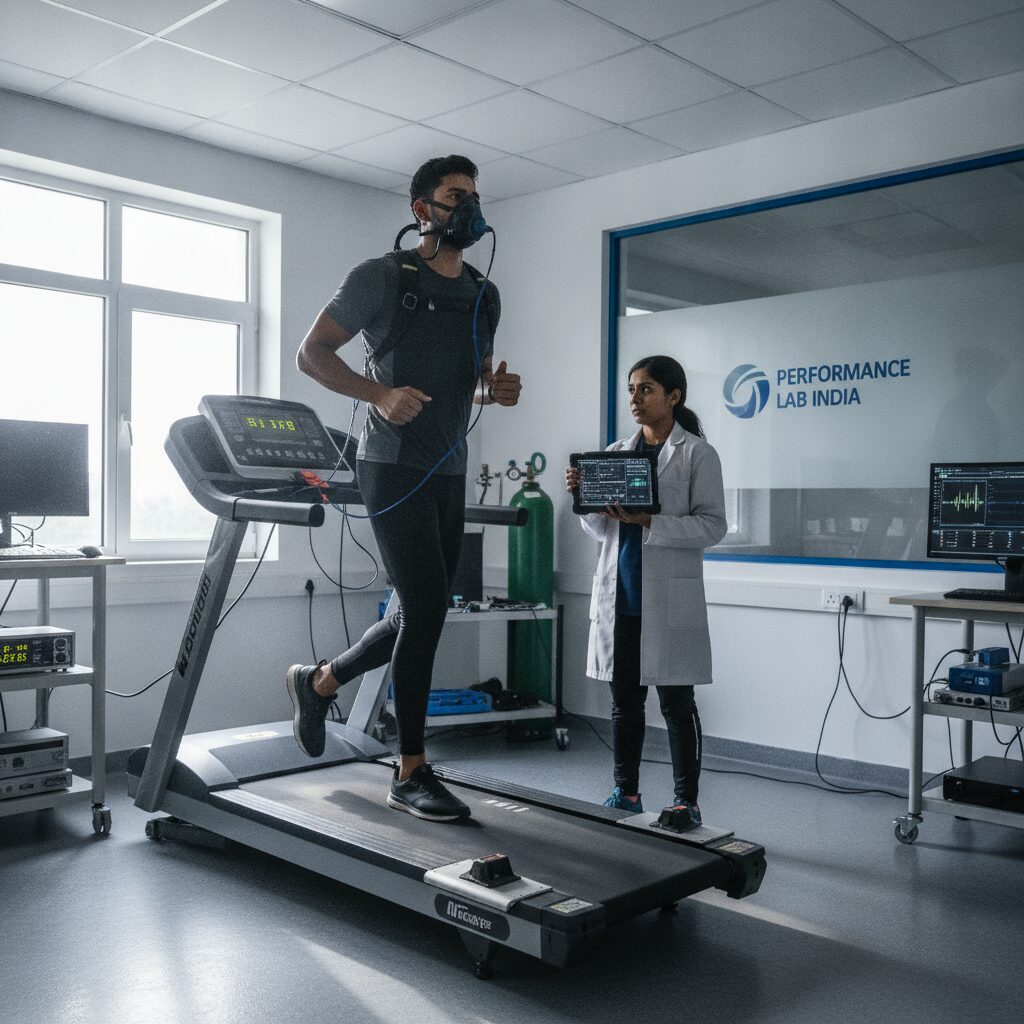
For decades, Indian athletics operated under amateur association models funded by discretionary grants and state enterprise jobs. Today, professional franchises, private sporting academies, and broadcast networks require formal business management alongside precise physiological measurement. Understanding this expansion means looking directly at the capital allocations, corporate hiring patterns, and technical job demands defining the current sports ecosystem.
The commercial engine: media rights and franchise valuations
Broadcast rights dictate modern sports economics. When the Board of Control for Cricket in India concluded its five-year media rights auction for the Indian Premier League at ₹48,390 crore for the 2023–2027 cycle, per-match value reached approximately ₹118 crore. According to the GroupM Sporting Nation report, media spends across digital streaming and television account for more than 55% of total industry revenue in India.
This monetization formula is no longer limited to men’s cricket. The Women’s Premier League established an opening five-year media rights valuation of ₹951 crore, establishing a commercial baseline for female professional sports in Asia. Meanwhile, properties such as the Pro Kabaddi League and the Indian Super League maintain sustained multi-city viewership numbers that attract corporate title sponsorships.
Through our sports education programs at ISST (Institute of Sports Science & Technology), we track how franchise asset sheets affect career pathways. A franchise is no longer managed by an informal coterie of retired players. Instead, front offices employ specialized business units dedicated to player auctions, mathematical squad modeling, corporate hospitality sales, and contract compliance. Those looking to build a career in sports find that capital inflows create structured roles that previously did not exist in domestic athletic associations.
Corporate CSR funding: building sustained grassroots infrastructure
The operational growth of domestic athletics receives massive institutional support through the Companies Act of 2013. Under Schedule VII, corporate entities can allocate their mandatory 2% Corporate Social Responsibility (CSR) spend directly to nationally recognized sports, Olympic training pipelines, and rural grassroots competitions. Corporate India now directs hundreds of crores annually into structured sports development foundations.
Leading corporate sports foundations treat athlete development as an engineering problem rather than an act of sporadic charity. They construct specialized regional training centers, fund international competition travel, and hire technical experts to monitor youth athlete maturation.
This statutory funding structure alters the domestic sports marketplace by establishing uninterrupted capital reserves. In the past, regional tournaments folded whenever an individual patron withdrew interest. Corporate CSR reserves ensure multi-year operational budgets for youth leagues, which in turn require salaried tournament directors, safety compliance officers, and regional coordinators trained through specialized sports management curricula.
Contrasting historical amateur models with modern sports business
To understand current commercial demand, you must examine how domestic sports functioned thirty years ago. Indian sports historically survived on public-sector undertakings: railways, public banks, and customs departments offering clerical employment to competitive athletes. Administration remained an amateur hobby led by honorary secretaries working out of municipal stadium offices.
Match receipts were tracked by hand, stadiums lacked basic spectator amenities, and player welfare ended at basic first aid kits. The commercial product was secondary to administrative territorial control.
The modern sports economy dismantled that amateur arrangement by introducing private equity, digital ticketing networks, and strict performance metrics. Today, modern venues operate as year-round entertainment hubs requiring sophisticated facility workflows, food and beverage logistics, perimeter security integration, and specialized turf maintenance. When a venue hosts thousands of spectators, venue managers must deploy computerized crowd flow monitoring systems to maintain public safety.
The table below summarizes this operational transition across the domestic ecosystem:
| Operational Dimension | Historical Amateur Model (Pre-2008) | Modern Corporate Model (Present) |
|---|---|---|
| Capital Source | Government grants and public sector quotas | Media rights, private equity, and corporate CSR |
| Administrative Structure | Honorary committees and bureaucratic boards | Corporate boards, salaried directors, and team ops |
| Athlete Preparation | Unmonitored training and generic physical education | Biomechanical screening and load management |
| Commercial Revenue | Static boundary banners and gate cash receipts | Dynamic digital licensing, hospitality, and app merchandise |
| Recruitment Standard | Informal athletic reputation | UGC recognized academic credentials and specialized certifications |
Corporate recruitment demand across core operational disciplines
As capital investment consolidates, corporate sports properties face an acute shortage of trained middle management. Franchises, equipment manufacturers, and digital sports agencies cannot scale their operations using generic corporate generalists who lack an understanding of competitive sports schedules. Demand concentrates across three primary disciplines:
1. Licensed merchandise and retail supply chains
Domestic replica jersey sales and branded lifestyle goods represent one of the fastest-growing revenue divisions in the sports economy. Managing this pipeline requires professionals who understand intellectual property licensing, anti-counterfeit measures, dynamic e-commerce fulfillment, and matchday retail pop-up execution. A franchise retail manager balances production lead times against erratic tournament outcomes so inventory never sits stranded in central warehouses.
2. Venue operations and tournament logistics
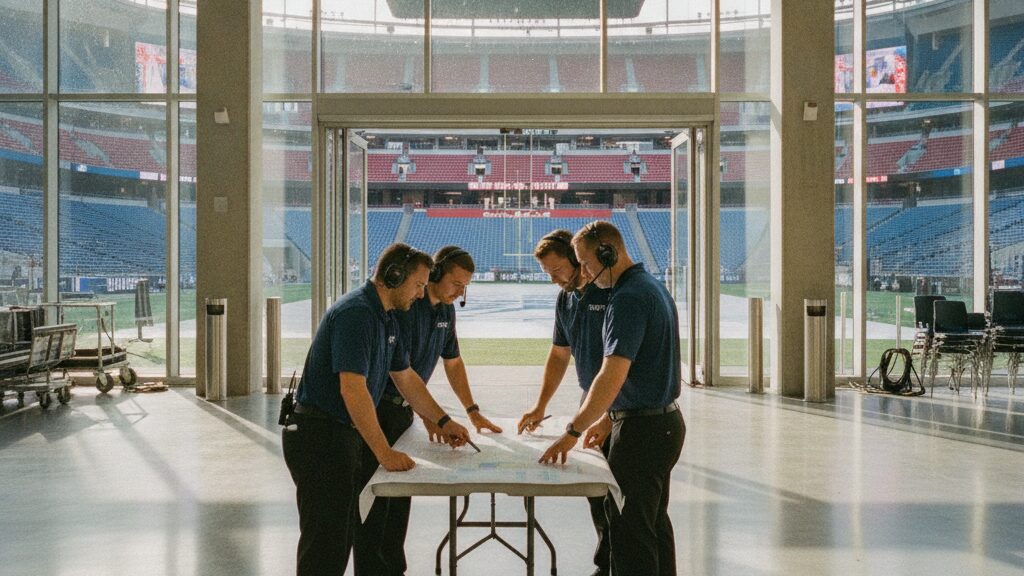
Modern sports facilities are complex urban utilities. Venue directors handle turnstile data integration, media accreditation areas, high-voltage broadcast cabling safety, team transport convoys, and emergency medical corridors. Practical training in facility scheduling and event risk assessment is now an indispensable prerequisite for major multi-sport games.
3. Performance science and conditioning
When professional teams invest hundreds of crores into player contracts, protecting athlete physical health becomes a board-level risk issue. Squads employ specialized athletic trainers, sports nutritionists, and biomechanists to run daily physiological monitoring. Our students working inside the ISST High Performance Centre examine velocity metrics, force plate jump asymmetries, and heart-rate variability indicators to mitigate soft tissue injuries before match days.
The integration of technical sports sciences
Athletic performance is no longer left to subjective coaching intuition. The expansion of the sports industry has accelerated corporate investment into diagnostic sports sciences. High-performance centers throughout India regularly employ full-time staff dedicated entirely to kinematic video analysis and micro-nutrient timing.
High school graduates and college graduates entering this sector increasingly choose structured academic pathways over informal gym training credentials. Completing an accredited sports sciences degree provides foundational training in human anatomy, motor learning, exercise physiology, and sports psychology. These skill sets match the employment requirements published by elite state sports academies and private sports leagues.
Data science has also fused with athletic training. Tracking micro-movements through wearable global positioning sensors requires analysts who can translate raw metrics into practical tactical interventions. Students pursuing sports analytics in India study algorithmic models that quantify defensive spacing, sprint recovery times, and pitch-specific cardiovascular fatigue.
Developing your professional career pathway
Transitioning from a sports enthusiast to an industry professional requires systematic educational preparation. The modern sports economy demands an understanding of sports law, balance sheet analysis, physiological monitoring, and international event hosting protocols.
When selecting your training route, verify that your academic degree is UGC recognized. Practical exposure remains equally mandatory: classroom theory must be reinforced by live exposure at competitive athletic events. Through the ISST alumni connect network, emerging managers step directly into operational internships at national championships, sports marketing agencies, and high-performance training complexes.
The sports industry will continue to outpace traditional corporate growth rates throughout the coming decade. Building a lasting career in this sector starts with obtaining verified academic foundations matched to the needs of the commercial sports economy.
Frequently Asked Questions
What is driving the market growth of the Indian sports industry?
Growth is driven by surging multi-platform media rights values, corporate CSR funding mandates, and expanding multi-sport franchise leagues. Increased consumer spending on fitness and live sporting entertainment accelerates this commercial expansion.
What qualifications are needed to work in sports management?
Most corporate sports employers require a UGC recognized bachelor’s or master’s degree in sports management or business administration. Practical event operations experience gained through verifiable internships provides a decisive hiring advantage.
How does sports science differ from sports management?
Sports science concentrates on athlete physiology, biomechanics, recovery nutrition, and physical conditioning. Sports management focuses on commercial operations, marketing, broadcast distribution, venue administration, and tournament logistics.
Are sports management degrees recognized by employers in India?
Degrees granted by UGC recognized universities are accepted by national sports governing bodies, corporate franchises, and sports agencies. Legitimate institutional accreditations validate academic standards across hiring committees.
What entry-level roles exist in venue operations?
Graduates routinely start as venue operations coordinators, accreditation officers, hospitality managers, or event logistics assistants. These positions oversee facility preparation, vendor schedules, spectator flow, and matchday security coordination.
How does corporate CSR funding impact domestic sports development?
Under Schedule VII of the Companies Act, corporate firms deploy mandatory capital into grassroots training facilities and athletic academies. This statutory support ensures financial stability for regional development circuits and youth athletic scouting programs.
What role does data analytics play in modern Indian sports?
Sports teams use predictive analytics to evaluate player recruitment targets, optimize tactical line-ups, and structure physical conditioning loads. Broadcast networks also utilize real-time match data to enhance on-screen commentary and digital engagement.
Can athletes transition into administrative sports careers?
Athletes frequently transition into front office positions, player development roles, or tournament operations by completing professional sports management programs. Their on-field experience paired with business management training creates strong leadership profiles.
Discover our comprehensive classroom and distance education programs in sports education, sports management, and sports sciences. Download the ISST course prospectus for free to plan your professional career path in the sports industry today.
The Institute of Sports Science & Technology (ISST), founded in 2008 in Pune, is India’s premier education center dedicated exclusively to sports management and sports science. By integrating cutting-edge academic pedagogy, robust industry partnerships, and scientific methodologies, ISST develops top-tier professionals equipped to lead the modern sports, fitness, and wellness industries.
- Founded in 2008 as a pioneer in Indian sports education
- Offers specialized programs in Sports Management & Sports Science
- Strong industry partnerships with leading sports leagues, teams, and organizations
- Faculty comprises expert sports scientists, veteran coaches, and industry researchers
- Dedicated placement cell with extensive national and international support