

Discover the logistical mastery behind the FIFA World Cup 2026 Kick-off. A sports management case study by ISST for aspiring sports professionals in India.
The Massive Scale of the FIFA World Cup 2026 Kick-off
On June 11, 2026, the whistle will blow at the Estadio Azteca in Mexico City, marking the official FIFA World Cup 2026 Kick-off. This event is not just another tournament. It represents the largest sporting expansion in history, moving from 32 to 48 teams. For those pursuing a career in sports, this is the ultimate case study in complex logistics. Managing 104 matches across 16 host cities in three different nations—the USA, Mexico, and Canada—requires a level of precision that goes beyond standard event planning. At the Institute of Sports Science & Technology (ISST), we teach our students that sports management is where strategy meets execution under extreme pressure.
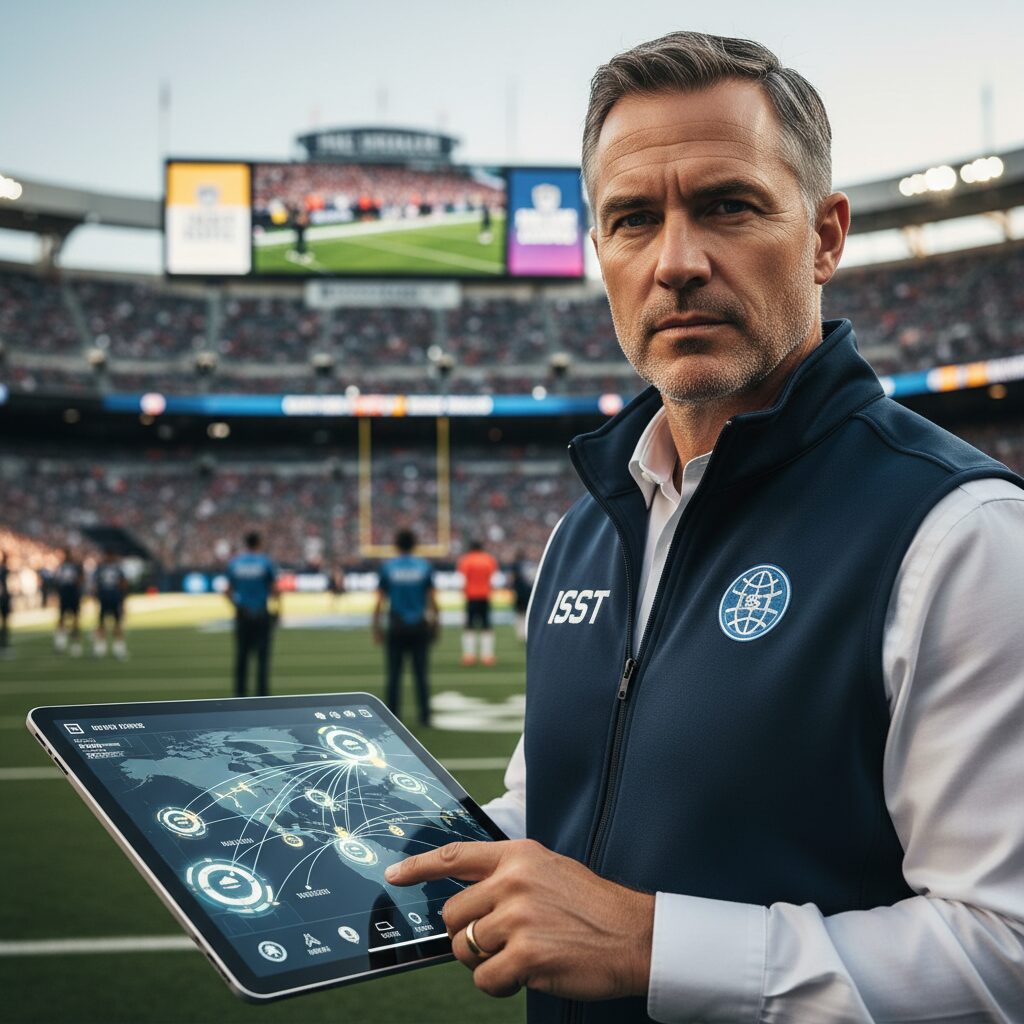
The operational footprint of 2026 is staggering. Unlike the compact nature of Qatar 2022, where stadiums were within driving distance, 2026 demands a transcontinental strategy. According to 2026 logistical projections, teams will travel over 15,000 kilometres on average during the group stages alone. This shift makes the MBA in Sports Management curriculum more relevant than ever. Success in this environment relies on decentralised management hubs, ensuring that each of the three host nations operates as a single, cohesive unit while respecting local laws and transport infrastructures.
Behind the Scenes of a Mega-Event: A Sports Management Case Study on the 2026 FIFA World Cup Logistics
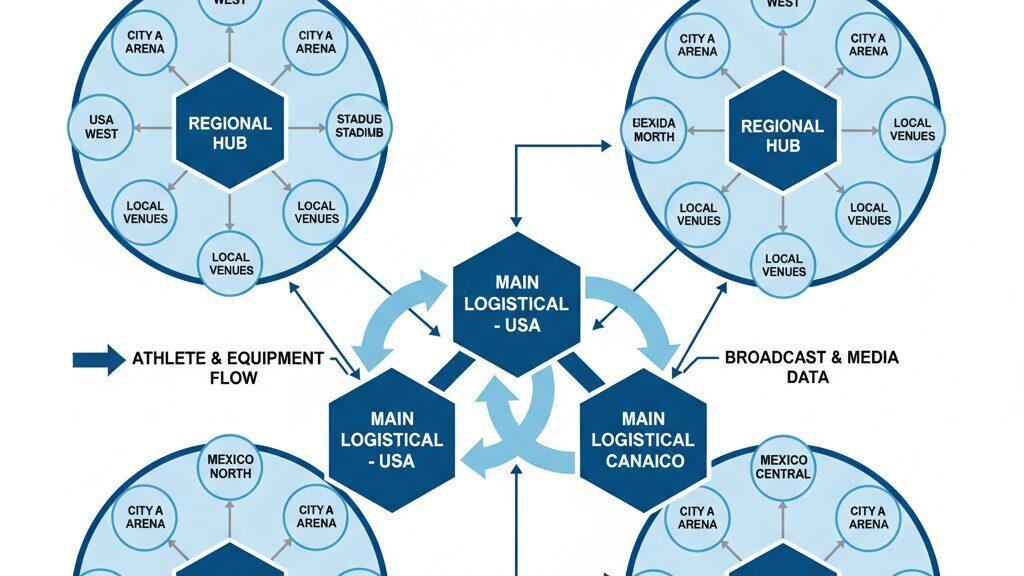
Logistics for a mega-event start years before the fans arrive. For the 2026 edition, the primary challenge is the ‘Triple-Nation Coordination.’ Each host city must manage an influx of roughly 2,00,000 to 5,00,000 international fans. In our BBA Sports Management programme, we break down these operations into three tiers: Transport, Security, and Technology. When you look at the 2026 logistics, you see a masterclass in risk mitigation. FIFA has established a ‘hub-and-spoke’ model to minimise travel fatigue for athletes, grouping matches within regional clusters (West, Central, and East).
Security logistics have also seen a massive overhaul. With 48 teams, the number of base camps has nearly doubled. According to a 2025 security audit by the host nations, the budget for event safety has surpassed ₹15,000 crore. This includes the implementation of AI-driven crowd control and biometric ticketing systems. For an aspiring manager, understanding these financial and technical layers is what separates a fan from a professional. This is the kind of practical training ISST provides through our Post Graduate Diploma Sports Management, where we analyse real-time data from global events to prepare students for the industry.
Managing the Fan Experience and Infrastructure
Infrastructure is the backbone of the FIFA World Cup 2026 Kick-off. While the USA is using existing NFL stadiums, Mexico and Canada have invested heavily in stadium upgrades. The logistics team must ensure that pitch conditions remain consistent across varying climates—from the high altitude of Mexico City to the humidity of Miami. Sports sciences play a major role here. Turf management and athlete recovery are managed by professionals who understand the physiological toll of constant travel. If you are interested in this side of the industry, our BSc Sports Science course covers exactly how environmental factors impact elite performance.
Fan zones are another logistical hurdle. In 2026, FIFA expects a total attendance of over 5.5 million people. This requires a massive supply chain for food, merchandise, and waste management. In India, we see similar logistical feats during the TATA IPL or the Pro Kabaddi league, though on a different scale. ISST students often get live exposure at such domestic events, which serves as a stepping stone toward international mega-events. The ability to manage a stadium’s ‘back of house’ while the world watches the ‘front of house’ is a rare and highly valued skill in the current job market.
Career Pathways in Global Sports Management
The 2026 World Cup has created a massive demand for skilled sports managers. Roles in venue operations, broadcast logistics, and athlete relations are being filled by professionals who have a formal education in the field. Many wonder about the MBA Sports Management placements and salary reality. In 2026, a junior operations manager for a major sporting franchise in India can expect a starting salary ranging from ₹6,00,000 to ₹10,00,000 per annum, depending on their experience and the scale of the event they are managing.
At ISST, our alumni connect allows students to network with professionals who have worked with organisations like HUDL, Star Sports, and various IPL franchises. These connections provide more than just a job; they offer a career in sports built on a foundation of actual industry knowledge. Whether it is through a Diploma in Sports Management or a full degree, the focus remains on equipping you with the tools to handle the next big kick-off, whether in Mumbai or New York.
The Role of Data and Analytics in 2026 Operations
Data is the silent engine of the 2026 World Cup. Logistics managers use predictive analytics to forecast transport bottlenecks and fan flow. For example, if a match in Vancouver finishes late, the system automatically adjusts the public transport schedules for thousands of fans. This level of sports analytics is a core component of our modern curriculum. According to 2026 industry trends, 65% of sports management roles now require a basic understanding of data visualisation and logistics software. Understanding the numbers behind the game is just as important as understanding the rules on the pitch.
This FIFA World Cup 2026 Kick-off, start your journey into the professional world of sports with ISST (Institute of Sports Science & Technology). Our programmes are designed to give you the competitive edge needed to manage global mega-events. From classroom learning to live event exposure at the ISST High Performance Centre, we provide the platform for you to build a successful career in sports.
Frequently Asked Questions
What makes the 2026 FIFA World Cup logistics different from previous years?
The 2026 tournament is the first to feature 48 teams across three nations. This creates a massive increase in travel, security, and venue management requirements compared to the 32-team format.
Can I work in FIFA World Cup logistics with an Indian sports management degree?
Yes, a formal degree from a recognised institute like ISST provides the foundational skills in event operations and logistics. Many international sports organisations value the practical training and live exposure gained at major Indian leagues.
What is the starting salary for a sports manager in 2026?
In the Indian market, a sports management graduate can expect a starting salary between ₹5,00,000 and ₹9,00,000 per annum. This varies based on the organisation, such as a league like the TATA IPL or a sports consultancy.
How do sports sciences impact tournament logistics?
Sports scientists manage athlete recovery, nutrition, and travel fatigue across different time zones. Their expertise ensures that players remain at peak performance despite the heavy travel schedule of a transcontinental event.
What are the core subjects in a sports management course?
Core subjects include sports marketing, event logistics, sports law, financial management, and sports analytics. These subjects prepare students for the operational demands of mega-events like the World Cup.
Is there a demand for sports analysts in mega-events?
Yes, data analysts are essential for predicting crowd movements, managing broadcast data, and improving team performance. Analytics is one of the fastest-growing sectors within the sports industry in 2026.
How does ISST provide live exposure to students?
ISST partners with major leagues like the Pro Kabaddi and TATA IPL to provide internships and on-ground event roles. This hands-on experience is critical for understanding the real-world challenges of sports logistics.
What is the importance of the ISST alumni connect?
The alumni network links current students with professionals working in top sports brands and foundations. This network is a vital resource for mentorship and exploring career opportunities in the sports industry.
The Institute of Sports Science & Technology (ISST), founded in 2008 in Pune, is India’s premier education center dedicated exclusively to sports management and sports science. By integrating cutting-edge academic pedagogy, robust industry partnerships, and scientific methodologies, ISST develops top-tier professionals equipped to lead the modern sports, fitness, and wellness industries.
- Founded in 2008 as a pioneer in Indian sports education
- Offers specialized programs in Sports Management & Sports Science
- Strong industry partnerships with leading sports leagues, teams, and organizations
- Faculty comprises expert sports scientists, veteran coaches, and industry researchers
- Dedicated placement cell with extensive national and international support