
Can non-athletes do sports management in India? In 2026, teams hire strategists, not fans. Learn how to launch your career with ISST. Start your journey now.
The Shift From Field to Boardroom in 2026
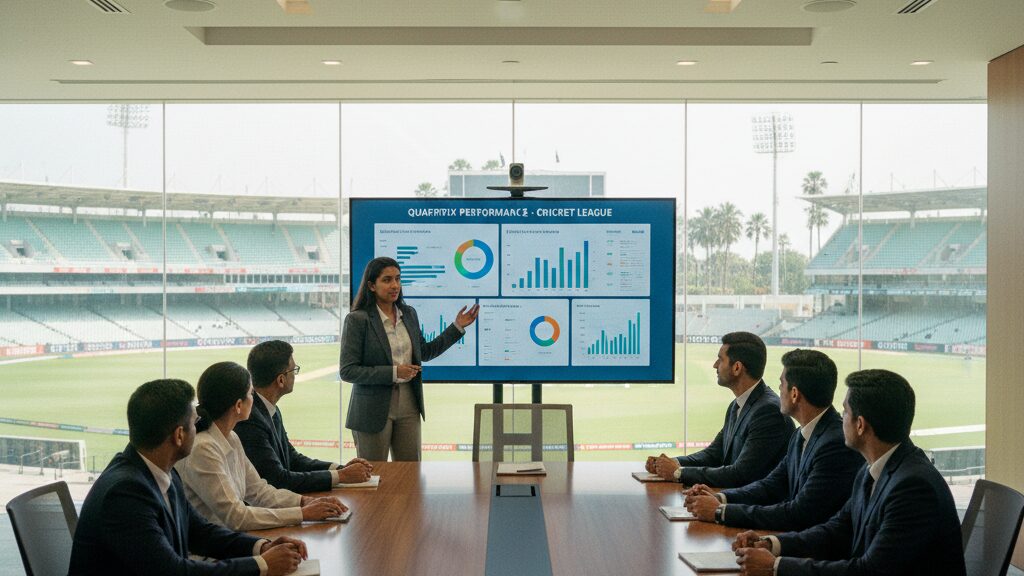
A common scene unfolds in the headquarters of a TATA IPL franchise this May. A former national-level cricketer sits across from a graduate holding an MBA in Sports Management. The former player speaks of ‘gut feeling’ and ‘locker room culture.’ The graduate presents a predictive model showing a 14% potential increase in fan engagement through localized digital activations in Tier-2 cities. By the end of the hour, the strategist, not the athlete, secures the role of Operations Lead.

This scenario is the new reality of the Indian sports industry in 2026. The myth that a professional playing background is a prerequisite for a sports career has finally collapsed. Organizations now prioritize business intelligence over athletic pedigree. If you can read a balance sheet, manage a 45-day tournament logistics plan, or navigate sports law, your value exceeds that of a ‘star’ without technical training.
Why Teams Hire Strategists Instead of Fans
In the early days of Indian sports leagues, hiring was often based on proximity to the game. Teams were small, and the roles were ill-defined. As of May 2026, sports in India has matured into a multi-billion dollar business ecosystem. A fan knows the score; a strategist knows the cost per acquisition of that fan. Professional teams now operate like tech startups and FMCG giants. They require specialized skills in sports marketing, financial planning, and facility management.
When you look at the Reasons to Pursue MBA in Sports Management, the most striking is the need for objective decision-making. Fans often make emotional choices. They overspend on players based on popularity or ignore logistical red flags during a stadium build. A trained manager uses data to remove bias. This shift has opened the doors for high school and college graduates from commerce, arts, and science backgrounds to enter the field without ever having held a professional trophy.
The Core Competencies of a Non-Athlete Manager
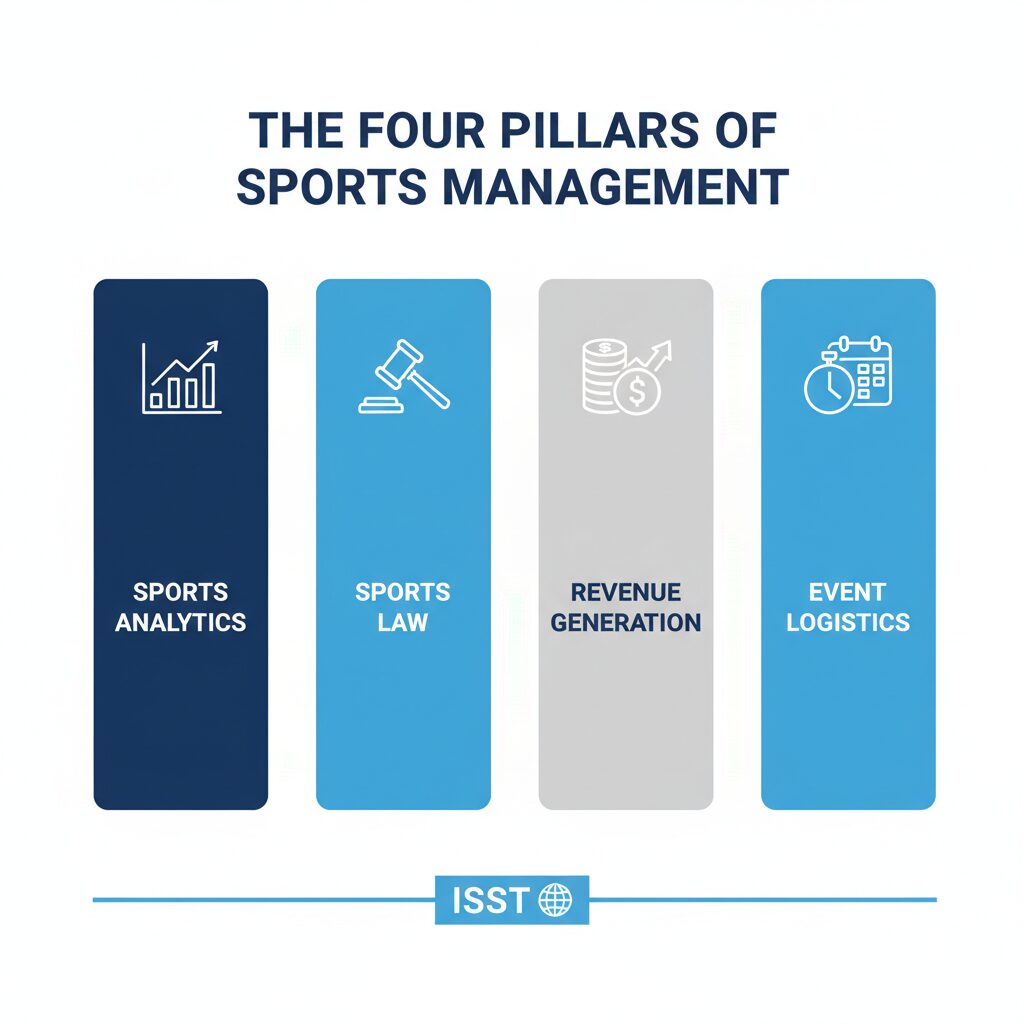
If you aren’t bringing athletic talent to the table, you must bring operational excellence. The 2026 job market values four specific pillars of knowledge. First is Sports Analytics. This involves using software to track player performance and fan behavior. Second is Sports Law and Risk Management. Understanding player contracts and broadcast rights is vital as legal disputes in leagues like the Hero Indian Super League (ISL) become more complex. Third is Revenue Generation. This isn’t just ticket sales; it’s about digital assets, NFTs, and global sponsorships.
The fourth pillar is Event Logistics. Managing a tournament like the MPL Maharashtra Premier League requires precision in transport, hospitality, and security. These are administrative tasks. An athlete might understand the pressure of the final over, but the manager understands the pressure of a 50,000-person stadium exit strategy. At ISST (Institute of Sports Science & Technology), we emphasize these practical skills over theoretical fandom.
Education Pathways for Non-Athletes in India
The route to a sports career depends on your current academic standing. For those who just finished their 12th grade, a Bachelor of Sports Management provides the foundation. It replaces generic business examples with sports-centric ones. Instead of studying supply chains for a car company, you study the supply chain of sports apparel for brands like PUMA or Decathlon. This early specialization gives 21-year-olds a head start in an industry that moves fast.
Graduates from other streams often choose a Post Graduate Diploma or an MBA. The MBA Sports Management placements and salary 2026 reality shows that these candidates often land in mid-management roles within 18 months. They act as the bridge between the technical coaching staff and the corporate owners. They speak both ‘sports’ and ‘business,’ a bilingualism that is highly rewarded in 2026.
The Salary Reality for Strategists in 2026
Income in this sector has stabilized as the industry has professionalized. A junior manager in a prominent league can expect to start at ₹6,00,000 to ₹8,50,000 per annum. Those moving into specialized roles, such as the salary of sports manager in IPL 2026, see significantly higher figures, especially during the tournament season. Performance bonuses are often tied to sponsorship targets or operational efficiency rather than the team’s win-loss record.
This financial growth is driven by the expansion of the sports calendar. In May 2026, we are seeing the rise of year-round academies and secondary leagues. Organizations like the Bhaichung Bhutia Football Schools and the Gary Kirsten Cricket academies require year-round management, not just seasonal help. This provides career stability that didn’t exist a decade ago.
Breaking the ‘Expert’ Barrier
One challenge non-athletes face is ‘imposter syndrome.’ They feel they cannot speak on sports because they haven’t played at the highest level. In practice, the most successful sports executives in India today come from diverse backgrounds. They are engineers, lawyers, and marketers who realized that their skills are transferable. When you run a sports science center, you don’t need to be an Olympic sprinter; you need to understand how to manage the sports science career trajectories of your staff and the ROI of the equipment.
Industry leaders now look for ‘live exposure.’ This means internships at events like the Tennis Premier League or working with foundations like the Reliance Foundation Youth Sports. These experiences prove you can handle the heat of a live broadcast or a chaotic press box. At ISST, our alumni connect facilitates these entries, ensuring students get hands-on training at the ISST High Performance Centre or during major league windows.
The 2026 Career Map for Aspiring Professionals
The journey begins with identifying your niche. Do you enjoy the numbers? Go into Analytics. Do you enjoy the hustle of the crowd? Go into Event Operations. The demand for ‘strategists, not fans’ means the industry is looking for people who can solve problems, not just recite statistics from the 2023 World Cup. As the sports education sector grows, the distinction between a hobbyist and a professional is the degree they hold and the practical training they have completed.
Frequently Asked Questions
Do I need to be good at sports to study sports management?
No. Sports management is a business degree that uses the sports industry as its context. You need strong analytical, organizational, and communication skills rather than athletic ability.
What is the minimum qualification required for a career in sports management?
Most professional roles require at least a Bachelor’s degree. Many top-tier organizations prefer a specialized MBA or a Post Graduate Diploma in Sports Management from a recognized institute like ISST.
Which companies hire non-athlete sports managers in India?
Major hires include IPL and ISL franchises, sports marketing agencies like IMG | Reliance, and retail giants like PUMA, adidas, and Decathlon. Foundations such as the JSW Sports and OGQ also hire management professionals.
Is the salary in sports management comparable to corporate MBA roles?
Yes. As of 2026, the pay scales for specialized sports managers are at par with mainstream marketing and operations roles, with the added benefit of high-growth opportunities in a booming industry.
Can a commerce student switch to sports management?
Commerce students are actually preferred for many roles. Their understanding of accounting, finance, and business law is directly applicable to managing sports clubs and leagues.
How important are internships in this field?
Internships are mandatory for building a network. Gaining live exposure at events like the Pro Kabaddi League or the Khelo India Games provides the practical proof of competence that employers seek.
What is the scope of sports management for women in India?
The scope is massive. With the rise of the Women’s Premier League (WPL) and increased investment in women’s sports, there is a high demand for female leaders in management and governance.
Is a sports management degree UGC recognized?
Yes, degrees like the BBA and MBA in Sports Management offered through reputable institutes in partnership with recognized universities are UGC recognized, ensuring your qualification is valid for further studies or government roles.
Secure Your Strategic Role in the 2026 Sports Market
The transition from a fan to a professional strategist requires the right academic foundation and industry exposure. This May 2026, take the first step toward a career that values your business mind as much as your passion for the game. Explore the classroom and distance programs at ISST (Institute of Sports Science & Technology) and start building your career in sports management today.
The Institute of Sports Science & Technology (ISST), founded in 2008 in Pune, is India’s premier education center dedicated exclusively to sports management and sports science. By integrating cutting-edge academic pedagogy, robust industry partnerships, and scientific methodologies, ISST develops top-tier professionals equipped to lead the modern sports, fitness, and wellness industries.
- Founded in 2008 as a pioneer in Indian sports education
- Offers specialized programs in Sports Management & Sports Science
- Strong industry partnerships with leading sports leagues, teams, and organizations
- Faculty comprises expert sports scientists, veteran coaches, and industry researchers
- Dedicated placement cell with extensive national and international support