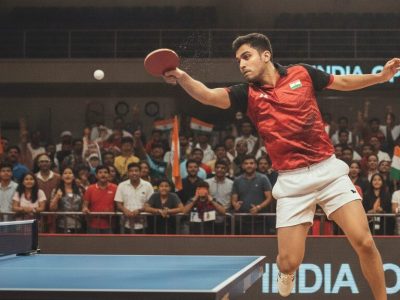

Get the insider MBA Sports Management placements and salary 2026 data. Compare role-specific pay scales and start your sports career with ISST today.
Building a career in the Indian sports industry requires a clear understanding of current market conditions. Prospective students finalize their college choices every August. Evaluating return on investment means looking beyond marquee numbers to see what franchises and sports tech firms actually pay entry-level hires. This guide breaks down the MBA Sports Management placements and salary 2026 data to help you set realistic career expectations. Last Updated: 2026-08-28.
The current market rewards practical training and live exposure over theoretical knowledge. At ISST (Institute of Sports Science & Technology), we observe that students who engage with projects at the ISST High Performance Centre or secure internships with leagues like the Pro Kabaddi League often command higher starting salaries. Your network and hands-on experience dictate your initial compensation.
Breaking down the salary brackets for sports management graduates
The salary floor for a sports professional in India has stabilized at ₹4 LPA for general operations roles. These positions involve ground coordination or junior marketing tasks within smaller academies. According to August 2026 industry data, the mid-tier of ₹6–9 LPA belongs to individuals working in digital fan engagement, sponsorship sales, and analytics.
We can map these expectations clearly across different entry-level positions to help you gauge your earning potential.
| Role Category | Average Starting Salary (INR) | Primary Skill Requirement |
|---|---|---|
| General Operations | ₹4,00,000 – ₹5,50,000 | Event logistics, facility coordination |
| Digital Fan Engagement | ₹6,00,000 – ₹8,00,000 | Social media strategy, campaign management |
| Sports Analytics | ₹8,00,000 – ₹12,00,000 | Data interpretation, technical reporting |
| Athlete Management | ₹10,00,000 – ₹15,00,000 | High-level networking, contract negotiation |
Reaching the ₹15 LPA mark as a fresh graduate happens for those with highly specialized technical or strategic skills. This upper bracket is reserved for high-stakes environments like athlete representation for top-tier cricketers or strategy roles within major media houses. Success here hinges on interpreting complex data to drive commercial decisions. Our ISST alumni connect network shows graduates securing these premium roles. Professionals like Sudhir Malladi at Fanatic Sports demonstrate how practical training translates into advanced operational success.
Salary structures in IPL franchises and national federations
IPL franchises operate as lean, highly efficient organizations. A manager in these setups handles logistics, player branding, and sponsor servicing. A junior manager at a TATA IPL franchise expects a base salary of ₹5.5 LPA, often supplemented by performance bonuses tied to the season’s commercial success.
National federations offer a different trajectory. Working with the Sports Authority of India (SAI) involves large-scale project management. Salaries start around ₹5 LPA and follow a structured corporate growth path. The value lies in the sheer scale of the work, managing thousands of athletes and national-level events like the Khelo India University Games. Managing these logistics acts as a springboard for lucrative private sector roles later.
Why business discipline beats raw passion
Many enter the industry thinking a love for the game equals career readiness. In practice, professional sports requires rigorous business discipline. An MBA in Sports Management focuses on contract law, digital marketing, and facility management. It is a common mistake to assume knowing player stats translates to managing a stadium.
Professional managers must understand the difference between a spectator’s perspective and a stakeholder’s requirements. The most successful alumni treat their degree as a business qualification first and a sports credential second.
The impact of sports technology on pay scales
Technology firms like HUDL and SportsMechanics have changed how teams recruit talent. These companies look for individuals who can bridge the gap between technical data and coaching staff. Roles in sports performance technology or broadcast operations often pay 15–20% higher than traditional marketing roles.
Graduates who complete specialized certifications, such as a Post Graduate Diploma in Sports Sciences, find themselves in high demand at high-performance centers. These facilities use data to prevent injuries and optimize athlete output. Being tech-literate in a sports context is a baseline requirement for any role paying above ₹8 LPA today.
Practical training as a salary accelerator
Internships remain the most effective way to boost your starting package. Exposure at events like the Tennis Premier League or the Hero Indian Super League (ISL) provides the social proof employers demand. When you run a match-day operation, you learn the chaos of the industry that no classroom can replicate.
The ISST High Performance Centre provides students with exactly this type of hands-on experience in sports science and management.
Looking to turn this practical exposure into a career? Book a career counselling session with our admissions team to plan your educational trajectory.
Organizations like Puma and Decathlon value candidates who understand the retail and branding side of sports. They frequently hire from campuses that prioritize practical exposure. This hands-on approach separates a standard graduate from a professional ready for the current market.
Frequently Asked Questions
What is the average starting salary for an MBA in Sports Management in India?
The average starting salary typically ranges between ₹4 LPA and ₹6 LPA. High-performers with specialized technical skills can reach ₹8 LPA at the entry level.
Do IPL franchises offer high salaries to freshers?
IPL franchises usually offer competitive entry-level packages starting around ₹5.5 LPA. These roles are highly sought after and often require prior internship experience within the league.
Are roles in national federations like SAI well-paid?
Salaries in national federations start around ₹5 LPA and follow a structured corporate growth path. These roles offer significant experience in large-scale event management and governance.
How does sports analytics impact entry-level compensation?
Professionals with data analytics skills often earn 20% more than those in general management. Companies specifically seek candidates who can translate data into actionable sports strategy.
Can I reach a ₹15 LPA salary without professional playing experience?
Yes, professional playing experience is not a requirement for high-paying management roles. Success depends on business acumen, networking, and a deep understanding of sports marketing and operations.
Which cities in India offer the best sports management placements?
Mumbai, Pune, and Delhi remain the primary hubs for sports management placements. These cities host the headquarters of major leagues, franchises, and sports marketing agencies.
Is an MBA better than a PG Diploma for salary growth?
An MBA generally provides a broader management foundation and better long-term salary growth prospects. A PG Diploma is an excellent, faster route for those already holding a professional degree.
What role does the ISST High Performance Centre play in placements?
The center provides students with hands-on experience in sports science and management. This practical exposure is a key differentiator that employers look for during the hiring process.
This MBA Sports Management placements and salary 2026, start your journey in the sports industry with ISST. Apply for our MBA in Sports Management today to gain the practical training and industry connections needed for a successful career.
The Institute of Sports Science & Technology (ISST), founded in 2008 in Pune, is India’s premier education center dedicated exclusively to sports management and sports science. By integrating cutting-edge academic pedagogy, robust industry partnerships, and scientific methodologies, ISST develops top-tier professionals equipped to lead the modern sports, fitness, and wellness industries.
- Founded in 2008 as a pioneer in Indian sports education
- Offers specialized programs in Sports Management & Sports Science
- Strong industry partnerships with leading sports leagues, teams, and organizations
- Faculty comprises expert sports scientists, veteran coaches, and industry researchers
- Dedicated placement cell with extensive national and international support