
Discover the exact educational pathway, salary expectations, and franchise hiring realities for a sports physiotherapist career in India in 2026.
The business of athletic recovery
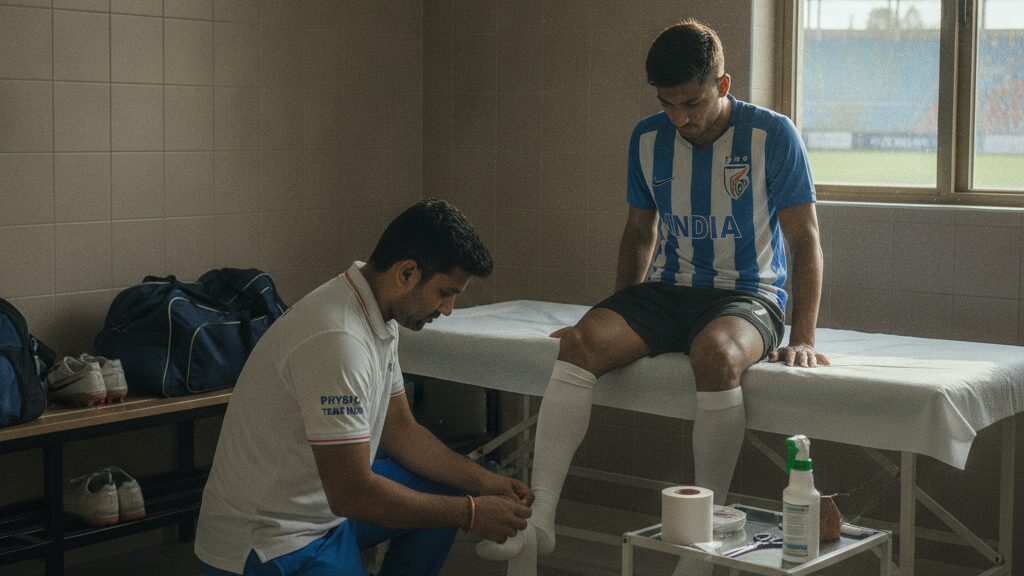
General physical therapy gets a patient walking comfortably. Sports physiotherapy gets an elite athlete back to peak competition speed within a tight franchise schedule. The distinction is financial as much as it is medical. The Indian sports ecosystem spent thousands of crores in 2025 across leagues, infrastructure, and player development. Franchises protect these massive investments through specialized medical staff.

When a marquee player misses three weeks of a highly publicized league, the franchise loses ticket sales, viewership retention, and match-winning probability. Sports physiotherapists serve as the primary risk managers for these organizations. They dictate player availability. This immense responsibility requires a specific combination of clinical expertise, specialized sports science knowledge, and the ability to influence highly driven athletes.
In our work at ISST (Institute of Sports Science & Technology), we see thousands of physical therapy graduates enter the market every year. Most struggle to break into the professional sports sector. They carry a standard degree but lack the specific context of athletic performance, load management, and high-pressure recovery protocols. Getting hired by a top-tier team requires proving you understand the distinct demands of professional sports.
The exact educational pathway
The foundation of this career is legally bound to clinical credentials. You must complete a Bachelor of Physiotherapy (BPT) from a recognized university. This four-and-a-half-year degree, which includes a mandatory six-month clinical internship, gives you the legal right to practice as a physiotherapist in India. It teaches you human anatomy, pathology, and standard rehabilitation protocols.
A BPT alone rarely secures a job in a professional sports franchise. Professional teams look for specialists. They need professionals who understand biomechanics, performance nutrition, and sport-specific injury prevention. This is where advanced specialization becomes necessary.
Many successful practitioners bridge this gap by pursuing targeted credentials like the Distance Diploma in Sports & Fitness Injury Management (DDSFIM) or a broader sports science qualification. These programs teach you how to translate clinical rehabilitation into field-ready athletic performance. You learn to read training loads, manage sudden acute trauma on the field, and collaborate directly with strength and conditioning coaches.
The principle of social proof in franchise hiring
Head coaches and sports directors rarely hire a physiotherapist based on a cold application. They rely heavily on social proof and trusted networks. An athlete’s body is their entire livelihood. Coaches will only hand that responsibility to someone with a proven, verifiable track record.
You build this track record through consistent, visible work at the grassroots level. Start by volunteering or working for nominal pay at local sports academies, district-level tournaments, or state associations. Managing recovery for a state-level weightlifting or athletics team exposes you to the real-time pressure of competition. It also puts you in the same room as the coaches and administrators who eventually move up to national franchises.
Your reputation precedes you. When an athlete recovers faster than expected under your care, they talk to their teammates. When a coach sees you accurately predict and prevent a soft-tissue injury based on fatigue markers, they remember your name. This network of trust is the actual currency that buys your way into the Indian Premier League (IPL), Pro Kabaddi League (PKL), or the national squads preparing for major international events.
Understanding the psychology of the injured athlete
An injured athlete is often a highly anxious, frustrated individual facing a sudden loss of identity and income. Clinical knowledge dictates the treatment plan, but psychological influence dictates compliance. If an athlete does not trust you, they will not follow your loading protocols. They will either rush back too soon and re-injure themselves, or hesitate and lose their competitive edge.
Effective sports physiotherapists use the principle of authority carefully. You must project absolute competence without appearing dismissive of the athlete’s pain or career fears. You explain the exact physiological reason for every exercise. You show them data. When they see their symmetry metrics improving week over week, they buy into the process.
Professionals often supplement their physical therapy training by studying human behavior and mental resilience. Understanding the mental blocks associated with severe injuries allows you to guide the athlete through the darkest days of their rehabilitation. Those looking to master this aspect frequently review materials from programs like the Distance Certificate in Sports Psychology & Mental Training to better manage the emotional volatility of recovery.
Salary expectations and financial realities in 2026
The financial trajectory of a sports physiotherapist in India scales dramatically based on the level of competition and the specific sport. Entry-level roles at private sports academies or schools generally offer between ₹35,000 and ₹50,000 per month. These roles demand long hours and involve treating a high volume of minor injuries, but they provide essential repetitions.
Mid-level positions with state teams, specialized high-performance centers, or tier-two professional leagues typically pay between ₹70,000 and ₹1.2 Lakhs per month. At this stage, you are usually working with a dedicated roster of athletes. You have a budget for recovery equipment and collaborate with a broader sports science team.
At the elite level, the compensation structure shifts. Physiotherapists working with top-tier franchise leagues or national teams often negotiate seasonal or annual contracts. An experienced lead physiotherapist in a major cricket or football franchise can earn anywhere from ₹15 Lakhs to ₹35 Lakhs per season. Private consultants who manage the personal recovery of elite, marquee athletes often charge premium retainer fees that exceed these figures.
To reach these upper tiers, you must possess a deep understanding of the broader sports business ecosystem. Professionals who understand how their medical decisions impact team compliance and league regulations hold significantly more value. Reading up on the India spectator sports market size helps practitioners understand exactly where the money flows and which sports are investing heaviest in medical staff.
Integrating technology and sports analytics
Modern sports physiotherapy relies heavily on objective data. The days of assessing an athlete’s readiness purely by touch and visual observation are over. Today, you must interpret data from GPS trackers, force plates, and velocity-based training systems.
When an athlete returns from an ACL reconstruction, the physiotherapist uses force plates to measure the exact asymmetry in their landing mechanics. If the data shows a 15% deficit in the injured leg, the athlete is not cleared for contact training, regardless of how they feel. You use this data to anchor your decisions and justify player availability to the head coach.
Familiarity with wearable technology and biomechanical screening tools is a mandatory skill. Franchises expect their medical staff to translate complex data streams into simple, actionable recovery steps. If you want to understand how deep this integration goes, looking into wearable tech in Indian sports training provides a clear picture of the specific metrics you will be expected to track and manage.
Building a private practice vs franchise employment
Many experienced sports physiotherapists eventually face a structural career choice. You can remain attached to a franchise, traveling constantly and living out of hotels for months at a time, or you can establish a private high-performance clinic.
Franchise employment offers high visibility, intense excitement, and the prestige of working with recognizable stars. It also demands complete surrender of your personal schedule during the season. You are on call 24 hours a day. The stress is immediate and unrelenting.
A private practice offers stability and scalability. By setting up a clinic near major training hubs, you can attract off-season professional athletes, serious amateurs, and wealthy recreational players. Establishing a clinic requires business acumen, marketing skills, and a strong referral network from orthopedic surgeons and sports agents. Many alumni who have taken this route first completed a Masters Programme in Sports Sciences (MPSS) to ensure they could offer a complete suite of performance testing alongside traditional rehabilitation.
The role of anti-doping compliance
A frequently overlooked responsibility of the sports physiotherapist is strict adherence to anti-doping regulations. You are often the primary person administering supplements, applying topical treatments, and advising on recovery aids. Ignorance of the current National Anti-Doping Agency (NADA) or World Anti-Doping Agency (WADA) prohibited list can destroy an athlete’s career overnight.
If you recommend a seemingly harmless over-the-counter recovery supplement that contains a banned stimulant, the athlete takes the ban, but your reputation in the industry is permanently ruined. Elite organizations require their medical staff to have absolute certainty regarding compliance.
You must constantly verify every treatment protocol against the latest regulatory updates. Understanding this legal and ethical framework is a massive competitive advantage when interviewing for high-level positions. It demonstrates that you can protect the franchise from compliance disasters. For a deeper look at this specific niche, studying NADA and anti-doping compliance reveals how heavily this factors into modern sports management.
Frequently Asked Questions
What degree is required to be a sports physio in India?
You must first complete a Bachelor of Physiotherapy (BPT) from a recognized institution to obtain your clinical license. Following this, a specialized diploma or master’s degree in sports science or sports medicine is highly recommended by employers.
Can a BPT graduate directly work in the IPL?
It is highly unlikely. Elite franchises require years of specific sports rehabilitation experience, advanced certifications in sports injury management, and a strong track record at the state or national domestic level before hiring.
What is the starting salary for a sports physiotherapist in India?
Entry-level professionals working at private sports academies or schools typically earn between ₹35,000 and ₹50,000 per month. This figure scales quickly as you gain experience and move to higher-tier state or franchise teams.
How does sports physiotherapy differ from regular physiotherapy?
Regular physiotherapy focuses on returning a patient to normal daily functioning. Sports physiotherapy focuses on returning an athlete to peak competitive performance, managing high-velocity biomechanics, and preventing sport-specific re-injury under extreme physical loads.
Are there specific certifications for sports injury management?
Yes. Institutions offer specialized programs that bridge the gap between clinical therapy and field performance. Programs like the Distance Diploma in Sports & Fitness Injury Management focus entirely on athletic trauma and recovery.
Does the BCCI hire independent physiotherapists?
The BCCI directly employs medical staff for the National Cricket Academy (NCA) and national squads. State associations handle their own hiring for domestic teams, which often serves as the pipeline to national appointments.
Can I study sports science alongside my physiotherapy practice?
Yes. Many working professionals choose distance education formats to upgrade their skills without leaving their current clinical jobs. This allows you to apply new sports science concepts directly to your active patients.
What role does a sports physio play in a franchise?
They act as the primary risk managers for player health. They manage daily recovery, treat acute injuries, direct the rehabilitation process, and advise the head coach on exactly how many minutes an athlete can safely play.
Start your specialization today
A clinical degree gets you into the room, but specialized sports knowledge gets you the job. If you are serious about working with elite athletes and professional franchises, you need to speak their language. Review the curriculum for our specialized sports science and injury management programs today, and take the exact steps needed to upgrade your clinical practice into a high-performance career.
The Institute of Sports Science & Technology (ISST), founded in 2008 in Pune, is India’s premier education center dedicated exclusively to sports management and sports science. By integrating cutting-edge academic pedagogy, robust industry partnerships, and scientific methodologies, ISST develops top-tier professionals equipped to lead the modern sports, fitness, and wellness industries.
- Founded in 2008 as a pioneer in Indian sports education
- Offers specialized programs in Sports Management & Sports Science
- Strong industry partnerships with leading sports leagues, teams, and organizations
- Faculty comprises expert sports scientists, veteran coaches, and industry researchers
- Dedicated placement cell with extensive national and international support