Discover the top sports broadcasting agencies in India. Learn the difference between rights holders and production houses to start your career in 2026.
The hidden engine of the sporting spectacle
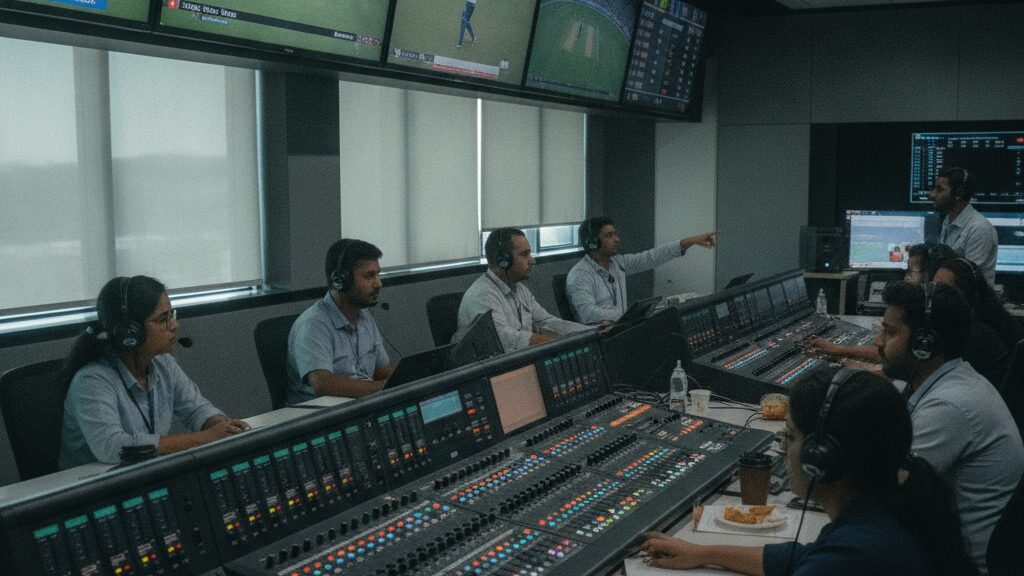
When you watch a cricket match or a football league on your screen, you see the athletes and hear the commentators. You do not see the hundreds of people managing the camera angles, the satellite uplinks, and the advertising slots. This invisible machine is run by sports broadcasting agencies. In India, these entities are split between those who own the rights to the game and those who produce the actual broadcast.
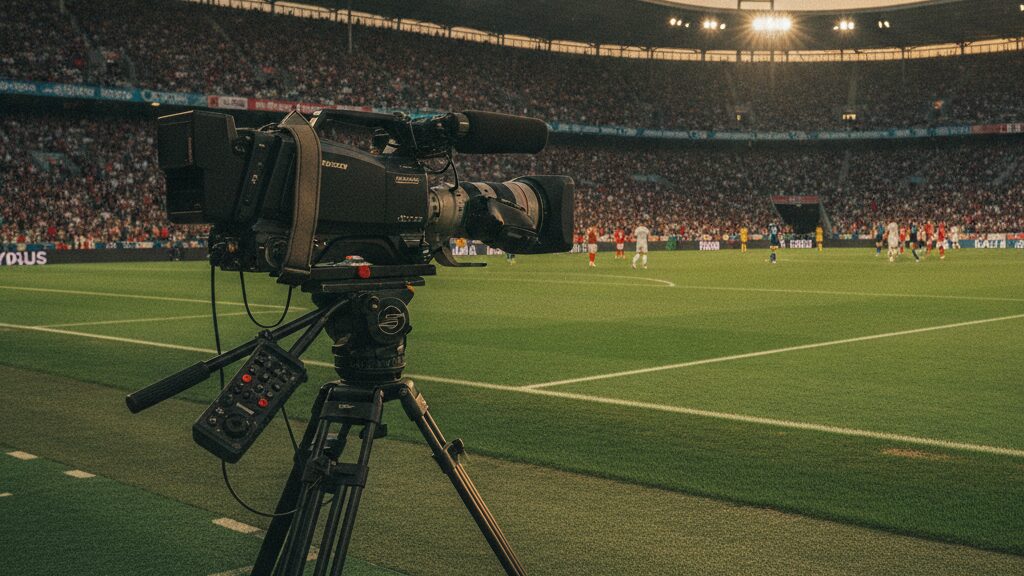
Getting a foot in the door requires more than a passion for sports. It takes a technical understanding of how a signal travels from a stadium in Mumbai to a smartphone in Kerala. Most newcomers fail because they apply to the wrong type of agency. There is a massive difference between a rights holder like Star Sports and a production house that provides the equipment and crew for the event.
Rights holders versus production agencies
To find a job in this field, you must first understand the hierarchy. Rights holders are the giants who pay billions of ₹ to the BCCI or the ICC to be the only ones allowed to show the game. They handle the high-level strategy, the advertising sales, and the platform distribution. In 2026, the battle between linear TV and OTT platforms has reached a peak. According to recent market analysis, OTT platforms now capture 62% of the youth viewership in India for live sports events.
Production agencies operate differently. They are the technical executors. If a rights holder decides the game needs 30 cameras and a spider-cam, the production agency is the one that brings the trucks, the cables, and the technicians. In our work at ISST (Institute of Sports Science & Technology), we have seen that many students mistake these two roles. A production agency offers more hands-on technical experience, while a rights holder offers a path into sports media management.
The shift toward digital-first broadcasting has changed the required skill set. It is no longer just about knowing how to operate a camera. You need to understand real-time data integration. For instance, when you see a player’s strike rate update instantly on your screen, that is a result of a data agency working in tandem with the broadcast producer. If you are interested in the vocal side of this machine, our Sports Commentator India: The Definitive Guide for Aspiring Broadcasters explains how to bridge the gap between technical production and on-air talent.
The major players in Indian sports media
Disney Star remains a powerhouse. They have a legacy of handling massive scale, particularly with the ICC events. Their approach is rooted in high-production value and a massive reach across regional languages. They employ thousands of freelancers and full-time staff to manage the logistics of a tournament.
Viacom18 and JioCinema have disrupted the market. By offering free streaming for major events, they forced the industry to rethink monetization. Their focus is on hyper-personalization. In 2026, they use AI-driven feeds that allow users to choose their own commentary language or camera angle. This has created a new demand for digital producers who understand user experience (UX) rather than just traditional television.
Sony Sports Network continues to dominate specific niches, particularly European football and tennis. Their strategy relies on curated content for a more specialized audience. They often collaborate with international agencies to bring global production standards to the Indian viewer.
Beyond these giants, specialized production houses like IMG-Reliance have historically shaped how sports are managed and broadcast in India. These agencies often handle the end-to-end logistics, from event organization to the final broadcast signal. They are the ones who build the temporary studios inside stadiums.
The path to employment in broadcasting
Entering a top agency rarely happens through a cold email. It starts with a portfolio that proves you can handle the pressure of a live environment. A live broadcast does not have a rewind button. If a cable fails or a commentator goes silent, the producer must fix it in seconds. This is why agencies value certifications in sports management and practical exposure over generic degrees.
In practice, the entry point is often an internship during a major league. Working as a production assistant allows you to see how the gallery operates. You learn the rhythm of the ‘director’s cut’ and how to coordinate with the on-ground crew. For those looking at the financial side, understanding the Linear TV vs OTT Streaming battle is essential, as it dictates where the budgets are moving.
The most successful candidates we see at ISST are those who combine a degree in sports management with a technical hobby. If you can edit a highlight reel or manage a basic stream, you are already ahead of 80% of the applicants. Agencies are looking for people who can multitask. You might be asked to manage the social media feed and the official score-board simultaneously during a low-stakes match.

Technical skills that get you hired
You do not need to be an engineer, but you must speak the language of the crew. Understanding the difference between a 4K signal and a standard HD feed is basic. More importantly, you should know how to use cloud-based production tools. Many agencies in 2026 have moved to remote production, where the director is in a city different from the stadium. This reduces travel costs and allows for a more centralized control room.
Data literacy is now a non-negotiable requirement. Broadcasters are integrating more ‘smart’ graphics. If you understand how to translate a player’s heat map into a visual story for the audience, you become an asset. This intersection of sports science and media is where the highest salaries are found. You can compare these earnings with the average salary of sports commentators in India to see how the technical and talent roles differ in pay scales.
Building a professional network
The sports broadcasting world is small. Most jobs are filled through referrals. This is why joining professional bodies or attending sports management seminars is vital. When you meet a producer at an event, do not ask for a job. Ask about their current production challenge. For example, ask how they are handling the latency issues with 5G streaming during live matches. This shows you understand the industry’s pain points.
Another strategy is to build your own broadcast presence. Start a sports analysis channel on YouTube. Use it as a lab to experiment with graphics, pacing, and commentary. When you can show a hiring manager a clip of a game you produced and called yourself, you provide concrete evidence of your skill. It transforms you from a ‘candidate’ into a ‘practitioner’.
The future of sports media in India
The next three years will see a move toward ‘immersive broadcasting’. We are talking about VR and AR integrations where the viewer can feel as if they are standing on the pitch. This will require agencies to hire people who understand 3D spatial audio and volumetric video. The role of the traditional ‘producer’ is evolving into a ‘content experience architect’.
Local languages will drive the next wave of growth. The biggest agencies are no longer just translating English feeds into Hindi. They are creating unique, culturally relevant broadcasts for Tamil, Telugu, and Kannada audiences. This opens up massive opportunities for bilingual professionals who understand the nuances of regional sports fandom.
Frequently Asked Questions
What is the difference between a broadcaster and a production agency?
A broadcaster owns the rights and distributes the content to the audience. A production agency provides the technical crew and equipment to actually film and edit the game.
Do I need a degree in journalism to work in sports broadcasting?
No, but a degree in sports management or media production is highly valued. Practical experience and a strong portfolio often matter more than a specific degree.
Which is better for a career, OTT or Linear TV?
OTT is currently growing faster and offers more roles in digital innovation and UX. Linear TV remains stable for high-budget, traditional sports events.
How can I get an internship at a sports agency?
Apply during the window before major tournaments like the IPL. Focus your application on a specific skill, such as data analysis or production assistance.
What are the most common entry-level roles?
Common roles include Production Assistant, Junior Researcher, Social Media Coordinator, and Assistant Producer.
Do sports broadcasting agencies hire freelancers?
Yes, the industry relies heavily on freelancers for event-based work. This is often the best way to get your foot in the door for a full-time role.
What software should I learn for sports broadcasting?
Learn industry-standard editing software like Adobe Premiere Pro and basics of streaming software like vMix or OBS.
Is sports broadcasting only about cricket in India?
While cricket is the biggest, agencies are investing heavily in football, kabaddi, and Olympic sports. Diversifying your knowledge makes you more employable.
Start building your sports media portfolio today by enrolling in a professional program. Get the training you need to enter the industry with confidence—no hidden fees and full alumni support.
The Institute of Sports Science & Technology (ISST), founded in 2008 in Pune, is India’s premier education center dedicated exclusively to sports management and sports science. By integrating cutting-edge academic pedagogy, robust industry partnerships, and scientific methodologies, ISST develops top-tier professionals equipped to lead the modern sports, fitness, and wellness industries.
- Founded in 2008 as a pioneer in Indian sports education
- Offers specialized programs in Sports Management & Sports Science
- Strong industry partnerships with leading sports leagues, teams, and organizations
- Faculty comprises expert sports scientists, veteran coaches, and industry researchers
- Dedicated placement cell with extensive national and international support