

Choosing between a BBA vs MBA in Sports Management in 2026? Learn about career paths, salaries, and live exposure at ISST. Start your sports career now.
The 2026 Decision: Immediate Entry or Strategic Mastery?
Imagine standing in the tunnel of a packed stadium. You are not wearing a jersey, but you are the reason the lights stay on, the tickets sell out, and the athletes are paid. This is the reality for graduates in the 2026 Indian sports market. The industry has moved past its infancy. Today, the choice between a BBA and an MBA in Sports Management is not about which degree is better. It is about speed versus depth. A BBA gets you into the game early. An MBA gives you the playbook to run the league. At ISST, we see hundreds of students grapple with this choice every admission cycle. The right answer depends entirely on your current career velocity.
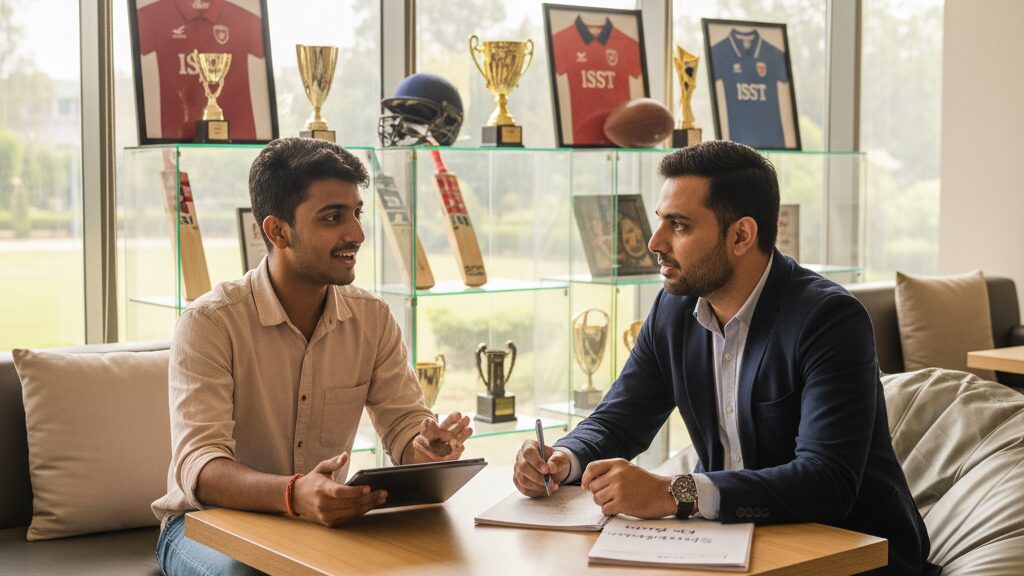
In May 2026, the demand for professionalized management has peaked. According to the 2026 Sports Industry Growth Report, the sector is expanding at 14% annually. This growth requires two types of professionals: ground-level executors and high-level strategists. If you are finishing class 12, the BBA in Sports Management offers a direct route to practical training. If you already hold a degree, an MBA provides the specialized edge needed to pivot into sports marketing or operations.
The BBA Advantage: Building a Career from the Ground Up
Starting a career in sports management directly after high school is a commitment to early immersion. A BBA program focuses on the mechanics of the industry. You learn how sports organizations function, how events are staged, and how grassroots talent is managed. In our experience at the ISST High Performance Centre, students who start early develop a ‘field sense’ that is difficult to replicate later in life. They spend three years absorbing the culture of Indian sports, from the TATA IPL to the Pro Kabaddi League.
The curriculum is designed for those who want to use their 20s to gain maximum live exposure. You study sports law, finance, and marketing while simultaneously working on-ground at events like the MPL Maharashtra Premier League. This early start allows you to build a massive network through the ISST alumni connect before your peers even finish their general degrees. If you are comparing BSc Sports Science vs BBA Sports Management, remember that the BBA is for those who want to manage the business, not necessarily the biology, of the athlete.
The MBA Edge: Strategic Leadership for Professionals
An MBA in Sports Management is a different animal. It is designed for graduates—often from BCom, BBA, or even Engineering backgrounds—who want to apply high-level business principles to the sports world. In 2026, organizations like IMG | Reliance and Viacom 18 look for MBA graduates to fill roles in digital rights management, global sponsorship strategy, and data-driven fan engagement. The maturity you bring to an MBA in Sports Management allows you to handle complex negotiations and multi-crore budgets.
Many students ask if a Master of Sports Management is worth it in 2026. The data suggests a resounding yes. According to ISST placement trends from early 2026, MBA graduates often enter the workforce at management trainee or assistant manager levels, bypassing the entry-level coordinator roles typical of BBA graduates. They use their post-graduate years to specialize in niche areas like sports analytics or international sports governance. If you are looking to pivot to sports management after BCom or BBA, the MBA acts as the bridge that validates your previous education within a sporting context.
Curriculum Comparison: What You Will Actually Learn
BBA programs are broad. You will cover principles of management, accounting, and human resources, all viewed through the lens of sports. You might spend a semester understanding the logistics of the Hero Indian Super League (ISL) or the administrative structure of the Sports Authority of India (SAI). The focus is on doing. Practical training is the cornerstone. You are prepared to be a generalist who can handle anything from social media management for a local academy to vendor coordination for a major tournament.
MBA programs are deep. The coursework shifts toward strategic management, sports economics, and consumer behavior. You analyze the revenue models of the ICC Men’s Cricket World Cup or the brand positioning of Puma and adidas. The goal is to produce decision-makers. You learn to use tools from companies like hudl and SportsMechanics to drive performance on and off the field. This is where the 2026 sports marketing mastery happens, focusing on ROI and long-term brand equity.
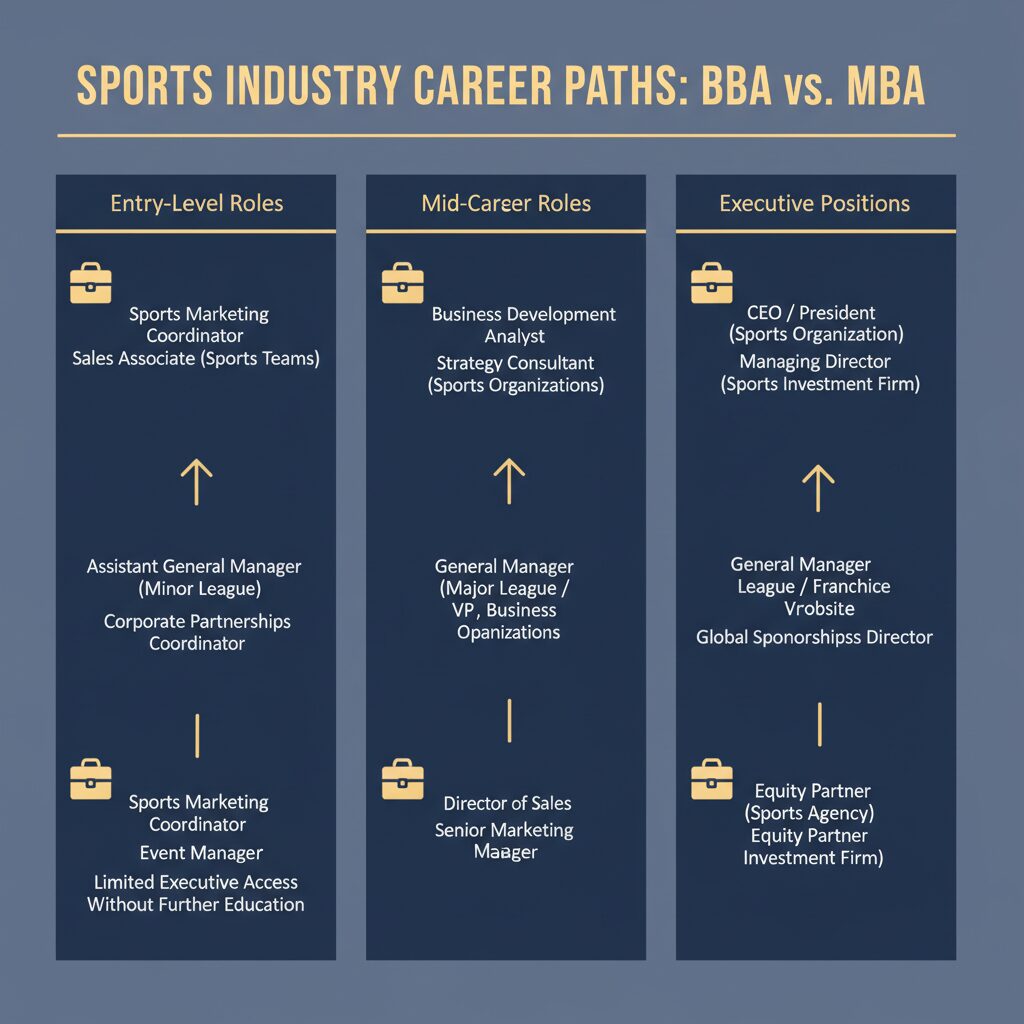
The Role of Live Exposure in 2026
Regardless of the degree you choose, classroom learning is only half the battle. In 2026, the sports industry values evidence of work more than the name on your certificate. This is why ISST emphasizes internships. Our students have recently completed stints with the Tennis Premier League, Yuva Kabaddi Series, and various franchises within the TATA IPL. These are not just line items on a resume. They are proof of competence.
Practical training at the ISST High Performance Centre allows students to see the intersection of sports management and sports sciences. Whether you are in the BBA or MBA track, seeing how a high-performance athlete is managed gives you a deeper appreciation for the ‘product’ you are marketing. This integrated approach is why ISST graduates are found in organizations ranging from the Abhinav Bindra Foundation to GoSporto.
Career Pathways and Salary Expectations
Market Data: ₹4,50,000–₹7,00,000 (Average starting CTC for MBA Sports Management in India, May 2026). While BBA graduates typically start in the ₹3,00,000–₹5,00,000 range, their three-year head start often means they reach management levels at the same time as their MBA counterparts. It is a trade-off between starting early and starting higher. Roles for BBA graduates often include event coordinator, operations executive, or junior talent scout. MBA graduates move toward roles like brand manager, sports consultant, or operations manager.
For those who cannot commit to a full-time classroom program, options like the Diploma in Sports Management or a PG Diploma in Sports Management offer a middle ground. These are particularly effective for working professionals looking to transition without taking a two-year career break. In 2026, the flexibility of UGC recognized distance and classroom degrees ensures that every aspiring professional has a pathway.
Choosing Your Path: The Decision Matrix
If you are 18 and certain that sports is your calling, the BBA is the most efficient path. You gain three years of industry experience and network building that no classroom can replace. If you are 21 or older and hold a degree in another field, the MBA is your best move. It provides the necessary credibility and specialized knowledge to compete with those who have been in the industry longer. Both paths are valid, but they require different levels of commitment and produce different professional outcomes.
The sports industry in India is no longer just a hobbyist’s playground. It is a sophisticated, data-driven business environment. Whether you choose the BBA or the MBA, ensure your education is grounded in live exposure and practical training. The ISST alumni connect is a testament to this philosophy, with former students now working at the highest levels of the Khelo India games and major sports brands.
Frequently Asked Questions
Is a BBA in Sports Management enough to get a job in 2026?
Yes, a BBA is highly valued for entry-level operations and marketing roles in the Indian sports industry. Most organizations prioritize candidates with live exposure and practical training over those with just a general degree.
Can I do an MBA in Sports Management after a regular BBA?
Absolutely, and many students choose this path to specialize after gaining a broad business foundation. It is an excellent way to pivot into leadership roles within sports franchises or foundations.
What is the main difference between BBA and MBA in Sports Management?
BBA programs focus on foundational management and early entry into the workforce through practical training. MBA programs emphasize strategic leadership, financial planning, and advanced sports marketing for post-graduates.
Does ISST provide placement assistance for both degrees?
ISST offers robust internship and placement support through its extensive network of partners like TATA IPL and Pro Kabaddi. Students gain live exposure that often leads to starting their careers in the industry.
Is sports management a high-paying career in India in 2026?
Salaries have grown significantly, with management roles in major leagues and brands offering competitive packages. Success depends on your specialization, network, and the practical experience gained during your studies.
Are these degrees UGC recognized?
Yes, ISST offers programs that are UGC recognized, ensuring that your degree is valid for both private sector jobs and further academic pursuits. This recognition is vital for long-term career stability in India.
What roles can I get after an MBA in Sports Management?
Graduates often secure roles as Brand Managers, Sports Agents, Operations Directors, or Sports Data Analysts. Many also find success working with foundations like the Abhinav Bindra Foundation or Reliance Foundation Youth Sports.
Do I need to be an athlete to study sports management?
No, professional sports management is about the business of sports rather than athletic performance. While an interest in sports is helpful, the industry requires skilled managers, marketers, and accountants above all else.
The 2026 sports season is already underway, and the demand for qualified managers is at an all-time high. Your choice today defines your role in India’s sporting future. Explore the ISST programs and find the path that matches your ambition.
Start your career in sports today by downloading our brochure. Experience the ISST advantage with no commitment required.
The Institute of Sports Science & Technology (ISST), founded in 2008 in Pune, is India’s premier education center dedicated exclusively to sports management and sports science. By integrating cutting-edge academic pedagogy, robust industry partnerships, and scientific methodologies, ISST develops top-tier professionals equipped to lead the modern sports, fitness, and wellness industries.
- Founded in 2008 as a pioneer in Indian sports education
- Offers specialized programs in Sports Management & Sports Science
- Strong industry partnerships with leading sports leagues, teams, and organizations
- Faculty comprises expert sports scientists, veteran coaches, and industry researchers
- Dedicated placement cell with extensive national and international support