

Choosing the right path for your sports management career
Standing at the entry point of the Indian sports industry in May 2026 feels different than it did even two years ago. The market has shifted from a generalist approach to a demand for high-level specialization. You might find yourself weighing a one-year PG Diploma against a two-year Master Degree in Sports Management. Both paths offer distinct advantages, yet the choice depends entirely on your current career stage and your long-term professional goals.
In our work at ISST, we see that graduates often struggle with the ‘commitment bias.’ This is the psychological tendency to finish a path even if a shorter route would have served their career better. If you are looking for a quick transition into the workforce, a PG Diploma provides the concentrated practical training required to enter roles in event operations or sports retail. However, for those aiming for leadership roles in sports governance or high-performance environments, the depth of a Master’s degree often carries more weight with hiring managers.
According to the 2026 India Sports Economic Report, the domestic sports industry grew by 14% (CAGR) between 2024–2026. This growth has created a hunger for managers who understand the intersection of data and athlete performance.
Master of Sports Management: Is it Worth it in 2026? This question is central to your decision. While a Master’s degree requires a larger investment of time, it provides the academic grounding needed for complex decision-making in the boardroom.
The PG Diploma: A tactical entry into the sports market
A Post Graduate Diploma in Sports Management is designed for speed and utility. It targets the immediate needs of the industry. If you already have a background in business—perhaps you are looking for 7 proven ways to pivot to sports management after BCom or BBA 2026—the diploma serves as a bridge. It replaces theoretical fluff with live exposure.
Students in these programs often find themselves working on-ground at events like the MPL Maharashtra Premier League or the Tennis Premier League. This direct contact with the industry creates a ‘liking effect.’ You build relationships with stakeholders while learning the logistics of venue management. By the time you graduate, you have a portfolio of real-world experiences rather than just a certificate.
The curriculum usually focuses on sports marketing, facility management, and grassroots development. These are the engines driving the Indian sports scene today. For many, this is the most efficient way to start a career in sports without spending two years in a classroom.
Master Degree in Sports Management: Building long-term authority
A Master’s degree is about more than just getting a job; it is about staying in the industry for decades. Authority is one of the strongest pillars of persuasion. In the professional world, a Master’s degree signals a level of expertise and dedication that a diploma cannot match.
During a two-year program, you explore the nuances of sports law, advanced financial management, and global sports politics. This is where you learn how to manage multi-million rupee budgets for organizations like the Reliance Foundation Youth Sports or major leagues like the Hero Indian Super League (ISL). The second year usually includes a thesis or an extended internship, allowing you to specialize in a niche like sports data analytics.
Recent data from ISST alumni connect shows that Master’s graduates often move into mid-management roles 30% faster than those with only a diploma. This is particularly true in organizations like SAI (Sports Authority of India) or the Abhinav Bindra Foundation, where academic rigor is highly valued.
Comparing the investment and the outcome
When we look at the financial side, the decision becomes a matter of Return on Investment (ROI).
Average Tuition (2026): ₹2,50,000–₹4,50,000 (PG Diploma)
Average Tuition (2026): ₹5,00,000–₹9,00,000 (Master’s Degree)
You must ask if the extra year and the higher fee will pay off. For many, it does. 7 Real Numbers for Sports Management Salary in India 2026 provides a clear picture of what you can expect. While entry-level salaries might be similar for both graduates, the ceiling for a Master’s degree holder is significantly higher.
Social proof plays a role here. When you see ISST alumni working with brands like Puma or Decathlon, you notice a pattern. Those in leadership roles almost always have an advanced degree. They have used their time in university to build a network that spans the entire sports management ecosystem.
The role of practical training and the ISST High Performance Centre
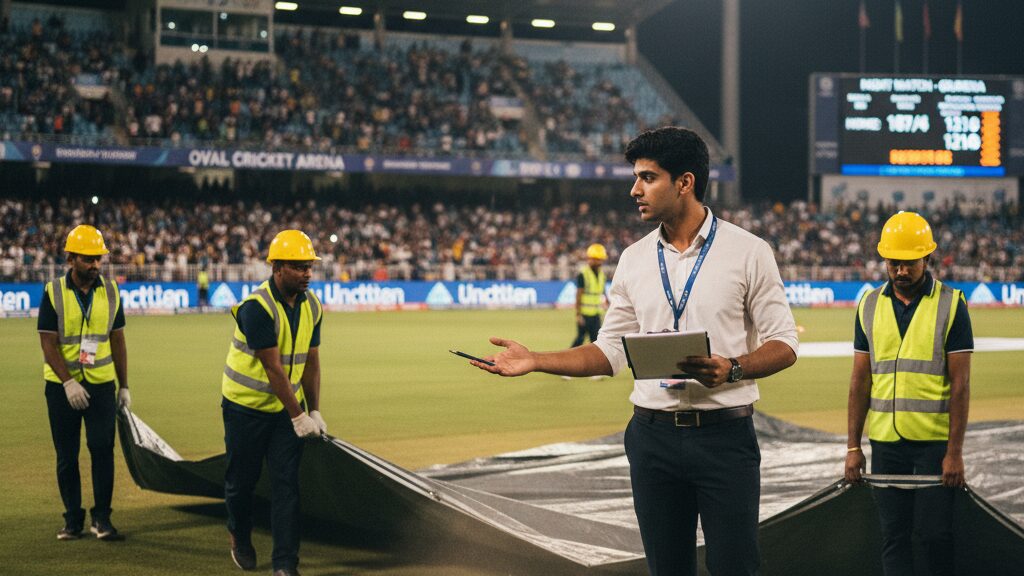
Regardless of which program you choose, the quality of your practical training will define your success. A degree without on-field experience is just paper. This is why we emphasize live exposure at ISST.
Our students have recently completed internships with the Pro Kabaddi league and the Khelo India University Games. These are not just observation roles. Students are involved in player management, digital media coordination, and logistics. This hands-on approach uses the ‘consistency principle.’ By performing small, successful tasks during an internship, you prove to your employer that you are ready for bigger responsibilities.
The ISST High Performance Centre also provides a unique environment for management students to interact with sports scientists. Understanding the physical demands on an athlete makes you a better manager. You learn why a team needs a specific recovery protocol or how to market an athlete’s peak performance.
Specialization: The 2026 competitive edge
In 2026, being a ‘sports manager’ is too vague. The market wants specialists. You might choose to focus on how cricket data analytics wins the IPL 2026 final or perhaps focus on sports law.
A Master’s degree gives you the room to find this niche. A PG Diploma is excellent for those who already know their path and want to start working. If you are still exploring, the two-year Master’s program provides the safety net to experiment with different sectors of the industry.
Remember that the sports industry relies heavily on the ‘scarcity of talent.’ There are thousands of fans, but very few professionally trained managers. By completing a UGC recognized program at ISST, you move from the ‘fan’ category into the ‘expert’ category.
Distance vs. Classroom: Flexibility in 2026
For working professionals, the choice isn’t just about the degree level but the delivery mode. Distance degrees like our MPSS or PGD options allow you to keep your current job while you study. This is an application of the ‘reciprocity’ principle—you gain knowledge from the course and immediately apply it to your workplace, creating value for your current employer.
However, for students fresh out of a BBA or BSc, the classroom environment is superior. The daily interaction with faculty and peers creates a competitive yet supportive atmosphere. You learn how to negotiate, how to lead a team, and how to handle the high-pressure environment of a live sports event.
Making your final decision
Before you enroll, look at the alumni of the program. Where are they working? Organizations like the Olympic Gold Quest (OGQ) or IMG | Reliance often hire from institutes with a proven track record. This is the ultimate social proof.
If you are still unsure, start by looking at your five-year plan. If you see yourself running a sports startup or managing a league, go for the Master’s. If you want to get into the thick of event operations immediately, the PG Diploma is your best bet.
Success in the sports industry is not guaranteed, but it is predictable. It goes to those who combine a passion for sport with a rigorous understanding of business principles.
Frequently Asked Questions
Is a PG Diploma equivalent to a Master’s degree in India?
No, they differ in duration and depth. A Master’s is a two-year degree providing deeper theoretical and research-based knowledge, while a PG Diploma is usually a one-year program focused on practical industry skills.
Can I get a job in the IPL with a PG Diploma?
Yes, many diploma graduates start their careers in event operations or marketing during the IPL. However, long-term executive roles often require the advanced management training found in a Master’s program.
Which course is better for a career in sports marketing?
Both offer marketing modules, but a Master’s degree allows for a deeper specialization in consumer behavior and digital strategy. A PG Diploma is better if you want to start in entry-level sales or brand activation roles quickly.
Are ISST courses UGC recognized?
ISST partners with recognized universities to ensure that degrees meet national educational standards. This recognition is vital for students who plan to pursue further education or government jobs in sports.
Do I need to be a professional athlete to study sports management?
Not at all. While an interest in sports is necessary, these programs focus on the business and scientific side of the industry, which requires analytical and managerial skills rather than athletic ability.
What is the starting salary for a sports management graduate in 2026?
Starting salaries generally range from ₹3,50,000 to ₹6,00,000 per annum depending on the organization. Graduates from reputable institutes like ISST often command better starting packages due to their practical training.
Can I switch from a different industry to sports management?
Yes, the PG Diploma is specifically designed for professionals looking to pivot. It provides the industry-specific vocabulary and networking opportunities needed to make a successful transition.
Does ISST provide placement assistance?
ISST offers extensive placement support through its alumni connect and industry partnerships. Students receive guidance on resume building and interview preparation for roles in sports brands, academies, and foundations.
Reach out to our admissions team to explore our 2026 course intake and find the program that aligns with your professional vision. Start building your career in sports today by enrolling in a program that balances academic rigor with real-world exposure.