When most young Indian sports fans dream of professional glory, they usually imagine stepping onto a packed cricket ground with a bat in hand. But in November 2014, a 21-year-old boy from Andhra Pradesh showed the country that a court, a shuttlecock, and a racket could command the exact same national pride. Srikanth Kidambi stunned five-time World Champion Lin Dan on his home turf to win the China Open Super Series Premier title. That single match proved that Indian male shuttlers could stand toe-to-toe with the absolute elite of global badminton.
By April 2018, Srikanth reached the top of the World Badminton Federation (BWF) rankings, becoming the first Indian man since Prakash Padukone to achieve the World No. 1 spot. His career offers a masterclass in athletic development, tactical adaptation, and physical longevity. Analyzing his trajectory provides clear answers for anyone studying modern sports education, athlete management, and training design.
The 2017 Superseries Blitz: Defining Tactical Aggression
To understand the playing style of Srikanth Kidambi, look closely at his phenomenal 2017 season. Over twelve months, he reached five Super Series finals and won four of them in Indonesia, Australia, Denmark, and France. Winning four high-tier international titles in a single calendar year placed him in a tiny group of global badminton legends.
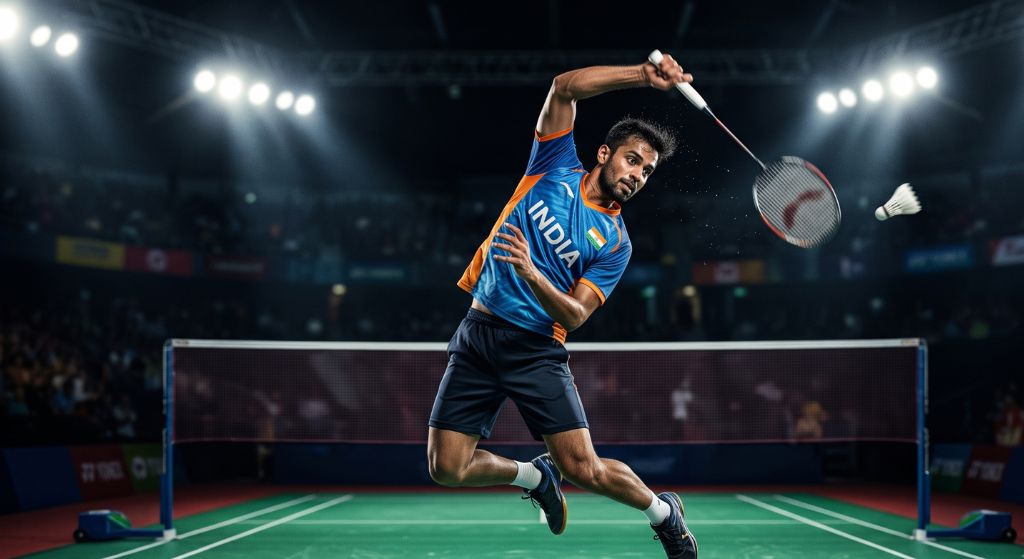
What made him practically unplayable during that run? His game relied on explosive movement and a lethal steep jump smash that caught opponents off balance. Instead of engaging in protracted flat rallies, he used quick deception at the net to force high lifts. Once the shuttle was lifted into the backcourt, his fast deceleration and jump allowed him to strike before defenders could set their feet. During the 2017 Australian Open final against Chen Long, his smash attack won 18 points directly in two straight games.
This aggressive tactical framework required precision footwork and rapid wrist acceleration. For coaches and sports management professionals, Srikanth’s 2017 run demonstrates how aligning an athlete’s physical attributes with a clear tactical identity produces world-class performances.
Managing Heavy Workloads and Mitigating Injury Risks
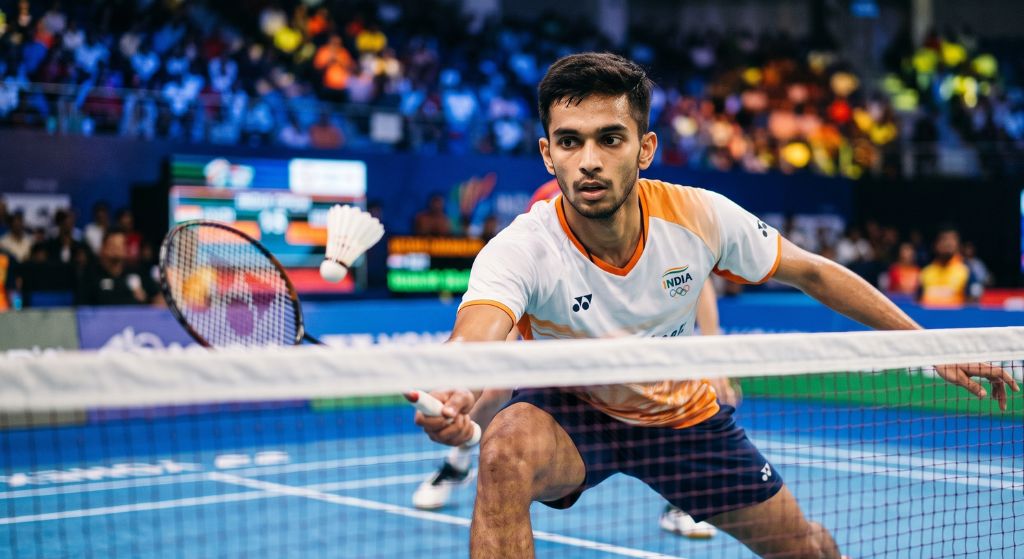
Elite badminton places extreme stresses on the human body. The constant lateral lunging, rapid direction changes, and repetitive overhead smashing put heavy demands on the knees, ankles, and shoulder complex. Following his rise to World No. 1 in 2018, Srikanth faced a difficult period marked by recurring hamstring and knee issues that sidelined him from key international fixtures.
In high-performance sport, staying healthy at the top level is just as demanding as getting there. When an athlete plays up to 60 high-intensity matches a year across different time zones, fatigue impairs reaction speed and load distribution. Proper recovery protocols, strength balance, and biomechanical monitoring become non-negotiable requirements for career longevity.
At ISST (Institute of Sports Science & Technology), we study these exact physical requirements across our academic programs. Students in our Masters Programme in Sports Sciences (MPSS) analyze movement patterns and recovery strategies to prevent chronic strain in professional athletes. Those seeking flexible study options often enroll in our Distance Diploma in Sports Sciences (DDSS) to learn how physical conditioning supports world-class talent over long careers.
Mental Resilience and the Historic Thomas Cup Triumph
While individual titles build a player’s personal legacy, team achievements test an athlete’s mental toughness in completely unique ways. In May 2022, Srikanth captained the Indian team at the Thomas Cup in Bangkok. India had never won the tournament in its 73-year history, and few analysts gave the squad a realistic chance against traditional powerhouses like Indonesia and Malaysia.
Srikanth delivered an flawless performance throughout the campaign, staying undefeated across all six of his matches. In the final against 14-time champions Indonesia, after Lakshya Sen and the doubles team of Satwiksairaj Rankireddy and Chirag Shetty gave India a 2-0 lead, Srikanth stepped onto the court against Jonatan Christie. Pressure in team ties can easily paralyze a player’s decision-making, but Srikanth held his nerve to win 21-15, 23-21, sealing a historic 3-0 victory for India.
Handling high-stakes pressure requires structured psychological preparation. Athletes must learn emotional regulation, visualization, and routine building to execute skill under pressure. Those interested in the psychological aspects of elite performance can explore our detailed guide on Sports Psychology Courses in India to understand how mental conditioning coaches build championship mindsets.
Building Grassroots Badminton and Elite Coaching Networks
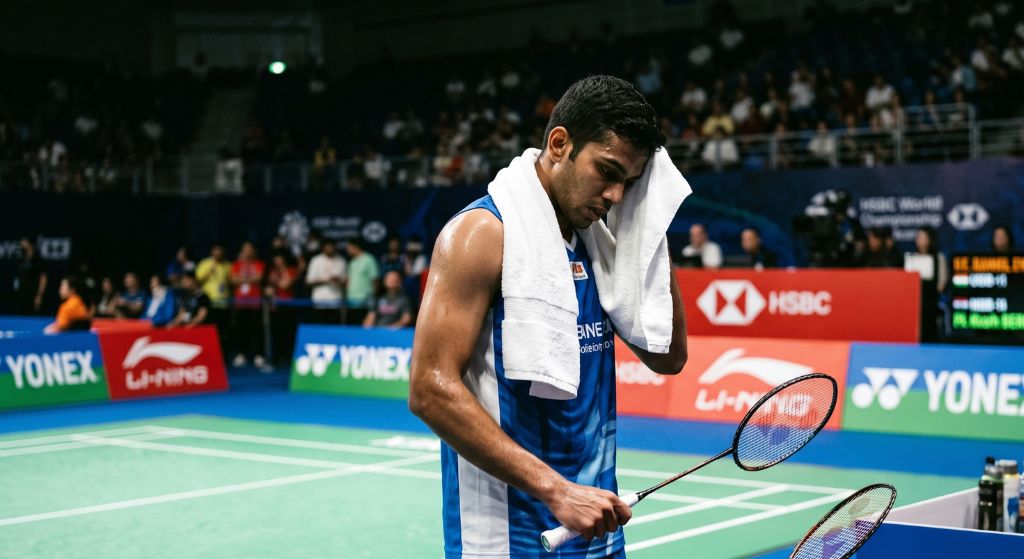
Srikanth’s journey from training courts in Andhra Pradesh to the Gopichand Badminton Academy in Hyderabad highlights the importance of strong sporting infrastructure. India’s rise as a global badminton force did not happen by accident. It resulted from structured coaching systems, top-tier sparring environments, and dedicated administrative support.
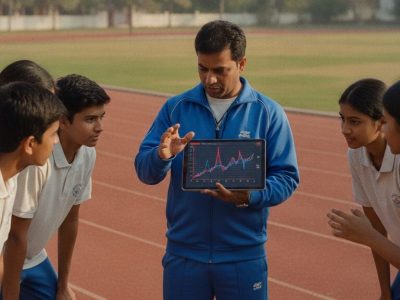
To sustain this level of international success, India needs qualified coaches, performance analysts, and sports administrators at every competitive level. Modern academies rely on structured data, video analysis, and high-performance physical preparation to prepare young players for international competition.
Our commitment to building sports infrastructure extends directly to practical training environments like the ISST High-Performance Center. Furthermore, ISST alumni are actively shaping badminton coaching across the country, including leaders like Krantivir Sethi, Assistant Coach at the Nikhil Kanetkar Badminton Academy. Their work ensures that young players receive scientific coaching grounded in modern sports education.
Frequently Asked Questions
What are the major achievements of Srikanth Kidambi?
Srikanth Kidambi reached the BWF World No. 1 ranking in April 2018 and won four Super Series titles in 2017. He also won a silver medal at the 2021 BWF World Championships and captained India to its maiden Thomas Cup gold in 2022.
Which academy did Srikanth Kidambi train at?
Srikanth trained extensively at the Gopichand Badminton Academy in Hyderabad under chief national coach Pullela Gopichand. The academy provided the technical foundation and elite sparring environment that propelled his international career.
When did Srikanth Kidambi beat Lin Dan?
Srikanth defeated Chinese legend Lin Dan in November 2014 in the final of the China Open Super Series Premier. He won the match in straight games with a scoreline of 21-19, 21-17.
What is Srikanth Kidambi highest world ranking?
His highest world ranking in men’s singles is World No. 1, which he officially achieved on April 12, 2018. He became the first Indian male shuttler to achieve this ranking in the modern BWF ranking system.
How did Srikanth Kidambi perform in the 2022 Thomas Cup?
Srikanth remained undefeated throughout the 2022 Thomas Cup tournament in Bangkok, winning all six of his men’s singles matches. He defeated Jonatan Christie in the final tie to secure India’s first-ever Thomas Cup title.
What racket style and playing technique does Srikanth use?
Srikanth plays an aggressive attacking style that relies heavily on steep jump smashes, sharp net deception, and fast wrist movement. He prefers head-heavy racket setups that generate high shuttle speeds on backcourt attacks.
Has Srikanth Kidambi won an Olympic medal?
Srikanth reached the quarterfinals of the men’s singles event at the 2016 Rio Olympics, finishing fifth overall after a close match against Lin Dan. He has not won an Olympic medal yet.
What awards has Srikanth Kidambi received from the Government of India?
Srikanth received the Arjuna Award in 2015 for his outstanding achievements in badminton. He was subsequently conferred with the Padma Shri, India’s fourth-highest civilian honour, in 2018.
Build your professional future in sports science, management, and athlete development today with ISST educational programs. Download our official brochure to explore structured degrees and distance courses tailored for sports careers.