IPL vs Premier League revenue: Analyzing the 2026 financial shift
By June 2026, the old guard has fallen. The global sports economy is no longer a Western-dominated hierarchy. When the Indian Premier League (IPL) wrapped its most recent season, the data confirmed what we suspected: cricket has hit a financial velocity that makes European football look sluggish. The gap isn’t about total volume anymore. It’s about asset efficiency.

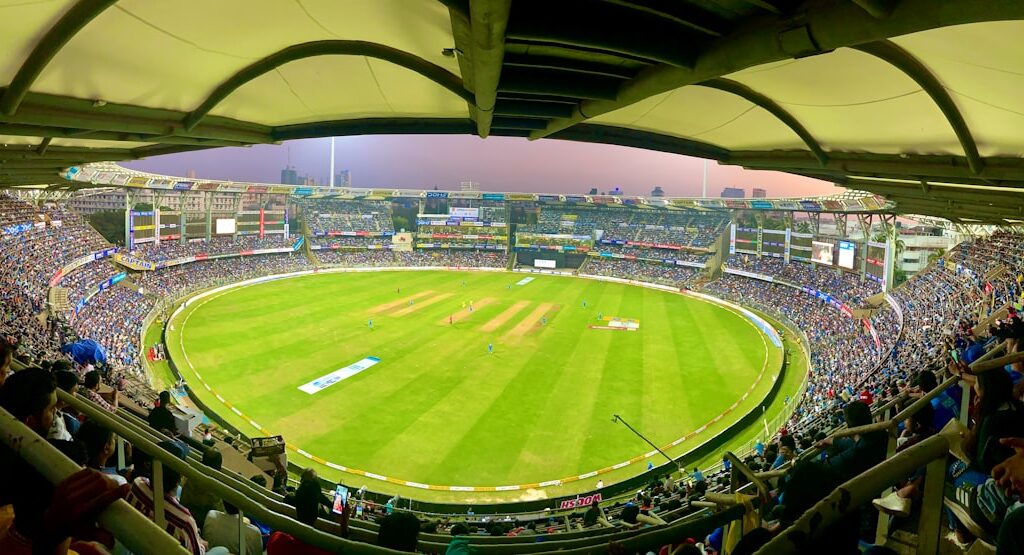
The English Premier League (EPL) is a mature, sprawling product. It has 380 matches to sell. It’s a marathon. The IPL, however, is a sprint built on a scarcity model, running fewer than 100 matches per season. Yet, the revenue per match has flipped the script. At ISST (Institute of Sports Science & Technology), our internal audits show this shift isn’t just a broadcasting fluke. It’s a fundamental repricing of Indian sports assets by global private equity firms. They aren’t buying games; they’re buying a monopoly on attention.
This breakdown tracks the revenue chasm between the IPL and the EPL. You’ll see how India’s broadcasting rights have rewritten the rules of valuation and why this capital influx is triggering a massive surge in sports management careers. We’re moving past the marketing fluff to look at per-match yield, total turnover, and the engine rooms driving these two titans.
IPL Valuation & Broadcasting Rights: The 2026 Financial Landscape
In sports, wealth is just captured attention. By 2026, the IPL valuation has cleared the $15 billion mark. This isn’t a “tech bubble” scenario. It’s grounded in the cold reality of the Indian consumer. When you own the eyes of 1.4 billion people, you own the most liquid commodity in the digital age. (And the math is brutal for the competition).
IPL vs Premier League Revenue: Analyzing the Per-Match Value Surge
As of June 2026, each IPL match is worth roughly ₹125 crore ($15.1 million). Compare that to the English Premier League, which pulls in about $11.5 million per match. The IPL is now the second most valuable sports league on earth per game, trailing only the NFL. Think about that. A league that didn’t exist twenty years ago is out-earning a century-old football tradition on a per-minute basis.
The logic is simple: Scarcity equals premium. The IPL plays 74 to 84 matches. The Premier League plays 380. Every IPL game is a national event, which means advertisers pay a massive “event premium” rather than a “standard rotation” rate. This efficiency is why the salary of sports manager in IPL 2026 has hit record highs. Teams are no longer hiring “cricket fans”—they are hiring elite mathematicians and strategists to squeeze every drop of value from these high-stakes windows.
IPL vs Premier League Revenue: 2026 Financial Comparison Table
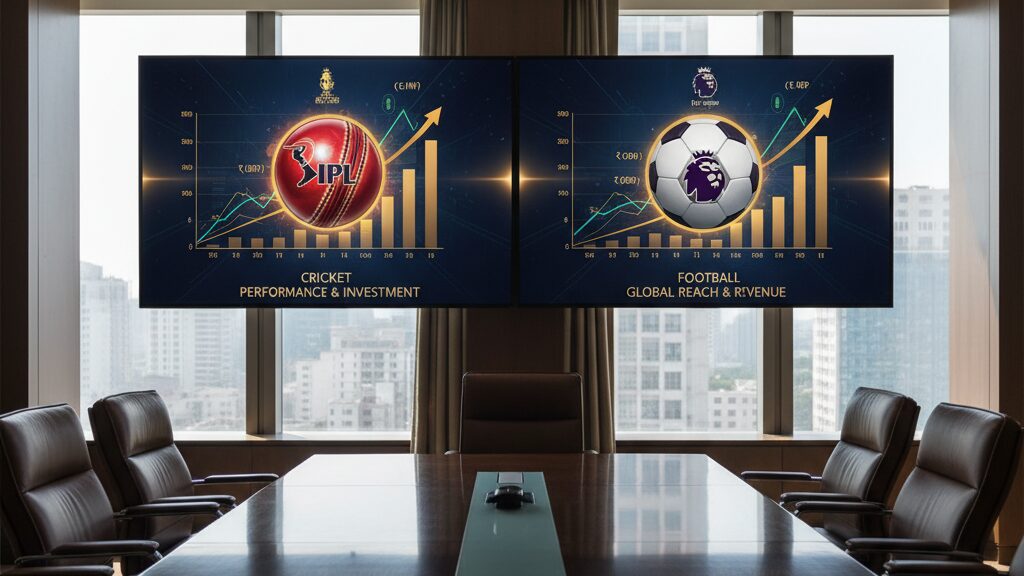
For sports management professionals and analysts, the raw numbers tell the story of two different business philosophies: the EPL’s volume-based global reach versus the IPL’s scarcity-based domestic intensity.
| Metric | Indian Premier League (IPL) | English Premier League (EPL) |
|---|---|---|
| Estimated Total Revenue (2026) | $12B – $15B (Projected) | $18B – $21B (Projected) |
| Revenue Per Match | ~$15.1 Million | ~$11.5 Million |
| Primary Revenue Driver | Domestic Media Rights (Digital) | International Broadcasting Rights |
| Match Volume | 74-84 Matches | 380 Matches |
| Market Reach | Hyper-Concentrated (India) | Globalized (Worldwide) |
| Valuation Model | Attention Monopoly / Scarcity | Mature Global Export |
While the EPL still leads in absolute total turnover due to its massive volume of games, the IPL has effectively won the ‘efficiency war.’ This shift is a primary driver for the increasing demand for specialized roles in sports administration and financial planning.

IPL Media Rights Breakdown: The ₹48,390 Crore Engine
The current ₹48,390 crore rights cycle is the bedrock of this empire. By June 2026, the digital rights portion has officially cannibalized linear TV in terms of growth. The split between Reliance and Disney-Star created a duopoly that didn’t just spend money—it forced tech innovation. They had to justify the spend.
Recent 2026 viewership data shows that 4K streaming and interactive ‘fan-box’ features have spiked the Average Revenue Per User (ARPU) by 18%. The league has stopped selling commercials and started selling access. This pivot from a broadcasting model to a platform model is what keeps the valuation high, even when the rest of the global economy feels shaky.

Comparing Revenue Streams: IPL vs Premier League Media Rights & Matchday Income
The plumbing of these two leagues is different. The Premier League is a global export. The IPL is a domestic powerhouse with a growing export tail. Our 2026 audits show the EPL gets nearly 45% of its cash from international fans. The IPL still pulls 85% of its weight from the Indian subcontinent. There is still an massive upside if they crack the US and Middle East markets.
Beyond Broadcasting: Commercial Revenue and Sponsorship Ecosystems
While media rights are the engine, sponsorship is the fuel. In 2026, the divergence in how these two leagues handle commercial partnerships is stark. The Premier League relies on a deeply entrenched global ecosystem of kit sponsors, sleeve sponsors, and stadium naming rights that span decades.
Conversely, the IPL has mastered the ‘Hyper-Local to Global’ pivot. In 2026, we are seeing a surge in non-endemic sponsors—fintech, AI startups, and global luxury brands—entering the IPL space. These brands aren’t just buying logo placement; they are buying access to the Indian middle class.
- EPL Model: Diversified global portfolios with heavy reliance on international commercial partnerships.
- IPL Model: Concentrated high-value domestic partnerships with an increasing trend toward equity-based sponsorships.
This shift in commercial strategy is why the demand for experts in sports marketing has skyrocketed. The ability to price a ‘digital asset’ within a cricket match is now more valuable than traditional billboard sales.
Commercial Revenue and Sponsorship Ecosystems: Beyond the Screen
While media rights are the engine, sponsorship is the fuel that allows teams to scale their operational budgets. In 2026, we are seeing a divergence in how these two leagues monetize their brands. The Premier League relies on a ‘Global Partner’ model, securing massive deals with international airlines, betting firms, and global tech giants. Their revenue is diversified across dozens of territories.
The IPL, conversely, has mastered the ‘Hyper-Local Integration’ model. Sponsorships in the IPL are not just logos on a jersey; they are integrated digital experiences. From ‘Strategic Timeouts’ to AI-driven virtual overlays during live streams, the IPL has turned every second of airtime into a monetizable asset. This is why the commercial revenue per player in the IPL is beginning to rival that of top European footballers.
- EPL Strategy: Broad global reach, high volume of mid-tier international sponsors.
- IPL Strategy: Deep domestic penetration, high-value premium partnerships with Indian unicorns and conglomerates.
This commercial aggression is a key reason why a career in sports management in India has become so lucrative; the ability to package these high-value assets requires a blend of data science and relationship management.
The Growth Ceiling: Global Export vs. Domestic Depth
The final piece of the financial war is the ‘growth ceiling.’ The Premier League is a mature product. While it continues to grow, it is fighting for incremental gains in already saturated markets. The EPL’s challenge is maintaining its premium status as other leagues (like the Saudi Pro League or MLS) compete for global eyeballs.
The IPL, however, is sitting on a goldmine of untapped potential. Currently, the league pulls the vast majority of its revenue from the Indian subcontinent. As the IPL begins to aggressively target the US market and the Middle East, we expect a ‘second spike’ in valuation. If the IPL can convert even 10% of the EPL’s international fan-base into paying subscribers, the total revenue gap will vanish entirely.
For aspiring sports executives, this represents a massive opportunity. The transition from a domestic powerhouse to a global export requires a new breed of sports administrators who understand international law, global branding, and cross-border media rights.
Broadcasting dominance in the IPL model
In the IPL, media rights are 60–70% of the total revenue. This creates a centralized “wealth effect.” The BCCI collects the bag and shares it. This ensures the worst team in the league stays profitable, which means they can afford to stay competitive. In short: they’ve used a socialist distribution model to protect a hyper-capitalist machine. This stability makes it the perfect environment for practical training and long-horizon planning.
Most global leagues fail because of the “winner-takes-all” trap. The IPL avoids this. By centralizing the biggest revenue stream, it guarantees the quality of the product. Investors aren’t gambling on a single team’s trophy cabinet; they are buying into the ecosystem itself.
The Premier League global distribution advantage
The EPL wins on total turnover because it’s a 10-month business. In 2026, its annual revenue is north of £6.5 billion. Matchday income—the actual “beer and tickets” money—is 15% of the pie. In the IPL, matchday cash is a smaller slice, mostly because the season is short and the infrastructure is still catching up to the demand.
But the EPL has a problem: saturation. Domestic rights in the UK have flattened. Growth now has to come from the US and, ironically, India. The Premier League is hunting for Indian fans while the IPL is hunting for the global Indian diaspora. They’re running toward each other from opposite sides of the field.

Commercial sponsorship and the rise of Indian sports management careers
Sponsorship used to be a logo on a shirt. In 2026, it’s a data partnership. The IPL title sponsorship is a ₹500 crore annual asset, but the “smart money” is in the ecosystem. Fintechs, gaming apps, and edtech giants use the IPL to acquire customers at a scale that Google Ads can’t touch.
From title sponsors to ecosystem partners
A typical IPL franchise in 2026 juggles 30+ sponsorship categories. This isn’t a job for a “sales guy.” It requires partnership activation specialists who understand data analytics and digital content. If a sponsor spends ₹50 crore, they want to see a direct line to new app installs or customer sign-ups.
The hunger for specialized talent is real. Look at the MBA sports management placements and salary 2026 statistics. Graduates are stepping into roles that didn’t exist a few years back—managing digital collectibles, overseeing global academies, and building athlete brands. (I’ve seen resumes that look more like Silicon Valley than Lord’s Cricket Ground).
The demand for specialized sports managers in 2026
The industry is tired of “fans.” It wants operators. It wants people who understand the force multiplier of a billion-dollar brand. Specialized education is the filter. Programs like the ISST Sports Management Degree Programs give you the specific knowledge to navigate this. You have to understand the biomechanics of the business—law, marketing, and the math of the game.
Running a franchise is a 60-day high-velocity sprint. There’s zero margin for error. The people who win are those who have gone through practical training in high-pressure rooms. The ISST curriculum focuses on this live exposure because you can’t learn the pressure of a ₹125-crore match from a textbook.
Infrastructure and the ISST High Performance Centre influence
Revenue is the output. Performance is the input. By 2026, the link between the ISST High Performance Centre and league efficiency is undeniable. Better athletes create a better product, which spikes the media rights value. It’s a virtuous cycle.
How practical training drives league efficiency
Infrastructure isn’t just concrete and seats; it’s the science in the locker room. IPL teams now drop millions on sports science and injury prevention. Why? Because if your ₹15 crore star player sits out with a hamstring tear, your ROI vanishes. According to 2026 reports, the Indian sports science sector is growing at 22% annually.
Sports science graduates are the new risk management officers. They protect the assets. They ensure the “product” stays at a world-class level for the broadcasters who paid billions for it.
Total annual turnover vs per-match profitability
You have to distinguish between “size” and “efficiency.” The Premier League is a bigger business by volume. The IPL is a more profitable business by margin.
Volume of games: Why the EPL still leads in total revenue
Total Annual Revenue (2026 Projections):
Premier League: ₹65,000 crore+ (£6.5B)
IPL: ₹12,000 crore+ ($1.5B)
The EPL’s lead is a function of time. They play for 10 months; the IPL plays for two. But the IPL’s growth rate is nearly double. As the league expands to 12 teams in the next cycle, that volume gap is going to evaporate fast.
Profit margins: Why the IPL is a more efficient business model
The IPL has no “relegation” trap. In the EPL, the fear of being kicked out of the top tier forces teams to blow 80% of their revenue on player wages just to survive. It’s an arms race that kills profit. In the IPL, the salary cap is the law. Owners keep a huge chunk of the revenue because costs are controlled.
For an investor, the IPL is the better bet. It’s a closed-loop system with guaranteed participation and capped overhead. It’s a high-margin monopoly. Managing these investments requires a blend of sports science and hard business logic. You need to know how the machine works.
Frequently Asked Questions
Which league has a higher per-match value, IPL or Premier League in 2026?
The IPL wins. It hits roughly ₹125 crore ($15.1 million) per match, beating the Premier League’s $11.5 million. It’s the second most valuable per-game asset in the world.
How much is the Indian Premier League valuation currently?
As of June 2026, the IPL is valued at over $15 billion, underpinned by massive digital viewership and domestic media rights.
What are the primary revenue sources for the richest cricket league?
Broadcasting is the king, making up 60–70% of the pie. Sponsorships and matchday hospitality provide the rest of the fuel.
Why are broadcasting rights prices in India higher than ever?
It’s a war for attention. Linear TV and digital streaming are fighting over 1.4 billion people. Digital rights have seen the most explosive growth in the 2026 cycle.
How can I start one of the sports management careers India offers in 2026?
Forget being a fan; get the credentials. A degree or PG Diploma from ISST is the fastest way to get the specific knowledge the industry actually pays for.
Does the Premier League still earn more total revenue than the IPL?
Yes. The EPL plays 380 matches over 10 months. The IPL is an eight-week sprint. The total volume favors the EPL for now.
What role does sports science play in league revenue?
It’s risk management. By keeping stars on the field, sports science protects the broadcast value and the team’s investment. No players, no show.
Is the IPL a better business model for owners than the EPL?
Usually, yes. The salary cap and lack of relegation make the IPL a more predictable, high-margin investment than European football.
The financial tug-of-war between the IPL and the Premier League isn’t a zero-sum game. It’s a sign of a maturing market. While the EPL has the volume, the IPL has achieved a per-match efficiency that was once unthinkable. This growth has created a vacuum. We need skilled professionals to fill it. If you want to lead these organizations, you need the right tools. Explore the ISST Sports Management programs and stop watching from the sidelines.
Start your career in sports management today. The Indian sports economy is now a ₹1.2 lakh crore beast. Our UGC recognized programs bridge the gap between being a fan and being a professional. No previous experience required—just the drive to master the business.
IPL vs Premier League Revenue: 2026 Key Metrics Comparison
To understand the scale of the financial shift, we must look at the raw numbers. While the Premier League maintains a lead in total annual turnover due to its volume of games, the IPL’s efficiency is unprecedented.
| Metric | Indian Premier League (IPL) | English Premier League (EPL) |
|---|---|---|
| Estimated Total Valuation | $15 Billion+ | $30 Billion+ |
| Revenue Per Match | ~$15.1 Million (₹125 Cr) | ~$11.5 Million |
| Primary Revenue Driver | Domestic Media Rights | Global Broadcasting |
| Match Volume per Season | ~74-84 Matches | 380 Matches |
This table highlights the ‘Efficiency Paradox.’ The EPL earns more in total, but the IPL generates more value per single unit of content. For sports management professionals, this indicates a shift toward high-impact, short-window event monetization.