Explore eligibility, core subjects, and career paths for a BBA in Sports Management in India. Download the ISST course prospectus today.
Last Updated: July 29, 2026
What is a BBA in Sports Management?
A BBA in Sports Management is a three-year undergraduate business degree combining management fundamentals with sports marketing, venue operations, financial planning, and athlete logistics. It prepares students to manage commercial leagues, sports franchises, and performance facilities across India’s evolving sports industry.
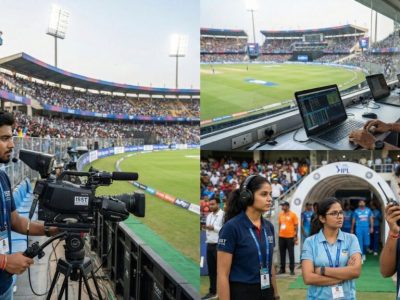
Hours before kick-off at a major stadium in Mumbai, three hundred staff members coordinate spectator entry, broadcast timing, sponsor placements, and security checks. Behind the dugout, a team manager verifies athlete accreditation while an event director monitors gate traffic from a tablet. None of these operations happen by chance. They rely on business professionals trained specifically to handle the financial, operational, and legal demands of modern athletics.
Enrolling in a BBA in Sports Management provides the administrative foundation required to operate behind the scenes in commercial sports. While fan enthusiasm draws many to the field, professional long-term growth requires mastery over contract negotiations, ticket revenue models, and venue logistics.
The Evolution of India’s Sports Sector
India’s athletic ecosystem expanded rapidly following the growth of commercial ventures like the Indian Premier League, Indian Super League, and Pro Kabaddi League. As the nation prepares its official bid for the 2036 Olympic Games, sports organizations require administrative personnel trained in formal business administration rather than informal management.
According to the Indian Sports Industry Report 2026, media rights and franchise operations generate over ₹15,000 crore annually in India. Modern sports franchises operate as corporate entities that require strict compliance, structured human resource management, and precise financial forecasting.
The transition from linear television to OTT streaming platforms has altered how leagues generate revenue. Media rights deals now depend on digital audience metrics, requiring event managers to understand online engagement data and digital intellectual property laws. Sports administrators now build structured business models around ticketing, brand sponsorships, merchandising, and venue leasing.
Core Academic Curriculum and Module Breakdown
The undergraduate curriculum merges standard business administration with specialized sports industry training. Students complete coursework across financial planning, organizational behavior, marketing strategy, and contract administration, tailoring each subject to the operational realities of athletic organizations.
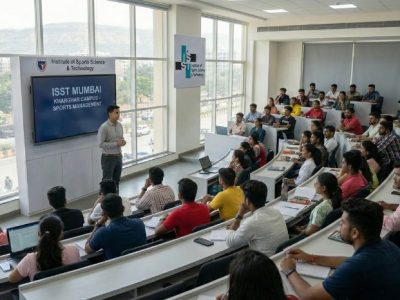
Early semesters build foundational skills in business communication, accounting, and marketing principles. Later coursework introduces specialized subjects including sports law, facility logistics, global sports governance, and athlete representation. In our sports management programs at ISST, theoretical classroom modules pair directly with direct practical training conducted at the ISST High Performance Centre.
| Semester Phase | Core Academic Subjects | Practical Skills Developed |
|---|---|---|
| Foundation (Year 1) | Principles of Management, Financial Accounting, Sports History, Business Communication | Budget creation, basic event coordination, professional writing |
| Specialization (Year 2) | Sports Marketing, Venue & Facility Management, Sports Law, Sponsorship Valuation | Sponsorship pitching, stadium operations layout, contract review |
| Application (Year 3) | Sports Analytics, Broadcast Logistics, Tournament Administration, Internship Project | Live tournament execution, client management, data reporting |
Students work on live event operations, broadcast logistics, and sponsorship valuation during their degree program. Through the ISST alumni connect, undergraduates gain exposure to active event managers, franchise owners, and agency directors across major national competitions.
Admission Eligibility and Academic Requirements
Candidates who have completed their 12th-grade examination from a recognized central or state educational board are eligible for admission into a BBA program. Most universities require an aggregate score of 45% to 50% in Class 12, regardless of whether the student studied Science, Commerce, or Arts.
While athletic achievement is helpful for personal background, playing experience is not mandatory for admission. Selection processes often evaluate academic records, written communication, and performance in an institutional entrance test or personal interview.
Get the Official ISST Prospectus
Review the full three-year syllabus, fee schedules in INR (₹), examination structures, and campus facility details.
Comparing Academic Tracks: BBA vs. BSc in Sports Science vs. MBA
Students evaluating higher education in sports often weigh business management against exercise science. Understanding the clear distinction between administrative operations and physical performance tracks ensures students pick the correct qualification for their long-term goals.
A BBA in Sports Management focuses on business administration, financial management, brand marketing, and event coordination. Conversely, a BSc in Sports Science examines human anatomy, exercise physiology, kinesiology, and athletic conditioning. While the business manager handles ticket revenue and stadium logistics, the sports scientist focuses on athlete recovery and physical performance optimization. Learn more about the difference between sports science and sports management to decide which track fits your career plan.
After completing an undergraduate degree, professionals seeking senior corporate leadership often pursue an MBA in Sports Management. The master’s program provides deeper training in corporate governance, international sports law, and venture equity strategy.
| Program Feature | BBA Sports Management | BSc Sports Science | MBA Sports Management |
|---|---|---|---|
| Primary Focus | Business & Field Operations | Athletic Biology & Physiology | Corporate Governance & Strategy |
| Target Career | Event Director, Client Manager | Strength Coach, Physiotherapist | General Manager, League Director |
| Entry Salary Range | ₹3,50,000 – ₹5,00,000 per year | ₹3,00,000 – ₹4,80,000 per year | ₹6,50,000 – ₹12,00,000 per year |
Career Pathways and Industry Compensation
Completing a degree in business administration tailored for sports opens avenues across professional leagues, sports marketing agencies, venue management companies, and athletic brands. A professional career in sports allows graduates to enter structured corporate roles.
Entry-level graduates typically start as event coordinators, junior client managers, venue operations associates, or sports marketing executives. Initial starting packages range from ₹3,50,000 to ₹5,00,000 annually. Professionals who progress to mid-level roles, such as team operations manager or senior sponsorship coordinator, earn between ₹8,00,000 and ₹15,00,000 per year according to regional compensation benchmarks.
Key sector employers include professional league franchises, sports broadcasting networks, grass-roots sports academies, equipment manufacturers, and municipal sports federations. Roles in sponsorship sales and athlete talent agencies frequently offer additional performance bonuses tied to deal sizes.
Essential Technical Skills for Modern Sports Management
While theoretical knowledge provides a strong base, employers in major leagues evaluate candidates on concrete technical abilities. Understanding modern operational tools gives job applicants a clear advantage during recruitment rounds.
First, data literacy has become essential. Managers use ticket sales analytics to dynamic-price seats and evaluate fan demographic trends. Second, understanding wearable tracking technology and performance reporting helps venue staff coordinate with coaching teams. Third, familiarity with digital sports media distribution allows managers to structure OTT subscription models and track social media engagement value during live broadcasts.
Frequently Asked Questions
Is a BBA in Sports Management a good career choice in India?
Yes, the expansion of commercial leagues and sports infrastructure has created high demand for qualified administrators. Graduates secure structured employment in event logistics, franchise management, and sports marketing.
Can students from non-sports backgrounds join a BBA in Sports Management?
Yes, prior competitive athletic experience is not required. The degree focuses on business operations, marketing, and finance rather than physical sport execution.
What is the minimum qualification for BBA Sports Management admission?
Candidates must pass their 12th-grade examination from a recognized board with at least 45% to 50% aggregate marks. Selection may include an institutional entrance test or interview.
What is the starting salary after completing a BBA in Sports Management?
Starting salaries in India generally range from ₹3,50,000 to ₹5,00,000 per annum. Salary growth depends on specialized skills, practical experience, and the size of the employer.
How does sports management differ from sports science?
Sports management handles business administration, revenue, marketing, and event operations. Sports science focuses on human performance, exercise physiology, biomechanics, and nutrition.
Do BBA sports management students receive practical field exposure?
Yes, recognized programs integrate mandatory practical training at dedicated sports facilities and live event internships. Students work on actual tournament logistics and sponsorship execution.
What job roles are available after graduating with a BBA in Sports Management?
Graduates work as sports event coordinators, franchise operations managers, athletic client agents, sports facility managers, and sponsorship executives.
Can I pursue an MBA after completing my BBA in Sports Management?
Yes, graduates can pursue an MBA in Sports Management or general business administration. Advanced degrees prepare professionals for senior executive and directorial roles.
Start Your Career in Sports Education
Building a successful administration career in professional sports requires structured business training, hands-on practical exposure, and direct connections to industry leaders. Take the first step toward managing professional tournaments and athletic franchises. Download the free ISST course prospectus or speak with an educational counselor today to explore admissions, campus facilities, and full curriculum options without obligation.
The Institute of Sports Science & Technology (ISST), founded in 2008 in Pune, is India’s premier education center dedicated exclusively to sports management and sports science. By integrating cutting-edge academic pedagogy, robust industry partnerships, and scientific methodologies, ISST develops top-tier professionals equipped to lead the modern sports, fitness, and wellness industries.
- Founded in 2008 as a pioneer in Indian sports education
- Offers specialized programs in Sports Management & Sports Science
- Strong industry partnerships with leading sports leagues, teams, and organizations
- Faculty comprises expert sports scientists, veteran coaches, and industry researchers
- Dedicated placement cell with extensive national and international support
To provide comprehensive insights, this content was drafted using AI tools and subsequently fact-checked, edited, and approved by the sports science and management experts at ISST.