Learn how local cricket academies use mobile AI apps to track biomechanics and build scout-ready player reports. Download our free training blueprint.
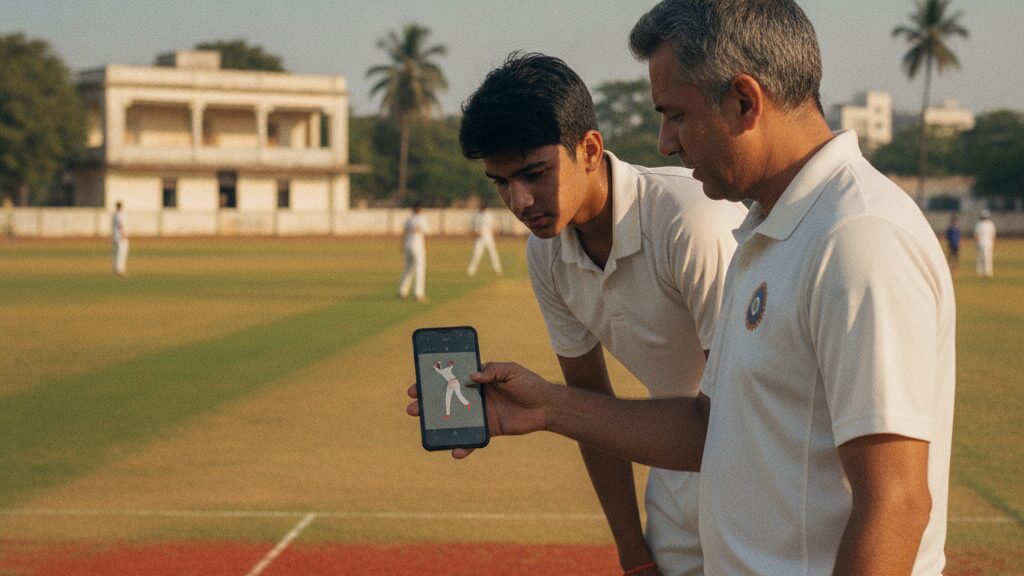
Grassroots cricket coaches across India can now convert ordinary net sessions into structured talent dossiers using a standard smartphone camera. For decades, biomechanical assessments and pitch map graphics stayed locked inside national institutes or high-budget franchise camps. Today, any academy coach working on a district ground can record an athlete, generate metric scores on crease mechanics, and hand a talent scout verified technical data.
This shift reached an inflection point when India’s News reported that Advanced Impactor launched an AI-powered cricket intelligence app in India on August 19, 2026. The tool processes standard mobile video footage to assess footwork angles, bowler release points, and pitch distribution patterns without external sensors. Because advanced sports analytics is no longer restricted to laboratory equipment, grassroots cricket mentors need a repeatable framework to collect, interpret, and present these figures to state selectors.
Why the August 2026 launch of Advanced Impactor changes grassroots coaching
High-end tracking cameras once cost several lakhs of rupees, making video-based biomechanical review impossible for small cricket academies. As noted by India’s News in August 2026, the arrival of Advanced Impactor proved that computer vision algorithms can analyze batting trigger movements and bowling trunk flexion directly through phone lenses. This shift democratizes high-performance metrics for every suburban net bowler and opening batter across India.
In our work at ISST (Institute of Sports Science & Technology), we see coaching staffs move away from vague observational notes toward objective numbers. When a coach tells a 16-year-old seam bowler that their front knee collapses at delivery, visual confirmation changes the conversation. The metric becomes immediate: Knee flexion at front foot contact: 142 degrees (acceptable baseline: 160–175 degrees). The player sees the angle on screen, and the technical intervention begins immediately. Understanding how to manage this transition is also central to discussions within the wider sports analytics market in India.
Step 1: Calibrate your mobile phone capture setup
Mobile analytics apps rely on clean visual inputs to map human skeletal points. If the video frames are blurry or poorly angled, the algorithm miscalculates joint angles and release trajectories. Coaches must treat the phone like an optical tracking station.
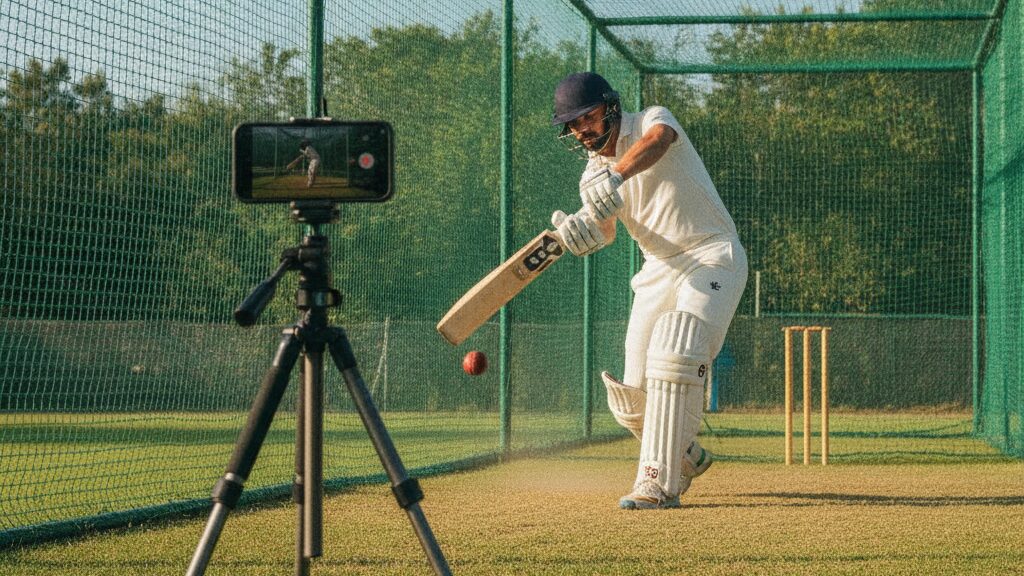
Use a stable tripod set at waist height, positioned precisely 3.5 meters perpendicular to the popping crease for side-on batting analysis. Set the camera recording speed to 120 or 240 frames per second rather than standard 30 or 60 frames. Natural morning sunlight between 7:30 AM and 10:00 AM provides clean shutter speeds without motion blur across the bat swing. A stable capture environment gives your cricket performance analysis app reliable source video.
Step 2: Track front-foot mechanics and bowler release markers
Once the video is processed, avoid collecting excessive variables that overwhelm young players. Concentrate on three primary biomechanical markers that directly govern performance and reduce joint stress. For batters, measure head position relative to the base of support at the point of ball impact. For bowlers, track trunk lateral flexion and front-knee stability at the moment of release.
When running net sessions at the ISST High Performance Centre, our coaches evaluate delivery stride length against total body height. Stride length: 78% of standing height (ideal range: 75%–85%). If the stride overreaches to 92%, braking forces spike into the lower back and delivery speed drops. Coaches studying through the Level 01 Cricket Coaching Certificate (L1CCC) learn that early identification of these mechanical flaws prevents bowling stress fractures before competitive tournaments start.
Step 3: Map pitch zones and bat-speed metrics
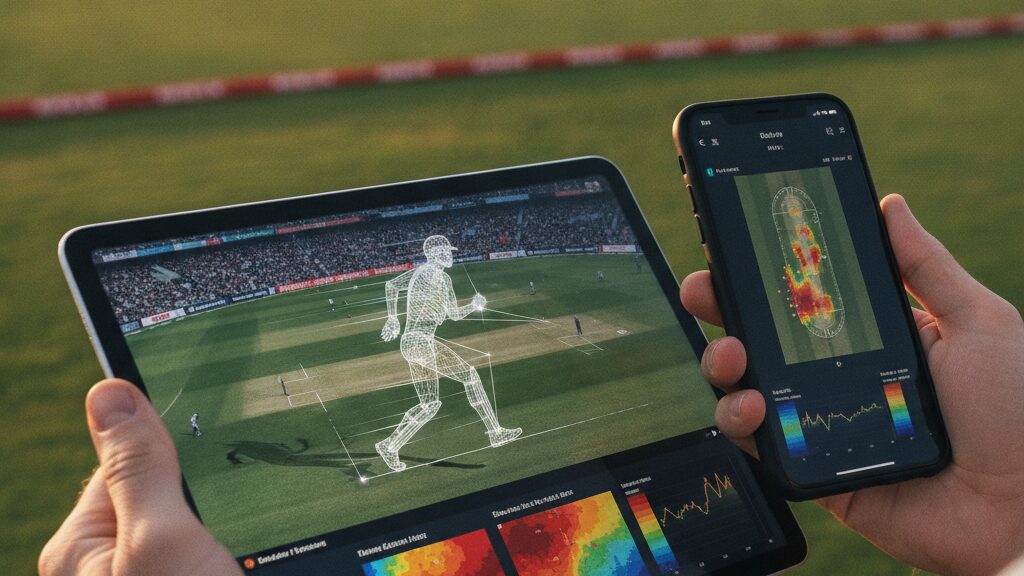
Biomechanical stability matters only if it produces repeatable results on the pitch. Modern apps generate automated beehive charts and pitch maps from back-of-the-net video feeds. Instead of counting raw runs scored in practice, record shot control percentages across specific length categories.
In practice, a coach tracks good-length deliveries on off-stump across a 36-ball spell. Control percentage: 81% (against balls pitching between 4 and 6 meters from the stumps). If the app highlights a sudden drop in bat path velocity from 114 km/h to 96 km/h after 25 deliveries, you have documented fatigue-induced deceleration. Combining mechanical metrics with pitch maps turns an average practice session into actionable talent assessment.
Step 4: Build scout-ready talent dossiers using mobile intelligence
Talent scouts represent state associations, IPL talent academies, and corporate clubs. They review hundreds of young athletes each month and have little time for subjective opinions from personal coaches. A one-page data report captures their attention far faster than emotional praise.
Organize your player report around clean, comparative baselines:
- Athlete physical metrics: Height, arm reach, and peak sprint speed over 20 meters.
- Kinematic markers: Front-knee angle at ball release, hip-shoulder separation angle at back-foot impact.
- Execution data: Pitch heat map grouping, bat-swing speed average across 60 balls, and false-shot percentage.
- Load exposure: Cumulative weekly deliveries bowled, measured against guidelines taught in sports sciences courses.
When presenting player files, always protect player welfare and identity standards. Review the protocols around athlete data privacy in India to ensure that biometric videos of youth players remain protected within club storage servers.
Preparing future analysts after the Advanced Impactor mobile app shift
The sudden accessibility of camera-based computer vision changes the required skillset for modern sports staff. A coach can no longer rely solely on gut instinct, and a sports scientist can no longer operate only inside air-conditioned biomechanics laboratories. Today’s practitioners must interpret cloud-processed video data directly on the grass boundary.
Young professionals aiming for a career in sports must bridge physical coaching with algorithmic feedback. ISST alumni connect stories from regional cricket setups demonstrate that analysts who understand both biomechanics and mobile reporting software earn roles faster. Those pursuing qualifications like the Distance Masters Programme in High-Performance Coaching (DMPHPC) or formal degrees in sports management and sports sciences gain practical training in converting raw technical readouts into winning game strategies.
Frequently Asked Questions
Can a phone camera replace high-end radar guns and optical motion rigs?
Smartphone cameras provide accurate joint angles and delivery pitch maps for daily academy coaching. They offer reliable screening data, while specialized multi-camera motion labs remain the gold standard for medical-grade kinematic research.
Which frame rate works best for cricket batting analysis on mobile phones?
Coaches should record batting actions at 120 or 240 frames per second using high-speed camera settings. Higher frame rates reduce shutter blur during rapid bat swings and ball impact moments.
Do talent scouts accept data generated by mobile sports apps?
State and franchise talent scouts actively value verified data dossiers that document bowling consistency, release velocity, and biomechanical angles. Concrete numbers help scouts validate what they observe with their own eyes during district trials.
How much storage space does an academy need for regular video tracking?
A single 60-ball high-frame-rate session recorded in high definition consumes roughly 3 to 5 gigabytes of phone storage. Academies should establish structured cloud drives to archive student footage without filling local mobile devices.
What is the most critical bowling metric to monitor on mobile apps?
Front-knee brace angle at release and lateral trunk flexion provide the clearest signals for speed generation and lower back health. Maintaining a steady front knee between 160 and 175 degrees maximizes kinetic energy transfer into the delivery.
Does a cricket academy require expensive sensors to build pitch maps?
Modern mobile applications use computer vision algorithms to trace ball bounce locations directly from phone video. You do not need expensive ground radar or wearable ball chips to produce accurate pitch heat maps.
How can young coaches learn to interpret AI cricket metrics?
Coaches can complete specialized certifications in sports analytics, strength and conditioning, and high-performance training. ISST offers classroom and distance programs that teach coaches how to evaluate digital biomechanical readouts.
Who owns the video recordings and biometric data captured during training?
The academy and the individual athlete share responsibility for training recordings under Indian data protection practices. Academies must secure consent from parents when filming junior cricketers for performance profiling.
Now that Advanced Impactor Launches AI-Powered Cricket Intelligence App in India, master mobile analytics and scout reporting through ISST sports education programs. Explore our free prospectus online today without payment obligations to build your future in sports sciences and high-performance coaching.
The Institute of Sports Science & Technology (ISST), founded in 2008 in Pune, is India’s premier education center dedicated exclusively to sports management and sports science. By integrating cutting-edge academic pedagogy, robust industry partnerships, and scientific methodologies, ISST develops top-tier professionals equipped to lead the modern sports, fitness, and wellness industries.
- Founded in 2008 as a pioneer in Indian sports education
- Offers specialized programs in Sports Management & Sports Science
- Strong industry partnerships with leading sports leagues, teams, and organizations
- Faculty comprises expert sports scientists, veteran coaches, and industry researchers
- Dedicated placement cell with extensive national and international support