The shift from hobby to high-growth industry
The victory of Gukesh D and the rise of a new generation of Indian Grandmasters changed the math for chess in India. It is no longer just a game for the academic elite or a quiet hobby in community centers. According to FIDE data from early 2026, India has seen a 40% increase in registered players under the age of 18 since 2023. This surge is not just a sporting trend. It is a commercial gold rush.

Parents are now viewing chess as a strategic investment in their child’s cognitive development. This shift in perception has turned local coaching centers into scalable business entities. In our work at ISST (Institute of Sports Science & Technology), we have seen a growing demand for professional management in niche sports. The growth is outstripping the available talent to run these organizations.
The unit economics of a modern chess academy
Running a chess academy in 2026 requires more than a high ELO rating. The most successful academies have moved toward a subscription-based revenue model. Instead of one-off fees, they use monthly memberships ranging from ₹2,000 to ₹8,000 depending on the level of coaching. This creates a predictable cash flow that allows for infrastructure expansion.
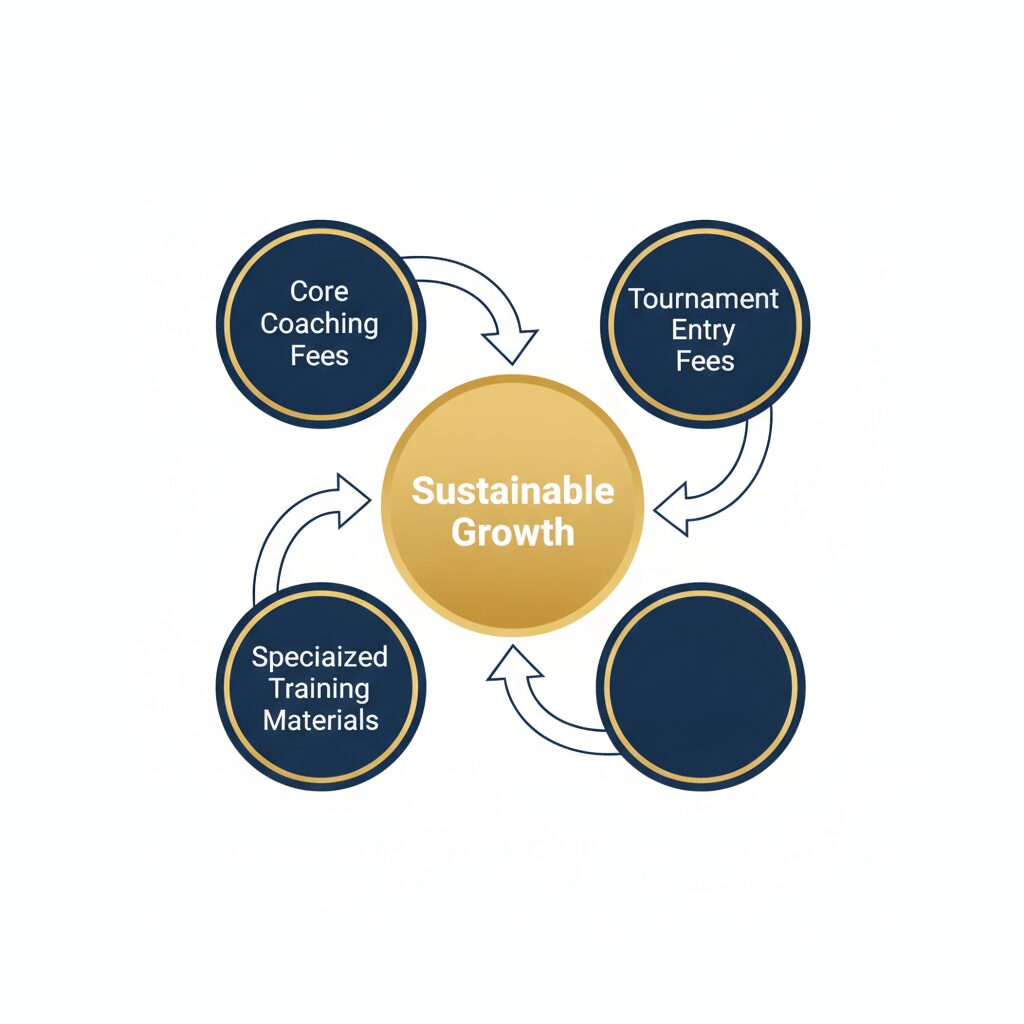
A typical mid-sized academy in a city like Chennai or Mumbai now operates on three primary revenue streams. First is the core coaching fee. Second is the organization of proprietary tournaments with entry fees. Third is the sale of specialized training software and study materials. When an academy scales to 500 students, the operational margin often exceeds 30% because the overhead is primarily human capital.
The failure mode for many new academies is the reliance on a single star coach. When the coach leaves, the students follow. Professional entities solve this by building a curriculum-led model. They standardize the teaching process so the brand, not the individual, holds the value. This is where sports management principles become vital for survival.
Sponsorship shift from CSR to brand alignment
For years, chess sponsorship in India lived in the world of Corporate Social Responsibility (CSR). Companies gave money to support the game because it looked good for their image. That has changed. In 2026, brands are treating chess as a high-intent marketing channel to reach the affluent, educated middle class.
We are seeing a move toward performance-linked sponsorships. A brand no longer just puts a logo on a jersey. They tie their visibility to tournament wins or rating milestones. This mirrors the commercial structure seen in the most expensive leagues in the world, where value is derived from visibility and prestige.
The sponsorship value of a top Indian youth player now competes with traditional sports. Tech firms and ed-tech platforms are the primary drivers. They recognize that the chess audience overlaps perfectly with their target customer: parents who prioritize high-performance education and mental discipline.
The professionalization gap in chess management
There is a glaring disconnect between the quality of chess coaching and the quality of business operations in India. Most academies are run by Grandmasters who are brilliant at the board but struggle with P&L statements, staff retention, and digital marketing. This creates a massive opportunity for those with formal training in sports administration.
Managing a high-performance center requires knowledge of athlete psychology, facility management, and legal contracts. A coach knows how to win a game, but a manager knows how to build a high-performance center that attracts global talent. The gap is where the money is.
In practice, an academy that employs a professional manager can increase its student intake by 25% simply by optimizing the enrollment funnel and improving the parent communication loop. This is why degrees like the BSC Sports Management are becoming relevant to the chess world. The industry needs CEOs, not just coaches.
Scaling through the franchise model
The next phase of the chess boom is the move from single-location academies to franchised networks. By creating a replicable system of coaching and administration, established brands are expanding into Tier-2 and Tier-3 cities. This allows them to capture the growing interest in regions where high-quality coaching was previously unavailable.
The franchise model reduces the capital risk for the brand owner while providing a turnkey business for the local investor. According to industry estimates from 2026, the average setup cost for a branded chess franchise in India ranges from ₹10 lakh to ₹25 lakh. The return on investment is faster than traditional gym or tuition center models because the physical infrastructure requirements are minimal.
However, the risk in franchising is quality dilution. If the coaching standard drops in one branch, the entire brand suffers. To prevent this, leading academies are implementing strict certification programs for their instructors, ensuring that every student receives the same level of practical training regardless of their location.
Integrating sports science into chess
The modern Grandmaster is an athlete. The mental load of a five-hour game requires immense physical endurance and nutritional discipline. We are seeing a rise in academies that integrate sports sciences into their training. This includes sleep tracking, heart rate variability (HRV) monitoring, and specific dietary plans to maintain glucose levels during long matches.
This integration increases the value proposition of the academy. When a center can prove that its players have better stamina and lower stress levels during playoffs, they can charge a premium. It moves the service from basic coaching to elite performance optimization.
For those looking to enter this space, understanding the intersection of psychology and physical health is a competitive advantage. Those with a Certificate in Sports Psychology & Mental Training are finding roles as mental performance coaches for top-tier chess players, helping them handle the pressure of world-stage competitions.
Frequently Asked Questions
Is starting a chess academy profitable in India?
Yes, provided you use a subscription model rather than one-off fees. Low overhead costs and high demand for cognitive skill-building make it a high-margin business.
What is the average cost to start a chess academy?
Small setups can start with ₹2 lakh to ₹5 lakh, while branded franchises typically require ₹10 lakh to ₹25 lakh for full infrastructure.
Do chess players get corporate sponsorships in India?
Top-rated players and promising juniors now secure sponsorships from tech, banking, and ed-tech brands through performance-linked contracts.
What qualifications are needed to manage a sports academy?
While coaching skills help, a degree in sports management or an MBA in sports management is preferred for handling operations and scaling.
How does the ‘Gukesh effect’ help small academies?
It increases the perceived value of chess, leading to a higher influx of students and a willingness among parents to pay premium fees.
Can chess academies be run online?
Yes, hybrid models are most successful, combining the reach of online theory classes with the intensity of offline practical tournaments.
Is sports science relevant for chess players?
Absolutely, as it helps players manage mental fatigue, nutrition, and physical endurance during long-format tournaments.
What is the best way to scale a chess business?
Developing a standardized curriculum and then expanding through a franchise model is the most effective way to grow quickly.
Build a professional career in the business of sports by mastering the art of management. Explore ISST programs today to gain the skills needed to lead the next generation of sports academies for free.