

Who are the highest paid sports leagues in 2026? Compare NFL, NBA, IPL, and Premier League revenue and athlete salaries in our 2026 financial analysis.
The Economics of Elite Performance: Highest Paid Sports Leagues in 2026
In May 2026, a mid-tier point guard signed a contract that broke the old world’s logic. This wasn’t a fluke. It was a signal. The gap between local pastimes and global financial engines is now a canyon. Sports are no longer just games. They are high-stakes asset management systems where the athlete is the primary capital. If you treat it like a game, you lose. If you treat it like a portfolio, you win.

Capital follows attention. In 2026, attention is the scarcest resource on the planet. The leagues that capture it command the highest premiums. This isn’t about points on a scoreboard; it’s about media rights, commercial valuations, and the talent flow. Regional disruptors are forcing salary inflation across the board. Sports science and management are the only things keeping these billion-dollar ecosystems from collapsing under their own weight.
Wealth in sports comes from ownership and leverage. For the athlete, leverage is their physical peak. For the league, leverage is the media contract. By the 2026 fiscal year, these two forces merged to create pay scales that defy history. To understand this, look past the highlights. Look at the balance sheets. That is where the real game is played.
Ranking the Highest Paid Sports Leagues in 2026: Revenue vs. Athlete Earnings
The hierarchy of sports wealth is stable at the top but volatile in the middle. Revenue determines the ceiling. Athlete earnings determine the talent flow. Follow the money to see the future. By 2026, the top five leagues have separated themselves from the rest of the world entirely. This creates a winner-take-all market for global talent.
2026 Global Sports Revenue & Salary Comparison Table
To understand the scale of the highest paid sports leagues, we must look at the raw data. The following table breaks down the estimated annual revenue and average player compensation for the top global ecosystems in 2026.
| League | Est. Annual Revenue (2026) | Avg. Athlete Salary | Primary Revenue Driver |
|---|---|---|---|
| NFL | $21.5 Billion | $5.2 Million | Domestic Media Rights |
| NBA | $13.2 Billion | $11 Million | Global Licensing & Media |
| English Premier League | $8.9 Billion | $4.1 Million | International Broadcasting |
| MLB | $11.8 Billion | $4.5 Million | Ticket Volume & Ads |
| IPL | $11.2 Billion | $1.2 Million (Avg) | Digital Rights & Sponsorships |
As shown, while the NFL dominates in total revenue, the NBA remains the leader in average per-player compensation due to a smaller player pool and aggressive global expansion. The IPL’s rapid ascent is driven by the highest revenue-per-minute growth in sports history.

Why North American Leagues Command the Highest Salaries in 2026
North American leagues operate as legal monopolies. They have perfect pricing power. The National Football League (NFL) remains the undisputed king. 2026 financial reports show the NFL generated over ₹1.6 lakh crore ($20 billion) in annual revenue. This wealth is fueled by domestic media rights that are effectively recession-proof. People will cut their grocery budget before they cut their sports streaming subscription. This means the NFL isn’t just a league; it’s a utility.
The National Basketball Association (NBA) follows. The NBA excels at exporting culture, which means its valuation is tied to its status as a global lifestyle brand. Major League Baseball (MLB) survives on sheer volume. A 162-game season creates a massive inventory of advertising slots. Individual game ratings might fluctuate, but the cumulative revenue keeps MLB in the top tier of the highest paid sports leagues. They have the most inventory to sell, which means they have the most opportunities to monetize.
The European Powerhouse: Premier League’s Financial Engine
No analysis of the highest paid sports leagues is complete without the English Premier League (EPL). By 2026, the EPL has solidified its position as the most-watched football league globally, creating a financial gravity well that pulls talent from every corner of the earth.
The EPL’s success lies in its collective bargaining and distribution model. Unlike other leagues where a few teams hoard the wealth, the EPL distributes broadcasting revenue more equitably, ensuring that even bottom-tier teams can outbid top teams in smaller leagues for elite talent. This has led to a systemic inflation of player wages across Europe.
- Global Reach: Broadcasting deals in Asia and North America have peaked in 2026, adding billions to the league’s valuation.
- The ‘Super-Club’ Effect: The top six clubs operate as sovereign financial entities, with wage bills that rival the total revenue of mid-sized sports leagues.
- Talent Pipeline: The financial gap between the EPL and other European leagues (La Liga, Bundesliga) has widened, making it the primary destination for the world’s highest-paid footballers.
This financial dominance underscores the need for specialized knowledge in sports administration to manage such complex, multi-national revenue streams.

IPL and the Indian market: the ₹100 crore player milestone
The Indian Premier League (IPL) did what no other league could. It cracked the code on revenue-per-minute. In the 2026 auction, the industry saw its first ₹100 crore player contract. This wasn’t an anomaly; it was math. A massive middle class with rising disposable income creates a gravitational pull for advertisers. Cricket is the only guaranteed way to reach them.
The IPL business model is leaner than its Western rivals. It runs for a shorter time but packs more commercial intensity into every hour. This efficiency is a case study for anyone seeking a career in sports. You are witnessing the transition from a sport-first model to a media-first model. The money follows the eyeballs, and the eyeballs are locked on the 22 yards. If you own the attention of a billion people, the revenue takes care of itself.
NBA financial structure and the average NBA salary 2026
The NBA is a laboratory for sports management. It uses complex algorithms to ensure parity while maximizing profits. The average NBA salary 2026 has hit ₹92 crore ($11 million) per year. This isn’t because the players are magically better than they were thirty years ago. It is because the value of the media they produce has increased exponentially. They are creators in a high-leverage environment.
From the Balance Sheet to the Boardroom: Your Career in 2026
The astronomical figures seen in the highest paid sports leagues aren’t accidental. They are the result of meticulous sports science, data-driven athlete management, and aggressive commercial strategies. As these leagues transition into ‘media-first’ models, the demand for professionals who understand both the game and the ledger has skyrocketed.
Whether it is managing a ₹100 crore player contract in the IPL or optimizing media rights for a global franchise, the 2026 market rewards those with formal training in sports management. The era of the ‘fan-turned-manager’ is over; the era of the sports executive has arrived.
To navigate this landscape, professionals are now pivoting toward advanced certifications that blend finance, law, and performance science. Understanding the economics of elite performance is no longer optional—it is the baseline for entry into the front office of any top-tier league.
Impact of the new 2025–26 media rights deal on player pay
The current salary explosion is the result of the 2025–26 media rights deal. It tripled the previous payout. The Collective Bargaining Agreement (CBA) mandates that players get roughly 50% of basketball-related income, so the salary cap rose automatically. In 2026, ‘role players’ earn more than most CEOs of Fortune 500 companies. This changes the incentives for everyone involved.
This creates a massive challenge for sports management professionals. Managing a roster is now managing a billion-dollar portfolio. A single bad contract can hamstrung a franchise for half a decade. Teams now employ data scientists to predict the ROI for every minute a player spends on the court. They aren’t just scouting talent anymore; they are pricing assets in a volatile market.
Salary floor vs luxury tax: how teams balance billion-dollar rosters
The NBA uses a ‘soft cap’ with a luxury tax. It lets wealthy owners overspend, but the penalties are brutal. For every ₹80 ($1) spent over the limit, they might pay ₹320 ($4) in taxes. This money is redistributed to smaller teams. It’s corporate socialism designed to keep the league competitive. In 2026, teams like the Warriors and Clippers pay tax bills that exceed the total payroll of entire leagues in other sports. It’s the price of entry for elite performance.
Global football shifts: Saudi Pro League wages and European responses
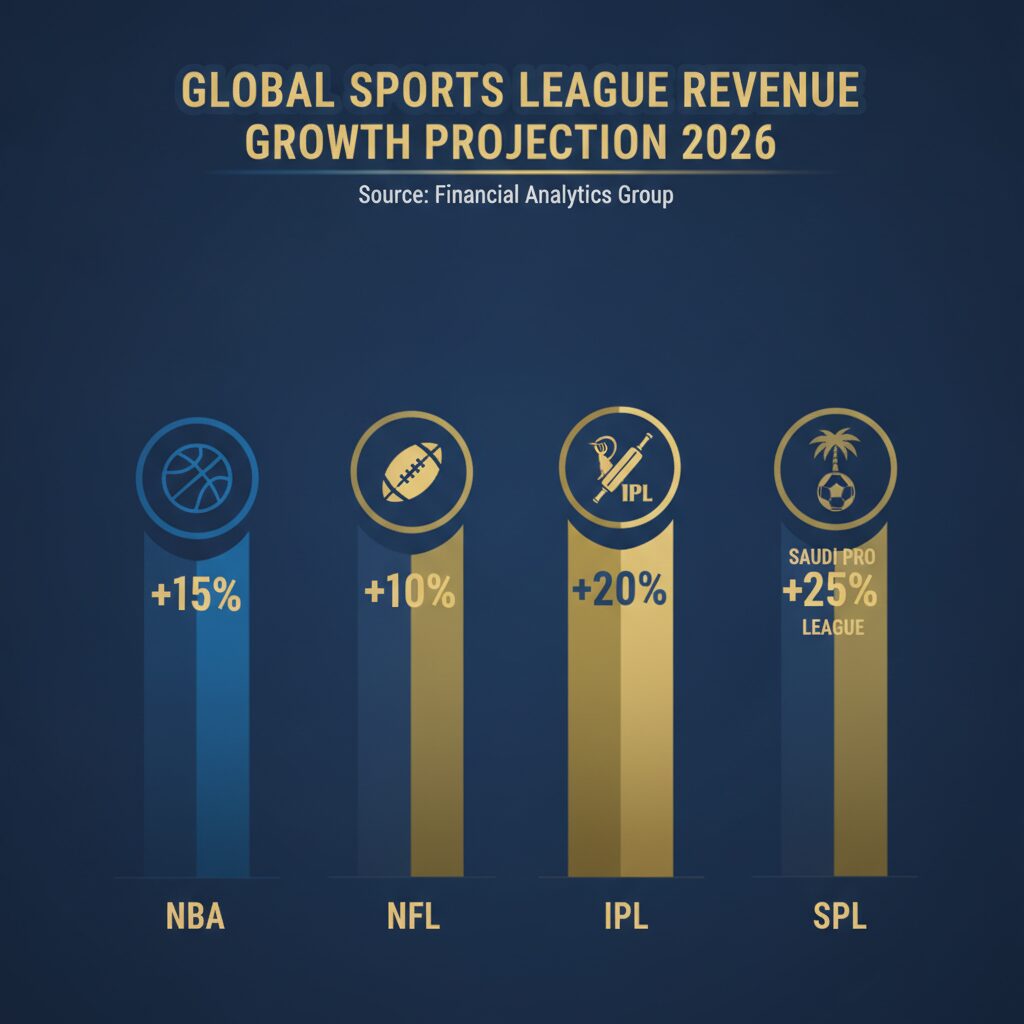
Football is the world’s most popular sport, but its finances are fragmented. For decades, Europe was the only place to get paid. That’s over. The Middle East decided to buy its way into the ecosystem. The Saudi Pro League wages in 2026 have forced every major European club to tear up their old wage structures. You either pay the market rate or you lose your stars.
The Middle Eastern investment model: sustainability or disruption?
The Saudi model is based on sovereign wealth, not immediate profit. They are buying soft power and economic diversification. In 2026, the average salary for a top star in Saudi Arabia is 3x what they would earn in the Premier League. The league persisted by signing younger stars in their prime, not just retired legends. This created a global arms race for talent.
This disruption created a massive demand for athlete contract management experts. Navigating these multi-jurisdictional deals is a nightmare of tax-free incentives, global image rights, and private jet clauses. It’s high-level negotiation. If you don’t have the specific knowledge to handle these deals, you’re leaving hundreds of crores on the table.
Premier League and La Liga: defending the crown of European football
European leagues can’t compete with sovereign wealth funds on raw cash, so they compete on prestige. The English Premier League remains the most lucrative because of its global reach. However, the ‘wage contagion’ is real. Even mid-table clubs must now offer ₹80 crore ($10 million) annual salaries just to keep their best players from leaving. It’s a defensive play to keep the quality of the product high.
Protecting the investment through sports science and performance
When you pay a human being ₹400 crore a year, their health is your biggest liability. A hamstring tear isn’t just a medical issue; it’s a corporate crisis. This is why sports sciences is now the most important department in the building. In 2026, the goal isn’t just healing injuries. The goal is predicting them before they happen. You protect the asset at all costs.
Biometric monitoring as a contract requirement in 2026
In 2026, high-value contracts include ‘biometric clauses.’ Players wear tracking devices 24/7 to monitor sleep, blood glucose, and heart rate variability. If the data shows a player is at high risk, the coach benches them. Period. The asset must be protected from its own competitive drive. This requires a new breed of professional who can bridge the gap between physiology and data science.
At the ISST High Performance Centre, we see this integration daily. The demand for specialists who can interpret athlete contract management through physical durability is at an all-time high. Professionals with a Masters Programme in Sports Sciences are the new guardians of these billion-dollar rosters. They are the insurance policy for the league’s biggest investments.
Injury prevention technologies at the ISST High Performance Centre
Modern practical training uses AI-driven biomechanics to analyze movement patterns. By spotting a slight imbalance in a stride, we can predict an ACL strain weeks before it happens. In the highest paid sports leagues, this technology saves teams hundreds of crores every season. Keep your star on the field for 10 extra games, and the media revenue follows. Sports science is no longer a cost center; it is a profit center.
The mechanics of athlete contract management in a high-inflation era
Contracts in 2026 are living documents. Static five-year deals are too risky in a world where revenue jumps 20% overnight. The executive sports agent has replaced the old-school negotiator. They are part lawyer, part economist, and part data analyst. They don’t just ask for more money; they build algorithms for compensation.
Escalation clauses and performance-based incentives in modern sports
The ‘revenue share escalator’ is the new standard. If the league’s media deal grows, the player’s salary grows with it. This prevents the player from being stuck in an underpriced deal. We also see hyper-specific incentives. A striker might get ₹5 crore for hitting ‘expected goals’ (xG) targets or high-intensity sprint counts. The sports management world has moved toward objective, data-backed rewards. No more guessing; just results.
The rise of the executive sports agent and legal strategist
To manage these deals, you need sports education that goes beyond the basics. You need to understand international law, digital asset rights, and collective bargaining. It is a highly specialized career path. Students in our MBA Sports Management program focus on these strategic negotiations. They are learning to manage the business behind the game, which is where the real leverage lives.
Frequently Asked Questions
Which sports league has the highest average salary in 2026?
The NBA holds the top spot. The average player earns ₹92 crore ($11 million) in 2026. Small roster sizes combined with massive global media revenue make it the most lucrative league per athlete.
How do Saudi Pro League wages compare to the Premier League in 2026?
The Premier League has more total wealth, but the Saudi Pro League offers higher individual peaks. Top stars in Saudi Arabia often earn 3 to 4 times their European market value, and it’s tax-free, which means their take-home pay is astronomical.
What is the average NBA salary for the 2026 season?
It’s roughly ₹92 crore ($11 million). This is a direct result of the 10% annual salary cap increases triggered by the 2025 media rights explosion. Even backup players are now earning generational wealth.
Why are sports salaries increasing so rapidly in 2026?
Streaming platforms are fighting for live content, which is the only thing people still watch in real-time. This bidding war, combined with investment from sovereign wealth funds, has inflated the price of talent globally.
Does the IPL pay more than the MLB on a per-match basis?
Yes. The IPL is the king of efficiency. Because the season is short, top cricketers earn more per hour of play than almost any other athlete on earth. They have mastered the art of high-intensity monetization.
What role does sports science play in athlete contracts?
It’s the foundation of the deal. Biometric data determines the ‘risk profile’ of an athlete. If your data is bad, your contract length is shorter. Teams use this to avoid “dead money” on injured players.
Is a career in sports management lucrative in 2026?
Absolutely. As leagues become billion-dollar entities, the people who can manage that capital are in high demand. Salaries for sports executives now rival those in private equity or tech.
How can I start a career in these high-paid leagues?
You need a mix of sports education and practical training. You can’t just be a fan. Programs like the PGD or MBA in Sports Management from ISST provide the specific knowledge and industry connections needed to enter this high-stakes world.
The financial trajectory of global sports in 2026 is a merger of entertainment and asset management. As the NBA and Saudi Pro League reset the ceiling for compensation, the need for qualified professionals has never been higher. Navigating this industry requires more than passion; it demands judgement and specialized training. Explore how an ISST sports education prepares you for the high-performance world of professional leagues through our UGC recognized degree programs. Start your journey today with our industry-led curriculum. The game has changed. Make sure you’re playing the right one.
The Institute of Sports Science & Technology (ISST), founded in 2008 in Pune, is India’s premier education center dedicated exclusively to sports management and sports science. By integrating cutting-edge academic pedagogy, robust industry partnerships, and scientific methodologies, ISST develops top-tier professionals equipped to lead the modern sports, fitness, and wellness industries.
- Founded in 2008 as a pioneer in Indian sports education
- Offers specialized programs in Sports Management & Sports Science
- Strong industry partnerships with leading sports leagues, teams, and organizations
- Faculty comprises expert sports scientists, veteran coaches, and industry researchers
- Dedicated placement cell with extensive national and international support
To provide comprehensive insights, this content was drafted using AI tools and subsequently fact-checked, edited, and approved by the sports science and management experts at ISST.