
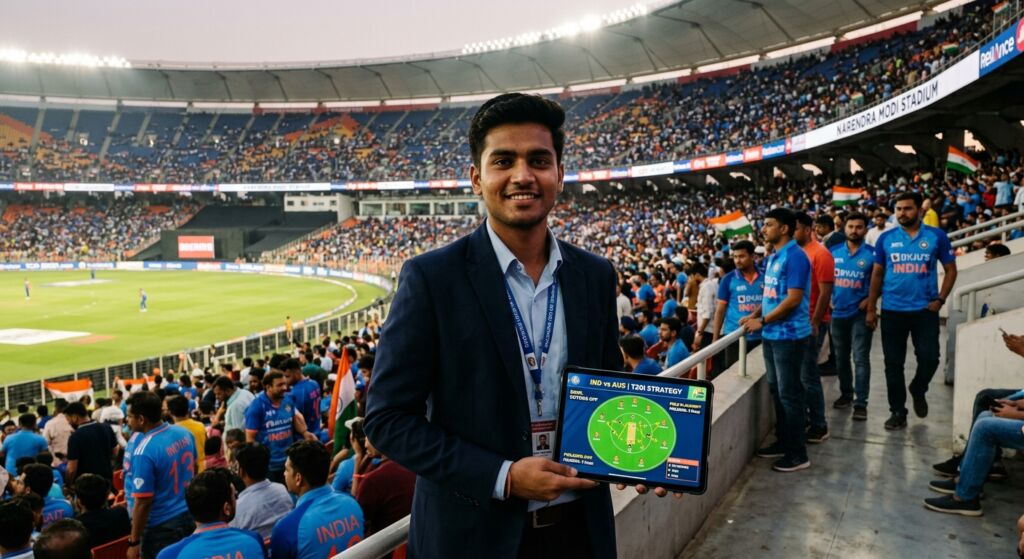
Ten years ago, if you told your parents you wanted to work in sports, they’d likely give you two choices: make the national team or find a “real” job. That world is dead. Right now, the machinery running Indian sport—the game behind the game—is a powerhouse. If you spend your nights dissecting IPL auction strategies or obsessing over ISL formations, the traditional engineering or BCom path will feel like a cage. You aren’t just a fan; you’re a strategist without a stadium.
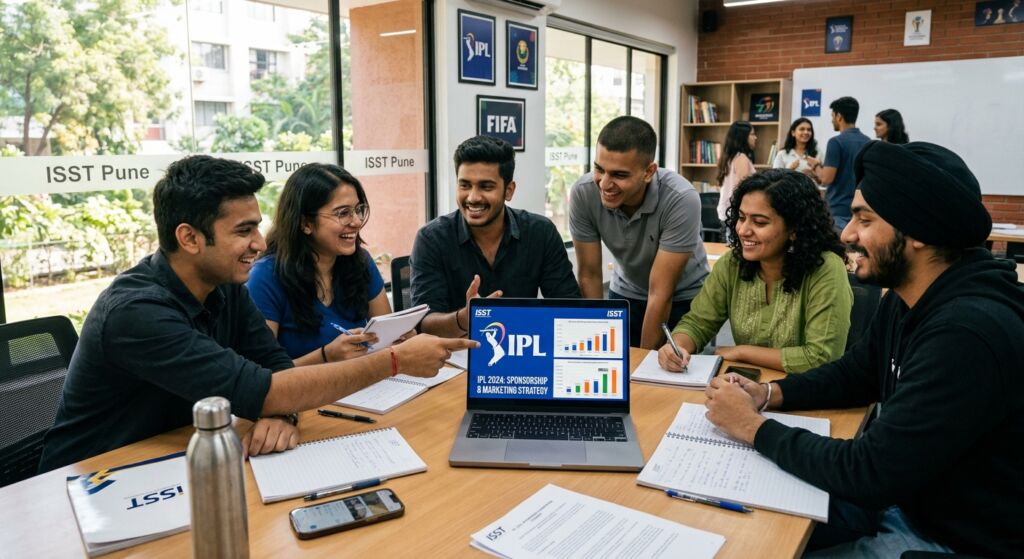
The numbers back this up. India’s sports industry is currently valued at over ₹15,000 crore and is expanding at a relentless 15% year-on-year. It is starving for professional managers who can bridge the gap between the scoreboard and the balance sheet. This guide breaks down how to turn that obsession into a legitimate career, the 2026 requirements for a BBA in sports management, and what your first paycheck will actually look like. I’ve seen students go from the back of the classroom to the front of the franchise dugout in less than 36 months.
Why Pursue a Sports Management Career After 12th in 2026? (Industry Outlook)
The 2026 sporting calendar is packed. We are no longer a one-sport nation. While cricket remains the 800-pound gorilla, the explosion of a multi-sport culture has created a massive vacuum for skilled professionals. I often hear parents ask if this is “stable.” The answer is in the sheer volume of events. When you have a professional league match happening almost every night of the year, stability isn’t the question—capacity is.
The rise of the multi-sport culture in India
Industry reports show that viewership for non-cricket sports like Kabaddi and Football has surged by 40% since 2024. This isn’t just a TV metric; it is a boots-on-the-ground reality. From private football academies in Navi Mumbai to high-performance centers in Bengaluru, the infrastructure is ballooning. Someone has to manage these facilities, coordinate the league schedules, and balance the books. That someone is a sports manager, which means you become the indispensable architect of the fan experience.
IPL, ISL, and PKL: More than just entertainment
The IPL now features 10 franchises, each functioning like a high-growth corporation. The Indian Super League (ISL) and Pro Kabaddi League (PKL) have followed that blueprint. These leagues have moved beyond three-month bursts to year-round operations. They need specialists in logistics, player management, and digital engagement. When you see a team dugout, you’re looking at a small army of managers ensuring every detail—from the pH of the hydration drinks to the millisecond of data analytics—is flawless.
Government initiatives: Khelo India and the TOPS scheme
The Indian government is no longer just watching from the sidelines. Through the Khelo India programme and the Target Olympic Podium Scheme (TOPS), hundreds of crores are being funneled into grassroots development. This state-led investment creates thousands of roles within the Sports Authority of India (SAI) and various state sports councils. These are structured, pensionable, and well-paying jobs for those who hold the right degree, giving you the authority of a public official with the heart of an athlete.
Top Career Options in Sports Management for 12th Pass Students
Most students think sports management is just being a flashy agent for a star player. That’s about 2% of the market. Most of our 2,000+ ISST alumni work in roles that didn’t exist a decade ago. Here are the paths you can actually walk.
Step-by-Step Roadmap: How to Start Your Sports Management Career After 12th
Transitioning from a high school student to a sports professional requires a strategic approach. Here is the definitive 2026 path to ensure you aren’t just getting a degree, but building a career.
- Step 1: Identify Your Interest Area: Do you prefer the chaos of event operations, the precision of data analytics, or the strategy of player management? Understanding this helps you choose between a BBA or a specialized diploma.
- Step 2: Choose the Right Qualification: For most 12th pass students, a BBA in Sports Management is the gold standard. It combines core business fundamentals (finance, HR, marketing) with sports-specific application.
- Step 3: Build a ‘Sports Portfolio’ During College: Degrees get you the interview; experience gets you the job. Volunteer for local marathons, intern with a state sports association, or manage a college league.
- Step 4: Master 2026 Tech Tools: Learn the basics of sports analytics software, CRM tools for fan engagement, and digital marketing for athlete branding.
- Step 5: Networking & Internships: Target internships during the IPL or ISL windows. This is where you move from the classroom to the dugout.

Eligibility & Course Comparison: Which Path is Right for You?
One of the most common questions we receive is whether you need to be an athlete to enter this field. The answer is a resounding no. Sports management is about the business of sport, not the play of sport.

General Eligibility for 2026 Admissions
- Educational Qualification: Completion of 10+2 (12th standard) from a recognized board (CBSE, ICSE, State Boards).
- Stream: Open to all streams (Commerce, Science, and Arts). While Commerce students have a slight edge in accounting, Arts and Science students often bring unique perspectives to management.
- Minimum Percentage: Typically 50% aggregate, though top-tier institutes may require higher benchmarks.
Course Comparison Table
Depending on your goals, you might choose different paths:
- BBA in Sports Management: Best for those wanting a comprehensive 3-year degree covering business and sports. Ideal for corporate roles in franchises.
- BSc in Sports Science: Best for those interested in the physiological and biomechanical side of performance. Ideal for high-performance centers.
- Diploma in Sports Management: Best for a fast-track entry into the industry or for those looking to specialize in a specific niche quickly.
Sports Operations Manager: Running the show
An operations manager is the glue. If a match starts at 7 PM at the Wankhede Stadium, the operations head has been on-site since 5 AM. They handle the messy reality of stadium logistics, security cordons, vendor management, and team travel. It is high-pressure and fast-paced. If you are the person who organized every school event while everyone else was just hanging out, this is your calling. You’ll be the one solving problems in real-time while 40,000 people roar in the stands.
Sports Marketing and Brand Management
Brands like Tata, Dream11, and Reliance aren’t just logos on a jersey; they are the financial engine of the industry. A sports marketer figures out how to weave these brands into the fan’s life without being intrusive. You might find yourself negotiating a ₹50 crore sponsorship deal or architecting a viral social media campaign for an ISL team. This means you control the narrative of how the world sees the sport.
Athlete Representation and Talent Management
This is the “business of the player.” You handle contracts, brand endorsements, and public relations. In India, this is no longer limited to the top 11 cricketers. Olympic athletes and even professional e-sports gamers now require dedicated talent managers to protect their interests and maximize their earnings. You become the shield and the advocate for the talent.
Data Analyst: The Moneyball of Indian Cricket
Teams now win or lose based on spreadsheets. Data analysts use advanced software to track every micro-movement a player makes. They provide the cold, hard insights that help a captain decide who should bowl the final over when the game is on the line. If you have a knack for numbers, this is one of the highest-paying niches. You can see how this works in our breakdown of how cricket data analytics wins the IPL 2026 final.
Top sports management courses in India for 2026
If you’ve finished your 12th, your entry point is a specialized degree. Not all certificates carry the same weight. You need a program that is UGC-recognized and plugged directly into the industry. Choosing a sports management course after 12th is about finding that sweet spot between classroom theory and dirt-on-your-shoes field experience.
BBA in Sports Management: The gold standard
A Bachelor of Business Administration (BBA) in Sports Management is a three-year degree. It covers the fundamentals of business—law, marketing, finance, and ethics—all through the lens of sport. This is the preferred qualification for large franchises and marketing agencies because it proves you have a formal, well-rounded education. It’s the difference between being a “fan with an opinion” and a “professional with a strategy.”
Diploma vs. Degree: Which path should you take?
A degree provides a broader foundation. It’s often mandatory for government jobs or if you want to study for a Master’s abroad later. A diploma is usually a one-year sprint designed for those who want to enter the workforce immediately. If you’re a graduate from another field looking to pivot, the diploma is your “fast track.” But for a 12th grader, the BBA is almost always the better long-term investment for your career trajectory.
Eligibility and entrance exams for 2026 admissions
Most institutes, including ISST, look for a minimum of 50% in your 12th boards (HSC/SSC). While some colleges have their own tests, the most critical part of our selection is the personal interview. We want to see your pulse for the industry. You don’t need to be a state-level athlete to apply, but you do need to be a serious student of the game. We look for those who can explain *why* a certain sponsorship failed or *how* a league can improve its fan engagement.
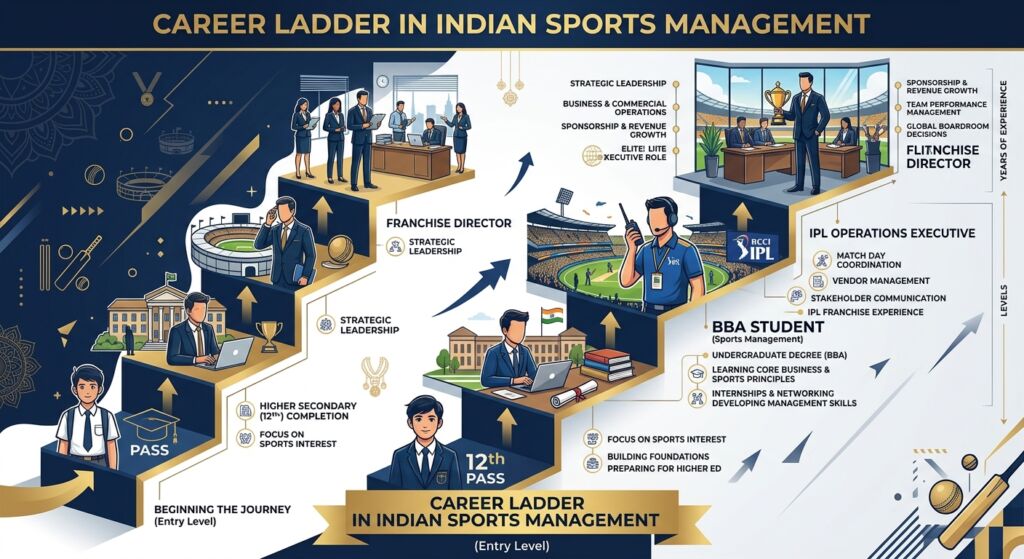
Expected salary for sports management graduates in 2026
Let’s talk money, because I know that’s what matters to you and your parents. In my 17 years in this space, I’ve seen the salary floor rise significantly. Here is the reality of the 2026 market.
Entry-level roles typically start between ₹3–6 LPA. This includes roles like junior operations executive or social media coordinator at a sports agency. While it might seem modest compared to some IT roles, the growth is aggressive. Many of our students see their salary double within 36 months of consistent performance. You aren’t just getting a job; you’re getting a front-row seat to an industry in its prime.
Mid-level managers with 4–7 years of experience earn between ₹8–15 LPA. At this stage, you are likely leading a department or managing a specific league project. Executive roles and franchise leadership positions for those at the top of their game can command ₹25+ LPA, often with performance bonuses tied to team success or sponsorship targets. In this world, when the team wins, you win too.
The ISST Advantage: From the classroom to the dugout
We’ve been doing this since 2008. ISST was founded back when people still laughed at the idea of a “sports degree.” Today, those same people are asking us for interns. We are proud winners of the CII Sports Business Award 2025, which acts as a stamp of authority within the Indian sports ecosystem.
Our campus in Pune isn’t just for lectures; it’s a networking hub. Our placement record is public—our alumni are in IPL teams, the BCCI, SAI, and top-tier sports tech firms. We don’t just teach from textbooks. We put you in the middle of the action with internships at major tournaments where you learn how to handle the pressure of a live broadcast. You can explore our sports management courses in India to see which one fits your specific goals.
Frequently Asked Questions
What is the salary of a sports manager in India in 2026?
Fresh graduates usually start between ₹3–6 LPA. Within 5 years, most professionals move into the ₹10–15 LPA bracket as they take on more project responsibility.
Can I do sports management after 12th Commerce or Science?
Yes. Whether you studied Arts, Science, or Commerce, you can pursue a BBA in Sports Management. All you need is a passion for the industry and a basic grasp of business logic.
Are there any government sports management colleges in India?
The Sports Authority of India (SAI) and National Sports University (NSU) offer programs. However, private institutes like ISST often provide more direct networking links with private entities like IPL franchises.
Is BBA in Sports Management a good career for the future?
Absolutely. With India targeting the 2036 Olympics, the demand for trained professionals will only intensify. It is one of the fastest-growing service sectors in the country.
Do I need to be an athlete to pursue sports management?
No. You don’t need to be a pro player. While an athletic background helps you understand the “on-field” vibe, management is about business, logistics, and strategy.
Which city is best for sports management jobs in India?
Mumbai and Pune are the heavy hitters because they house the BCCI, major IPL franchises, and the biggest agencies. Bengaluru and Delhi are also major hubs for sports tech and government roles.
Can I work in the IPL after this course?
Many ISST alumni work directly with IPL franchises in operations and marketing. Your success depends on your performance during your internships and how well you network during the course.
What is the duration of a sports management degree?
A standard BBA in Sports Management takes 3 years. Diploma programs are shorter, ranging from 6 months to 1 year for those looking for a quick entry point.
The days of sports being “just a hobby” are over. As we look at the 2026 sporting calendar, the demand for trained professionals has never been higher. Choosing a sports management career after 12th isn’t just about avoiding a boring desk job. It’s about being at the heart of India’s next big economic wave. If you’re ready to stop watching from the stands and start running the game, it’s time to act. Book a counseling session with our team today and let’s map out your next three years.
Frequently Asked Questions About Sports Management Careers
Can non-athletes pursue a career in sports management?
Absolutely. In fact, many of the best sports managers are not former athletes. They bring professional business discipline, organizational skills, and strategic thinking to the sports world.
What is the average starting salary for a sports management graduate in India?
For 2026, entry-level roles typically range between ₹3 LPA to ₹6 LPA, depending on the role and the organization (e.g., a private academy vs. a major league franchise).
Is a BBA better than an MBA for starting after 12th?
A BBA is the foundational step immediately after 12th. An MBA is a postgraduate degree. For a student just finishing school, the BBA provides the necessary undergraduate degree required to later pursue an MBA or enter the workforce.
Which are the best roles for sports management freshers?
Most freshers start as Operations Coordinators, Digital Marketing Executives for sports brands, or Junior Analysts in performance centers.