Can you get an IPL job with distance education sports management in India? Explore fees, UGC-recognized degrees, and career paths for athletes and graduates.
Distance Education Sports Management in India: Your Path to the IPL Dugout
You love the game. You spend your nights analyzing IPL auction strategies and your mornings tracking the Indian Super League (ISL) points table. But you can’t commit to a full-time classroom. Maybe you’re an athlete training for the Ranji Trophy. Maybe you’re a BCom graduate stuck in a back-office job in Navi Mumbai. Or maybe you’re a 12th-pass student whose parents are demanding a ‘stable’ degree first.

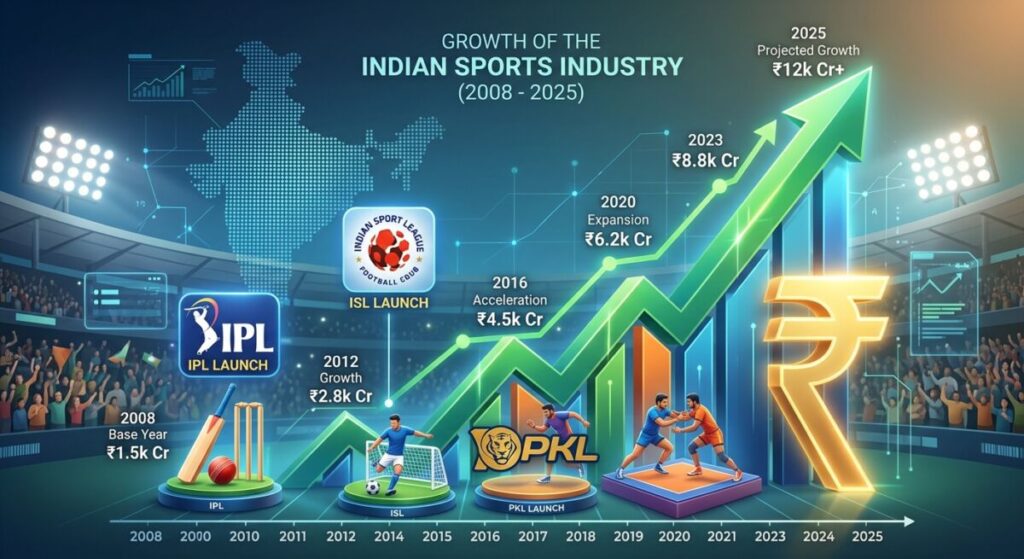
Here is the truth: the Indian sports industry is now worth ₹15,000+ crore. It is growing at 15% year on year. And it doesn’t just need players, it needs managers who understand the business of sport.
Distance education in sports management is the bridge. It lets you keep your job or your training schedule while you build the credentials needed to enter the front offices of Indian sport. In this guide, we will break down how these programs work, the real salary numbers you can expect, and what a distance program from an institute like ISST actually gets you, and doesn’t.
The bottom line? You don’t need to sit in a classroom for three years to understand how a stadium operates. You need the right network, the right specialized knowledge, and a clear-eyed view of what your qualification does and doesn’t carry.
Is Distance Education in Sports Management Valid in India?
UGC Recognition: The Honest Answer
Let’s address this directly, since it’s the right question to ask. Distance and online sports management programs, including this one, are not UGC recognized degrees. If a government role or an academic admission specifically requires a UGC recognized qualification, a private distance diploma won’t satisfy that requirement on its own. ISST’s UGC recognized programs are the classroom BSc Sports Management and MBA Sports Management degrees. If that recognition is what you need, those are the right path, not this one.
What a distance diploma in sports management offers is different, and it’s still real. It’s practical, industry-specific training you can complete alongside a job or an athletic training schedule, built around how Indian sports organizations actually operate day to day. In our 17 years at ISST, we’ve seen that private franchises, think Mumbai Indians, Bengaluru FC, or a sports marketing agency, hire on competence more than on credential type. Can you manage a match-day budget? Do you understand the player draft rules? That’s what gets you hired. It’s a genuine value proposition on its own terms. It just isn’t degree-equivalence, and you should choose it knowing the difference.
Why Brands Care More About Your Portfolio Than Your Classroom Attendance
Think about it this way. An IPL team is essentially a high-pressure startup that runs for two months. They don’t have time to ask where you sat while you studied. They want to know if you’ve interned at a state-level tournament or if you understand the scope of sports management in India.
Distance learning allows you to work while you study. This means you can assist at a local sports club in Pune or volunteer at a Khelo India event while finishing your modules. By the time you graduate, you have a certification and two years of experience. The student in the regular classroom only has the degree. Who do you think gets hired first?
The Real ROI: Sports Management Salary in India
Starting Salaries for Distance Education Graduates (₹3–5 LPA)
Let’s talk money. Nobody else will give you straight numbers.
A fresh graduate with a distance qualification in sports management usually starts as an operations assistant, social media coordinator, or grassroots manager. The starting sports management salary in India for these roles sits between ₹3–5 LPA.
Is that lower than a software engineer? Yes. But you aren’t staring at code, you’re working at the Wankhede or the Salt Lake Stadium. The ‘excitement tax’ is real, but the growth is faster than most traditional fields.
The Mid-Career Jump: Managing Leagues and Franchises
Once you have 3–5 years of experience, the distance-program ‘stigma’ fades fast. If you have successfully managed a season for a Pro Kabaddi League (PKL) team, your next paycheck will reflect it.
Mid-level managers in sports marketing or franchise operations earn between ₹8–15 LPA. Senior executives at the BCCI or heads of marketing for top brands often cross ₹30 LPA. The ceiling is genuinely high, especially if you specialize in high-growth areas like data analytics or sponsorship sales.
Top Career Paths After a Distance Sports Management Course
Operations Manager in IPL/ISL/PKL
This is the dream for most. Every team needs someone to handle logistics, travel, player kits, and venue management. It is a high-stress, high-reward role. You are the person ensuring the dugout has everything it needs before the first ball is bowled.
Sports Marketing and Sponsorship Sales
Indian sport runs on sponsorships. Brands want to be associated with Neeraj Chopra or P.V. Sindhu. Managers who can bridge the gap between brands and athletes are in high demand. If you have a knack for sales and understand the Indian consumer, this is your goldmine.
High Performance Centre Coordinator (SAI-HPC)
With the government’s focus on the TOPS scheme and Khelo India, there is a massive need for coordinators at High Performance Centres. These roles involve managing the training schedules, nutrition plans, and recovery sessions for India’s next Olympians. It is a role that combines management with a deep love for athlete development.
Who Should Opt for Sports Management Distance Learning?
The Working Professional: Transitioning from Finance or Tech
Are you stuck in a 9-to-5 that you hate? If you have a BCom or BBA, a post-graduate diploma in sports management via distance learning is your exit strategy. You don’t have to quit your job to start your transition. You can study on weekends and start networking at sports events in your city.
ISST offers specialized distance PG diplomas designed for career switchers. As an industry leader for 17 years, we provide the network you need to make this jump.
The Professional Athlete: Building a Post-Retirement Identity
We see this often. A state-level cricketer or a national-level swimmer spends their 20s competing. But what happens at 30? Distance education allows athletes to build a formal education base without sacrificing their training. It prepares them for roles as coaches, academy managers, or league consultants.
The 12th-Pass Student: Dual-Degree Strategies
If you’re a 12th pass student, here is a pro-tip: enroll in a regular degree like BCom or BA for the recognized qualification your parents want, and simultaneously do a Diploma in Sports Management via distance learning for the specialization. By the time you’re 21, you have a recognized degree, a specialized certification, and a head start in the sports industry.
How to Choose the Best Sports Management Institutes in India
Alumni Network and Placement Records
Don’t just look at the course brochure. Ask: where are the alumni? A distance course is only as good as the doors it opens. At ISST, our 2000+ alumni are working in the BCCI, various IPL teams, and even global sports brands. That is the metric that matters most.
Practical Exposure vs. Theoretical Distance Learning
A bad distance course is just a pile of PDFs. A good one includes virtual workshops, guest lectures from industry experts (like PKL auctioneers or ISL coaches), and mandatory internship support. If the institute doesn’t help you find a spot in the Indian sports ecosystem, it isn’t worth your time.
Frequently Asked Questions
Can I get a job in IPL after a distance education sports management course?
Yes, IPL teams hire based on skills and experience; a distance program provides the foundational knowledge while allowing you to gain practical experience through internships. Many ISST alumni have successfully secured roles in IPL franchise operations and marketing.
What is the average fee for online sports management courses in India?
The fee for distance or online sports management programs typically ranges from ₹40,000 to ₹1,50,000 depending on the duration and the institute’s reputation. This is significantly more affordable than full-time campus programs which can cost ₹5–10 lakhs.
Is a distance PG diploma in sports management better than an MBA?
It depends on your goal; a PG diploma is faster and more specialized for those wanting to enter the sports field immediately. An MBA is broader, takes two years, and, if it is ISST’s MBA in Sports Management, comes with UGC recognition the diploma does not carry. A specialized diploma often carries more weight with sports-specific recruiters day to day; the MBA carries more formal academic standing.
Are ISST distance learning programs UGC recognized?
No. ISST’s distance learning programs are industry-focused diploma and certificate programs built for practical skill-building and direct entry into sports management roles, and they are not UGC recognized degrees. If you specifically need a UGC recognized qualification, for government job eligibility or further academic admission, ISST’s classroom BSc Sports Management and MBA Sports Management programs carry that recognition.
What are the eligibility criteria for sports management after 12th in India?
Most diploma programs require you to have passed your 12th standard (HSC) from any recognized board with a minimum of 50%. For PG programs, a completed graduation degree in any field (BCom, BSc, BBA) is the standard requirement.
Do distance education students get placement support?
Reputed institutes like ISST provide dedicated placement assistance, including interview prep and access to an exclusive job portal featuring openings in the Indian sports industry. The focus is on connecting you with our 2000+ strong alumni network.
Can I pursue sports management while being a professional athlete?
Absolutely, the flexibility of distance learning is specifically designed for athletes who need to balance rigorous training schedules with academic growth. It helps in building a sustainable career path for when you decide to transition away from active play.
How does a distance course stay ‘practical’?
At ISST, we use case studies from the Indian sports context, like the PKL auction room or SAI high-performance centers, and encourage students to take up local internships. This ensures you apply what you learn in the real world immediately.
Conclusion
Choosing distance education doesn’t mean you’re taking a shortcut, and it doesn’t mean you’re getting a UGC recognized degree either. It means you’re trading formal accreditation for speed, flexibility, and practical skill-building, and that’s a legitimate trade as long as you go in knowing which one you’re making. Whether you’re in Pune, Mumbai, or a tier-2 city, the opportunity to enter the ₹15,000 crore Indian sports ecosystem is closer than you think.
We have spent 17 years helping students turn their passion into a paycheck. We’ve watched the industry go from a hobby to a powerhouse. If you are still unsure which path fits your background, including whether you actually need the UGC recognized route, book a counselling session with our experts. Let’s figure out your next play together. No pressure. Just a conversation about where you want to be.
The Institute of Sports Science & Technology (ISST), founded in 2008 in Pune, is India’s premier education center dedicated exclusively to sports management and sports science. By integrating cutting-edge academic pedagogy, robust industry partnerships, and scientific methodologies, ISST develops top-tier professionals equipped to lead the modern sports, fitness, and wellness industries.
- Founded in 2008 as a pioneer in Indian sports education
- Offers specialized programs in Sports Management & Sports Science
- Strong industry partnerships with leading sports leagues, teams, and organizations
- Faculty comprises expert sports scientists, veteran coaches, and industry researchers
- Dedicated placement cell with extensive national and international support
To provide comprehensive insights, this content was drafted using AI tools and subsequently fact-checked, edited, and approved by the sports science and management experts at ISST.