Discover the 5 AI and wearable technologies now mandatory in 2026 sports degrees. Learn how Digital Twins and AI analysis are shaping sports careers at ISST.
The days when a sports science degree focused solely on anatomy and basic nutrition are over. By May 2026, the integration of high-level data and artificial intelligence has moved from the sidelines of elite franchises directly into the classroom. If you are entering a sports management or sports science program today, you are no longer just studying movement; you are learning to manage a complex digital ecosystem.
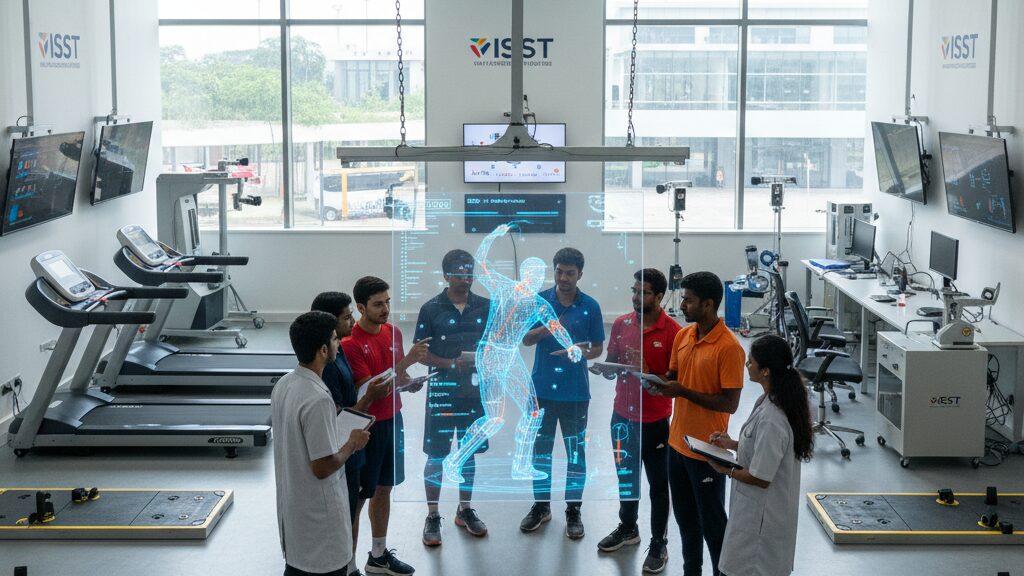
At the ISST High Performance Centre, we have seen this shift firsthand. Industry leaders now expect graduates to interpret real-time data streams as fluently as they read a playbook. This evolution is driven by the need for precision in leagues like the Hero Indian Super League (ISL) and the TATA IPL, where a 1% margin in recovery or biomechanics determines the season outcome. Here are the five technological modules that have become essential for every sports professional in 2026.
1. Digital Twins for Personalized Athlete Modeling
A digital twin is a virtual replica of a physical athlete, built using thousands of data points from wearable sensors and medical imaging. In 2026, students in our Masters Programme in Sports Sciences (MPSS) use these models to simulate how an athlete’s body will react to specific training loads or environmental conditions before they even step onto the field. This reduces the trial-and-error approach that often leads to overtraining.
According to research from the 2026 Sports Science Symposium, teams using digital twin simulations reported a 22% decrease in non-contact injuries. This is not about simple animation. It is about predictive physics. When you run a simulation, you can see how a slight change in a sprinter’s stride frequency might stress their hamstring over a 400-meter heat. Learning to build and manage these twins is now a core requirement for modern performance analysts.
2. Autonomic Recovery via Advanced HRV Tracking
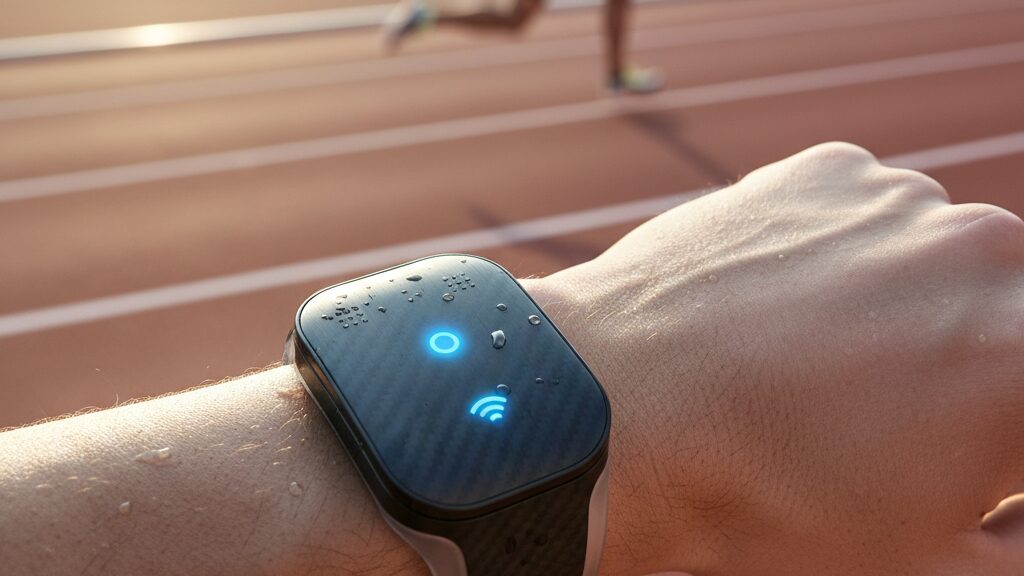
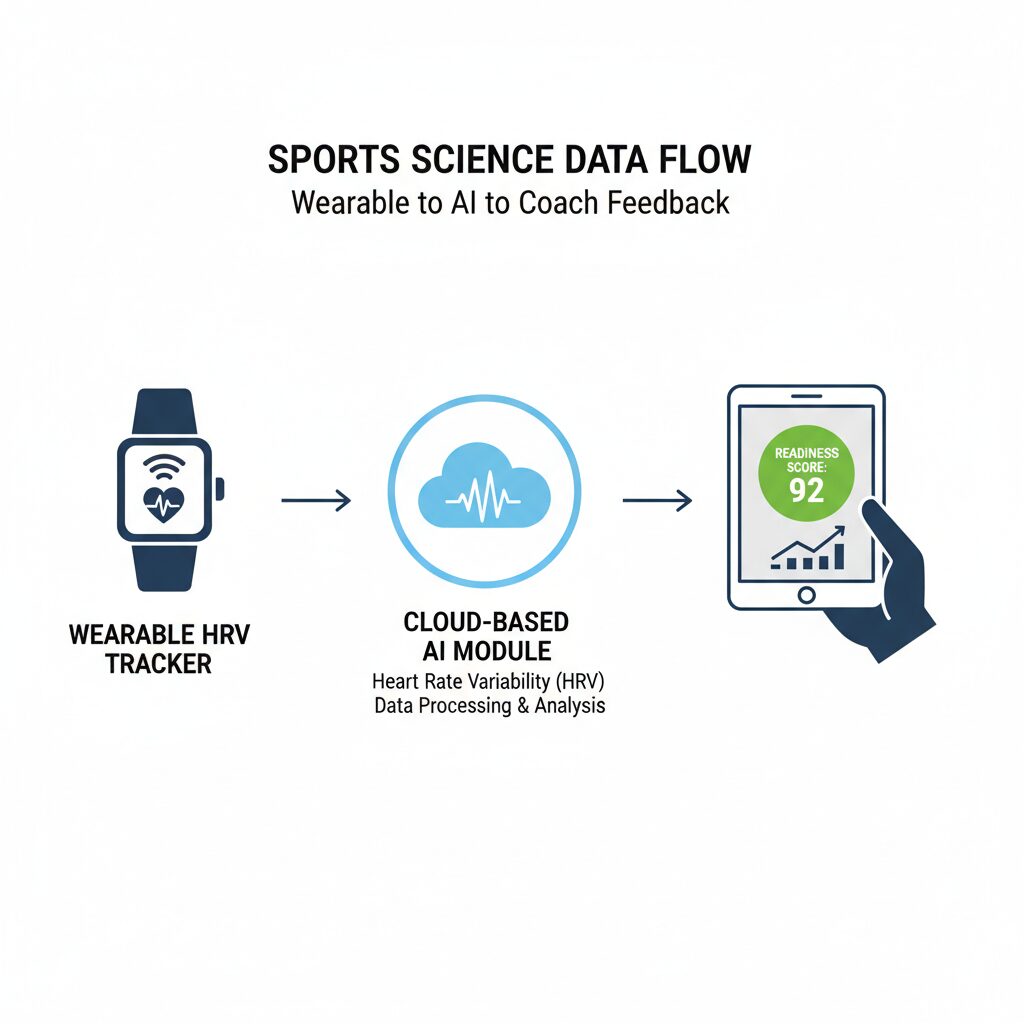
Heart Rate Variability (HRV) was once a niche metric for endurance runners. Today, it is the primary gauge for the autonomic nervous system across all disciplines. Our 2026 curriculum at ISST emphasizes the shift from raw heart rate to the nuance of inter-beat intervals. This data tells us if an athlete is physically recovered but mentally fatigued, or vice versa.
During live exposure at events like the Pro Kabaddi league, our students observe how recovery protocols change based on morning HRV readings. If the data shows a suppressed parasympathetic response, the coach might swap a high-intensity tactical session for a light recovery walk. This level of data-backed decision-making is what separates a modern manager from an old-school coach. You are not guessing; you are responding to the body’s internal signals.
3. Markerless AI Movement Analysis
The heavy, expensive laboratory setups of the past have been replaced by mobile AI-driven biomechanics. Using nothing more than a high-speed camera and an AI module, sports scientists can now perform 3D gait analysis in the middle of a live match. This technology identifies micro-deviations in form that are invisible to the naked eye but lead to significant performance drops.
In practice, this means a bowling coach can analyze a pacer’s delivery stride in real-time during a training session at the ISST High Performance Centre. The AI compares the current movement against the athlete’s ‘golden standard’ and flags any deviation in joint angles or ground reaction forces. This immediate feedback loop is why biomechanics has become one of the most popular specializations for 2026 graduates.
4. Predictive Injury Risk Algorithms
Sports management is now as much about risk mitigation as it is about marketing. AI modules now ingest data from sleep trackers, GPS vests, and even subjective wellness questionnaires to assign a ‘Risk Score’ to every player. In 2026, a sports manager must know how to communicate these technical risks to a head coach who may be hesitant to bench a star player.
Recent data from 2025–2026 seasons shows that predictive modeling can identify 70% of soft-tissue injuries before they occur. This is a massive financial win for organizations. If you are pursuing a career in sports management, understanding the ethics and accuracy of these algorithms is vital. It is about protecting the athlete as an asset while maintaining the team’s competitive edge.
5. Cognitive Load Monitoring with NIRS
The final frontier is the mind. Near-infrared spectroscopy (NIRS) wearables now allow us to measure oxygenation levels in the prefrontal cortex during competition. This helps us understand the ‘cognitive load’—the mental effort required to make split-second decisions under pressure. In 2026, this is a mandatory module in both sports science and sports psychology degrees.
When an athlete is ‘choking,’ the NIRS data often shows a spike in brain activity in areas related to self-consciousness rather than task execution. Our ISST alumni connect often features experts who use this tech to train athletes to stay in the ‘flow state.’ Learning to interpret these neurological markers ensures you are treating the athlete as a whole human, not just a physical machine.
The 2026 Competitive Edge
These technologies are no longer optional extras; they are the tools of the trade. Whether you are managing a franchise or coaching a national team, your ability to leverage AI and wearable data will define your career velocity. The sports industry in India is growing rapidly, and the demand for tech-literate professionals has never been higher.
Frequently Asked Questions
Are these technologies used in Indian grassroots sports?
Yes, several academies like the Bhaichung Bhutia Football Schools have started using basic AI movement analysis. As costs decrease in 2026, even local clubs are adopting simplified versions of these modules.
Do I need a coding background to study sports science in 2026?
No, you do not need to be a programmer. However, you must be comfortable using data visualization software and interpreting algorithmic outputs to make informed decisions.
Is a UGC recognized degree required to work with these technologies?
A UGC recognized degree from an institute like ISST provides the foundational knowledge and industry credibility required. Most elite organizations prefer candidates with a structured academic background in sports education.
How has AI changed sports management placements?
Placements now frequently involve roles like ‘Data Coordinator’ or ‘Performance Analyst.’ Our students gain live exposure with partners such as the Pro Kabaddi League and various TATA IPL franchises.
Can I study these AI modules through distance education?
Yes, our distance degrees like the PGD in Sports Management include comprehensive modules on sports technology. This allows working professionals to stay current with 2026 industry standards.
Is wearable tech only for elite athletes?
In 2026, the consumer market for wearables has bridged the gap. High school athletes and fitness enthusiasts now use tech that was exclusive to professionals just five years ago.
What is the most important tech for injury prevention?
While all are useful, the combination of HRV tracking and AI movement analysis provides the most comprehensive view of an athlete’s injury risk profile.
How does ISST stay updated with these rapid tech changes?
We constantly update our curriculum based on feedback from our ISST High Performance Centre and global sports science conferences. This ensures our students are ready for the 2026 market.
This May 2026, secure your future by mastering the tools that are defining the next era of sports. Explore our UGC recognized programs and start your career in sports with ISST.
The Institute of Sports Science & Technology (ISST), founded in 2008 in Pune, is India’s premier education center dedicated exclusively to sports management and sports science. By integrating cutting-edge academic pedagogy, robust industry partnerships, and scientific methodologies, ISST develops top-tier professionals equipped to lead the modern sports, fitness, and wellness industries.
- Founded in 2008 as a pioneer in Indian sports education
- Offers specialized programs in Sports Management & Sports Science
- Strong industry partnerships with leading sports leagues, teams, and organizations
- Faculty comprises expert sports scientists, veteran coaches, and industry researchers
- Dedicated placement cell with extensive national and international support