Explore BCCI Centre of Excellence jobs as ₹127 Cr rehab spend creates demand for cricket physios and sports scientists. Learn career paths at ISST.
Elite cricket operations in India have crossed a structural turning point. The Board of Control for Cricket in India (BCCI) has directed massive financial muscle toward sports medicine and physiological management, fundamentally altering how support staff enter high-performance sport. Anyone tracking bcci centre of excellence jobs can see that candidate requirements have migrated away from informal mentoring toward credentialed biomechanics, data monitoring, and clinical rehabilitation.
According to reporting published by India Today / Aaj Tak on 12 October 2026, the board has earmarked ₹127 crore for its new Centre of Excellence (CoE) in Bengaluru for the 2026–27 cycle. This allocation followed an intense annual workload during which the facility treated 32 top men’s national team players. Indian cricket’s primary operational expenditure is no longer dominated by travel and hospitality logistics. It is driven by sports science and clinical injury management.
The ₹127 Crore Budget Shift and Bengaluru CoE Workloads
Managing the physical condition of elite cricketers has become an around-the-clock exercise. When 32 centrally contracted cricketers pass through a single rehabilitation wing in 12 months, standard treatment plans collapse under load. Fast bowlers returning from lumbar stress fractures, spin bowlers managing shoulder impingements, and multi-format batters running hamstring deficits demand individualized, round-the-clock care.
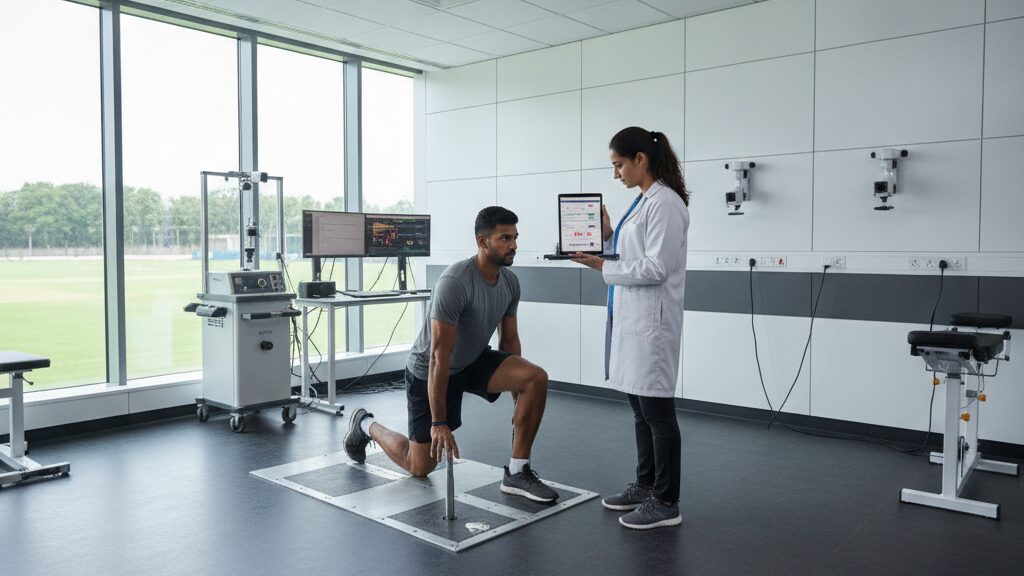
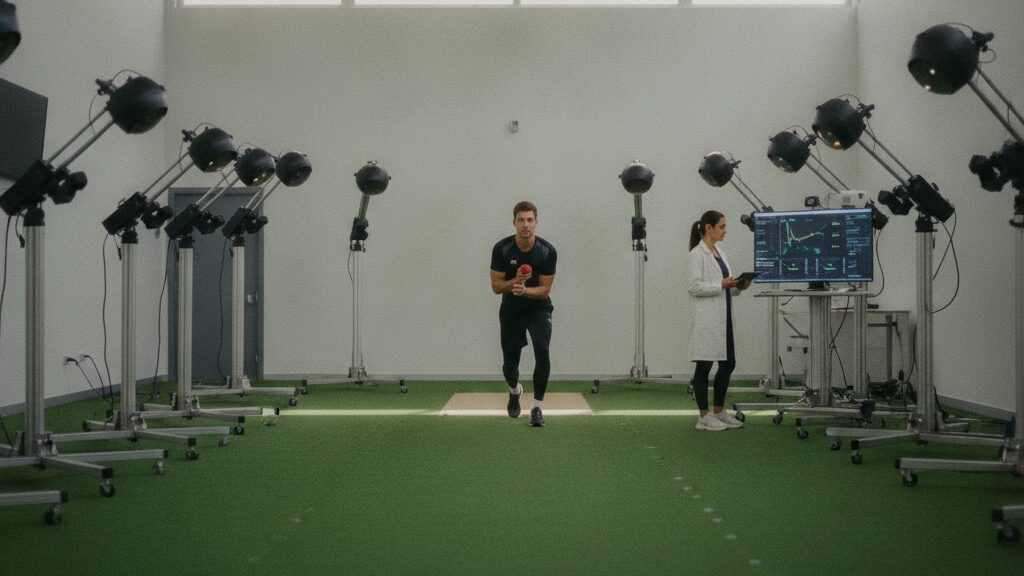
At the Institute of Sports Science & Technology (ISST), our work with national athletes shows that recovery timelines compress only when objective metrics replace subjective guesswork. The BCCI Bengaluru facility, which expanded out of the older National Cricket Academy (NCA) setup, reflects this evolution. The ₹127 crore expenditure directly supports high-density lab equipment, force plates, high-speed camera gantries, and oxygen chambers.
This capital deployment creates a distinct labor problem for Indian cricket: advanced machinery is useless without qualified technicians who interpret what the graphs show. Sports scientists who understand musculoskeletal workloads and physiological adaptation have become indispensable. Cricket boards require specialists who can read kinetic data instantly and communicate risk profiles clearly to team coaches.
Key Technical Roles Emerging at the Centre of Excellence
Cricket support structures used to rely on a single team physio and a generic gym trainer. Today, the modern high-performance unit functions like a diagnostic hospital ward combined with a research laboratory. The Bengaluru facility’s operational growth opens up four specific technical career profiles.
First, sports rehabilitation physiotherapists handle return-to-play protocols. These professionals work closely with athletes during mid-stage and end-stage tissue repair. Rather than simply massaging tight muscles, they measure joint mobility through digital inclinometers and monitor isometric muscle force. Readers looking at how to become a sports physiotherapist in India must realize that clinical rehabilitation degrees require strong integration with sports-specific movement analysis.
Second, acute workload and GPS tracking analysts interpret daily player fatigue. Fast bowlers in particular carry strict ball-count caps and sprint-distance targets. A load monitoring analyst tracks accelerations, decelerations, and high-speed running metrics using micro-sensor technology. If an athlete spikes their weekly acute-to-chronic workload ratio beyond 1.4, this analyst flags the injury risk to the medical head before a tendon fails.
Third, biomechanists inspect bowling mechanics. A stress fracture in a fast bowler’s lower back rarely happens by accident; it usually stems from front-foot contact forces or excessive shoulder counter-rotation. Technicians trained in three-dimensional motion capture evaluate joint angles to correct flaws before tissue failure occurs.
Fourth, performance nutritionists design targeted feeding protocols. When an athlete faces months of reduced activity after surgery, their metabolic needs change overnight. Maintaining lean muscle mass while preventing unwanted body fat accumulation requires rigorous dietary control based on metabolic rate testing.
Why Modern Cricket Rehab Demands Objective Data
Subjective assessments like asking a bowler whether their side feels tight have failed repeatedly at the top level. The Bengaluru CoE operates on objective physical baselines. When a player reports for national duty, sports scientists evaluate their baseline neurological and mechanical metrics to know what normal looks like.
Consider neuromuscular fatigue tracking. In our practical training modules at the ISST High Performance Centre, we teach students that jump tests reveal hidden systemic fatigue days before an athlete feels muscle soreness. Applying tools like countermovement jump tests gives sports science staff an objective metric: eccentric deceleration force (measured in Newtons per kilogram). If that number drops by 8% on two consecutive mornings, the athlete gets pulled from heavy bowling nets regardless of how energetic they claim to feel.
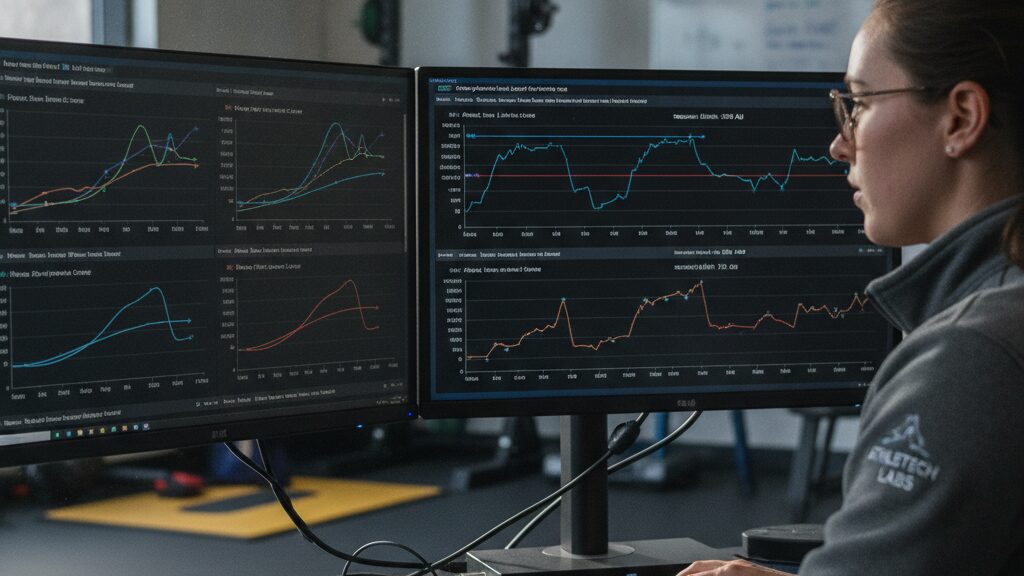
The ₹127 crore budget covers this level of diagnostic depth. Every major joint angle, sprint impulse, and force output gets logged into an integrated athlete management database. Candidates competing for positions inside state cricket associations or the national CoE must demonstrate proficiency in software systems that ingest, store, and graph these numbers.
Educational Pathways for Cricket Sports Science Aspirants
Entering the technical side of professional cricket requires a clear academic foundation. While formal degrees in physiotherapy remain mandatory for hands-on clinical treatments, broader roles across workload monitoring, strength training, and movement analysis require structured sports science credentials.
Undergraduate aspirants often enter through programs such as the BSc in Sports Sciences, which covers exercise physiology, sports biomechanics, and kinesiology. For graduates holding degrees in life sciences, physical therapy, or general physical education, advancing into specialized postgraduate study provides the technical depth required by elite academies. The classroom-based Masters Programme in Sports Sciences (MPSS) delivers hands-on lab experience, teaching students how to run physiological stress tests and operate force platforms.
Practical training matters far more than theoretical memorization. When cricket academies interview prospective analysts, they rarely ask students to recite textbook muscle attachments. Instead, they present real GPS sprint data from an injured fast bowler and ask the candidate to build a progressive three-week conditioning schedule. Hands-on experience with equipment like metabolic carts and timing gates separates qualified professionals from pure academics.
State Associations Emulating the Bengaluru CoE Blueprint
The impact of the ₹127 crore investment extends well beyond Bengaluru. India’s state cricket associations face similar athlete preservation challenges. When key Ranji Trophy players suffer muscle tears, state bodies lose competitive advantage and absorb significant treatment costs.
As a result, associations across Mumbai, Tamil Nadu, Karnataka, and Maharashtra are establishing regional high-performance satellites. They mirror the testing batteries, gym setups, and diagnostic protocols established at the central CoE. This geographic decentralization multiplies the total volume of technical jobs across domestic cricket.
In practice, state teams hire their own sports scientists, junior physiotherapists, and strength coaches to maintain continuous player monitoring. A sports science graduate does not need to enter the senior national dressing room on day one. State academy pipelines, under-19 regional camps, and women’s state developmental squads represent viable entry points that provide essential live exposure.
Translating Scientific Credentials into Professional Positions
Securing a position within elite sports administration requires deliberate career positioning. Aspirants often believe that sending resumes to recruitment emails yields results. In professional sports, hiring managers look for verifiable technical competencies and verified field experience.
First, build a portfolio of objective work. Document how you conducted physical testing batteries, collected workload data, and adjusted conditioning programs during competitive seasons. If you evaluated twenty youth athletes over an eight-week training cycle, show the before-and-after force curves and mobility scores.
Second, build industry networks through institutional channels. Leveraging the ISST alumni connect network allows young professionals to speak with practitioners who currently manage strength and conditioning departments inside commercial franchises and sporting bodies. Hearing directly from practitioners about actual field problems prepares candidates for technical interview grilling.
Third, master data literacy. Modern cricket physiotherapists and sports scientists collaborate daily with performance analysts. Understanding how to clean data sets, write basic statistical scripts, and present visual dashboards to coaches makes a candidate twice as valuable on matchday.
Frequently Asked Questions
What educational qualification is needed for sports science jobs at the BCCI CoE?
Candidates typically require a recognized bachelor’s or master’s degree in sports science, exercise physiology, or sports biomechanics. Clinical physiotherapy positions require a bachelor’s or master’s degree in physiotherapy with sports-specific specialization.
Why did the BCCI allocate ₹127 crore to the Bengaluru Centre of Excellence?
The BCCI allocated ₹127 crore for 2026–27 to expand medical, rehabilitation, and sports science infrastructure following heavy player workloads. The facility managed rehabilitation cycles for 32 national men’s team cricketers within a single year.
What is the difference between a cricket team physiotherapist and a sports scientist?
A cricket physiotherapist focuses on diagnosing acute injuries, hands-on clinical treatments, and joint rehabilitation protocols. A sports scientist focuses on physiological testing, GPS workload tracking, fatigue monitoring, and performance optimization.
Do state cricket associations hire sports science graduates?
Yes, state associations hire sports scientists and strength coaches to monitor senior and age-group domestic squads. These regional setups mirror the central CoE protocols to prevent injuries before players reach national contention.
What tools do rehabilitation specialists use at modern cricket academies?
Staff use dual force plates, high-speed 3D motion capture cameras, GPS wearable sensors, and isokinetic dynamometers. They also utilize specialized athlete management software to log daily fatigue and recovery metrics.
Can graduates from non-medical streams work in cricket rehabilitation?
Yes, non-medical sports science graduates work as workload monitors, biomechanists, and strength and conditioning coaches alongside clinical staff. However, direct manual therapy and injury diagnosis remain restricted to certified physiotherapists.
How important is practical laboratory training for sports science careers?
Practical laboratory training is critical because sports organizations assess your ability to operate diagnostic hardware and interpret live athlete data. Pure theoretical knowledge without field experience rarely translates into high-performance employment.
Where can students gain hands-on sports science education in India?
Institutes like ISST offer UGC recognized degree programs alongside specialized postgraduate diplomas in sports sciences. These courses provide practical training with industry-standard assessment tools inside high-performance centers.
Now that BCCI Projects ₹127 Crore Expenditure for Bengaluru Centre of Excellence Amid Rising Player Rehabilitation Demands, build your technical career in sports sciences with ISST. Explore our comprehensive sports management and sports science programs today, download a free syllabus, or speak directly with our academic counselors without any upfront commitment.
The Institute of Sports Science & Technology (ISST), founded in 2008 in Pune, is India’s premier education center dedicated exclusively to sports management and sports science. By integrating cutting-edge academic pedagogy, robust industry partnerships, and scientific methodologies, ISST develops top-tier professionals equipped to lead the modern sports, fitness, and wellness industries.
- Founded in 2008 as a pioneer in Indian sports education
- Offers specialized programs in Sports Management & Sports Science
- Strong industry partnerships with leading sports leagues, teams, and organizations
- Faculty comprises expert sports scientists, veteran coaches, and industry researchers
- Dedicated placement cell with extensive national and international support