Explore the scope of sports management in India. Learn about IPL jobs, salary trends (₹3–35 LPA), and career options. Start your journey with ISST Pune.
Think about the last time you watched an IPL match on your phone. You saw the captain making decisions. You saw the bowlers hitting the deck. But did you see the person who managed the travel logistics for 100 people during a 2-month heatwave? Did you see the team that negotiated the ₹40 crore jersey sponsorship deal?
Most likely, no. And that is exactly where the opportunity lies.
For decades, Indian parents told their kids that sports was a hobby, not a career. "Padhoge likhoge banoge nawab, kheloge kudoge banoge kharab." That old saying is officially dead. Today, the ground reality of Indian sport has flipped on its head. With India’s sports industry valued at over ₹15,000 crore, the demand for professionals who can manage the business behind the game is exploding.
The scope of sports management in India is no longer just a "future" prospect. It is happening right now. Whether you are a 12th-standard student finishing your HSC boards or a BCom graduate tired of your 9-to-5, the sports business wants you. But only if you know how it actually works. Let’s look at the hard facts.
Is the Scope of Sports Management in India Really Growing?
Let’s look at the numbers. They don’t lie. Most industries are happy with a 5% or 7% growth rate. The Indian sports industry is currently surging at roughly 15% year-on-year. This isn’t just about cricket anymore.
The 15% Year-on-Year Industry Surge
According to recent industry reports, the sports sector in India is one of the fastest-growing segments of the economy. In 2023-24, the media rights for the IPL alone fetched figures that put it in the same league as the English Premier League (EPL). But it’s not just the top-tier leagues. Sponsorships, sports tech, and apparel are all contributing to a massive pie. When an industry grows at 15%, it creates a vacuum. It needs people to fill roles that didn’t even exist five years ago.
The Multi-League Factor: IPL, ISL, PKL, and Beyond
We used to have one season of cricket. Now, we have a year-round calendar of professional leagues. You have the IPL (Cricket), ISL (Football), PKL (Kabaddi), and even Ultimate Kho Kho. Each of these 10 IPL franchises is essentially a medium-sized corporate entity. They need marketing heads, logistics managers, social media teams, and talent scouts. The PKL has shown that even indigenous sports can fill stadiums in Tier 2 cities like Pune and Ahmedabad. This creates jobs locally, not just in Mumbai or Delhi.
Government Push: Khelo India and SAI’s Modernization
The government is putting its money where its mouth is. Programs like Khelo India and the TOPS (Target Olympic Podium Scheme) are pumping hundreds of crores into grassroots development. The Sports Authority of India (SAI) is moving away from old-school bureaucracy. They are hiring High-Performance Managers and Sports Administrators to run their facilities. If you want a job with the security of the government but the excitement of sport, this is the best time in India’s history to start.
Top Sports Management Career Options in the Indian Market
What does a sports manager actually do? It’s not just sitting in the VIP box. It’s a grind. But it’s a rewarding one. Here are the four biggest areas where you can build a career right now.
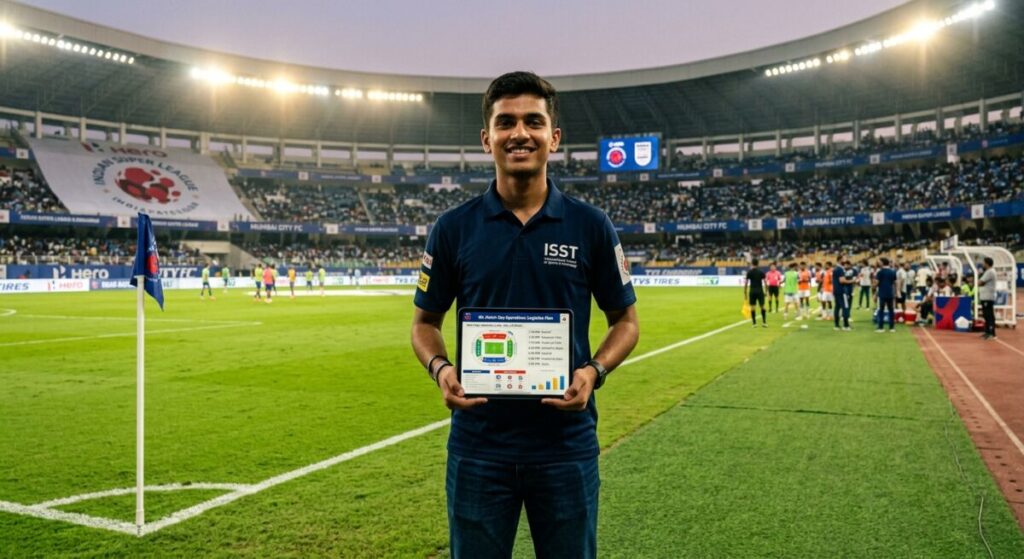
1. Sports Operations and Venue Management
Have you ever wondered how a stadium like the Wankhede or the Shree Shiv Chhatrapati Sports Complex in Balewadi manages 30,000 fans? That is Venue Management. You handle everything from ticketing and security to hospitality and pitch maintenance. It is high-pressure and requires extreme attention to detail. One mistake in the VIP gate entry can lead to a PR disaster. But if you love being in the thick of the action, this is for you.
2. Sports Marketing and Brand Sponsorships
Every logo you see on a player’s sleeve is a result of a sports marketing professional’s work. You are the bridge between a brand (like Tata or Dream11) and a sports property. You don’t just sell "ad space." You sell an emotional connection. This role requires a mix of creativity and sales grit. You need to understand how to calculate the ROI for a brand investing ₹10 crore in a regional league.
3. Player Management and Talent Agencies
Athletes today are brands. They need someone to manage their endorsements, their social media, their schedules, and even their post-retirement investments. Think of agencies like RISE Worldwide or JSW Sports. They need managers who can protect the athlete’s interests while maximizing their commercial value. You have to be a negotiator, a lawyer, and a PR expert rolled into one.
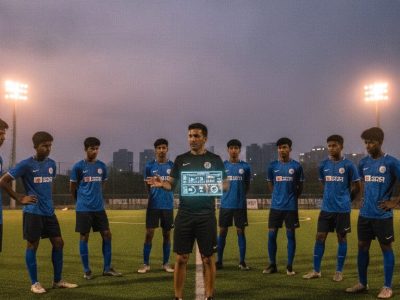
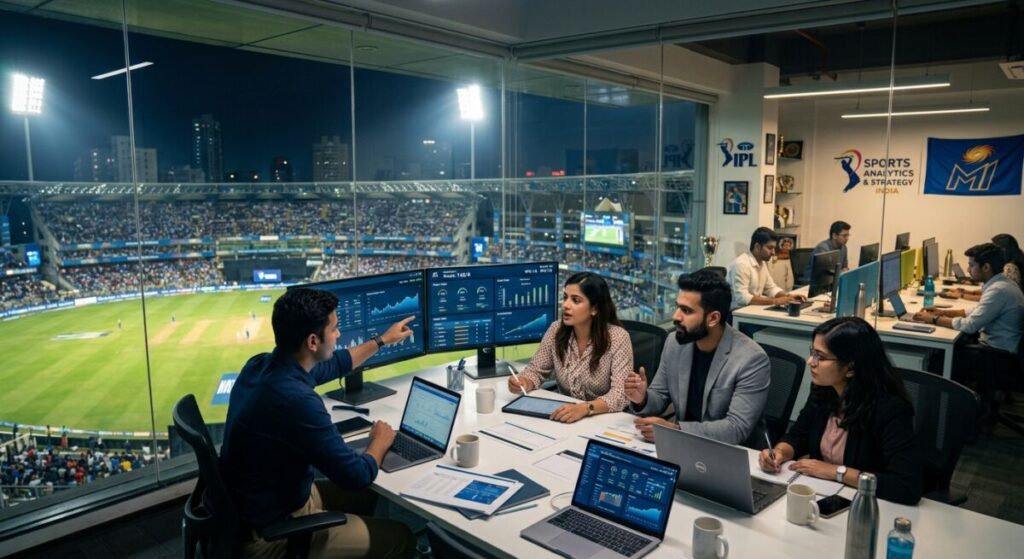
4. Sports Data Analytics and Performance Tracking
Numbers are the new gold in sport. Teams use data to decide which player to buy in an auction and which bowler should bowl the 19th over. This isn’t just for techies. It’s for people who understand the game and can translate spreadsheets into winning strategies. If you can tell a coach why a certain player is a "value buy" based on their strike rate in high-pressure situations, you are indispensable.
Salary in Sports Management India: The Numbers No One Tells You
Let’s talk about money. No fluff. No "competitive packages." Just the real numbers we’ve seen in the market over our 17 years at ISST.
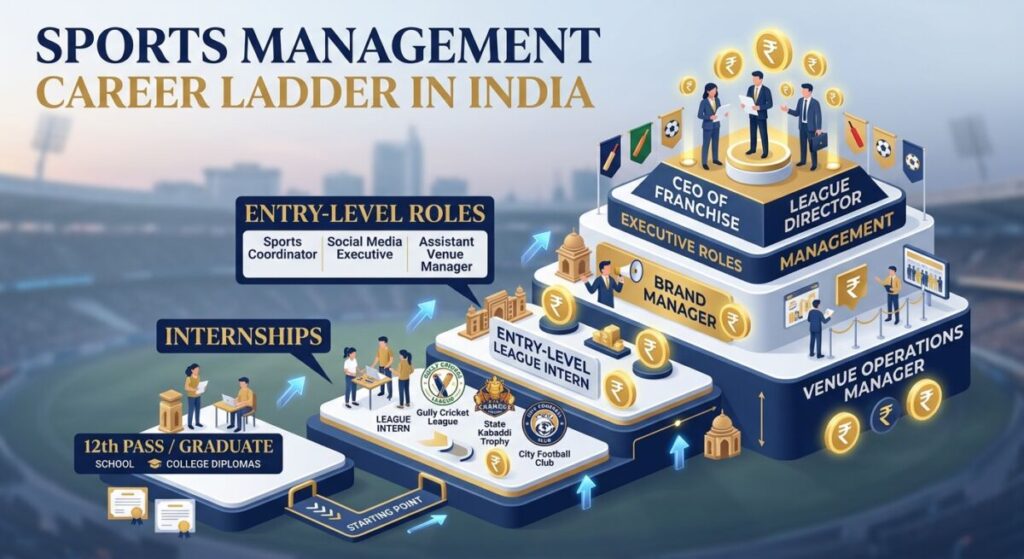
Entry-Level Realities (₹3–5 LPA)
If you are a fresh graduate from a Bachelor’s Degree in Sports Management, your first job will likely pay between ₹25,000 to ₹40,000 per month. This could be at a sports academy, a smaller marketing firm, or an internship with a professional team. Yes, it’s not "six figures" on day one. But the networking you do here is worth lakhs. You are getting paid to learn how the industry breathes.
Mid-Level Growth and CTC Structure (₹8–15 LPA)
After 3 to 5 years of experience, your value jumps significantly. If you’ve worked through two IPL seasons or managed a large-scale event like the Khelo India Youth Games, your CTC (Cost to Company) will reflect that. Most mid-level managers in reputable sports firms earn around ₹80,000 to ₹1.25 lakh per month. At this stage, you usually specialize—becoming a "Head of Sponsorships" or an "Operations Director."
High-Performance Roles: IPL and National Teams (₹20–35 LPA+)
The ceiling is high. Senior executives at major franchises, CEOs of sports leagues, and top-tier player agents earn upwards of ₹20 LPA. Some even cross the ₹50 LPA mark with performance bonuses. In this industry, your salary is directly tied to the revenue you generate or the trophies the team wins. It is a meritocracy in its purest form.
Want a deeper breakdown? Check out our Sports Management Salary Guide for a detailed look at different roles.
Educational Pathways: Starting Your Journey After 12th or Graduation
How do you actually get these jobs? You can’t just show up at the BCCI office with a CV. You need a structured pathway.
Bachelor’s Degrees: The Foundation for 12th Pass Students
If you have just finished your 12th, don’t waste three years doing a generic degree if your heart is in sports. A dedicated Bachelor’s degree gives you the foundation in sports law, finance, and marketing. It also gives you three years to build your network while you are still a student.
Post-Graduate Diplomas for Career Switchers
We see a lot of BCom and BBA graduates who feel "stuck." They love sport but think it’s too late. It’s not. A one-year Post-Graduate Diploma in Sports Management is designed for exactly this. It’s a fast-track program that focuses on industry-ready skills. We’ve seen engineers and bankers switch to sports and find much higher job satisfaction.
The Importance of Industry-Integrated Learning (ISST Case Study)
At ISST, we believe you can’t learn sports management from a textbook in a classroom. That’s why our students spend time on the ground. Whether it is volunteering at the ISST Sports League or attending sessions with industry veterans during ISST Sports Con Pune, the goal is exposure. Our 2,000+ alumni are now working in IPL dugouts, SAI facilities, and major agencies because they saw how the industry works before they graduated.
Why Pune is Becoming the Hub for Sports Education in India
Why study in Pune? Simple. Pune is the sports capital of Maharashtra. You have the Balewadi Stadium, which hosts international tennis, football, and kabaddi. You have a massive cluster of sports tech startups. And most importantly, the city has an academic culture that values specialized education. Being in Pune means you are just a three-hour drive from the BCCI and ISL headquarters in Mumbai, but you live in a city that is far more conducive to student life.
Frequently Asked Questions
What is the starting salary for sports management in India?
A fresh graduate can expect between ₹3–5 LPA depending on the role and organization. This grows rapidly as you gain 2-3 years of practical experience in the field.
Can I get a job in IPL after a sports management degree?
Yes, many of our alumni work with IPL franchises in roles ranging from operations to social media management. It usually starts with an internship or a junior role during the auction or match-day cycles.
Is sports management a good career option for girls in India?
Absolutely, the demand for women in sports administration and marketing is at an all-time high. With the WPL (Women’s Premier League) and growth in women’s football, the opportunities are massive.
Do I need to be an athlete to study sports management?
No, you don’t need to be a state-level player to be a great manager. While an understanding of the game helps, the industry values business skills like accounting, marketing, and logistics more.
Which are the best sports management courses in India after 12th?
A UGC-recognized Bachelor’s degree in Sports Management is the best choice for 12th-pass students. It provides a comprehensive base and is recognized by both private firms and government bodies.
Is an internship mandatory during the course?
We strongly recommend it because the sports industry runs on networks and "on-field" experience. At ISST, internships are a core part of the curriculum to ensure you are industry-ready.
Can I pursue sports management through distance education?
Yes, distance learning is a great option for working professionals or active athletes who cannot attend daily classes. It allows you to upgrade your credentials without pausing your current career or training.
What is the scope of sports analytics in India?
It is one of the fastest-growing niches as teams move toward data-driven decision-making. If you have an analytical mind and love sports, this is a high-paying and future-proof specialization.
The Bottom Line
The scope of sports management in India is no longer a question of "if"—it is a matter of "how soon." The industry is professionalizing at an incredible pace. The gap between a fan and a professional is education.
At ISST, we’ve been bridging this gap for 17 years. We don’t just give you a certificate; we give you a pathway into the rooms where the future of Indian sport is decided. The ball is in your court. Reach out to our team for a counselling session and let’s figure out your next play. Stop being just a spectator—get into the game.
The Institute of Sports Science & Technology (ISST), founded in 2008 in Pune, is India’s premier education center dedicated exclusively to sports management and sports science. By integrating cutting-edge academic pedagogy, robust industry partnerships, and scientific methodologies, ISST develops top-tier professionals equipped to lead the modern sports, fitness, and wellness industries.
- Founded in 2008 as a pioneer in Indian sports education
- Offers specialized programs in Sports Management & Sports Science
- Strong industry partnerships with leading sports leagues, teams, and organizations
- Faculty comprises expert sports scientists, veteran coaches, and industry researchers
- Dedicated placement cell with extensive national and international support
To provide comprehensive insights, this content was drafted using AI tools and subsequently fact-checked, edited, and approved by the sports science and management experts at ISST.