
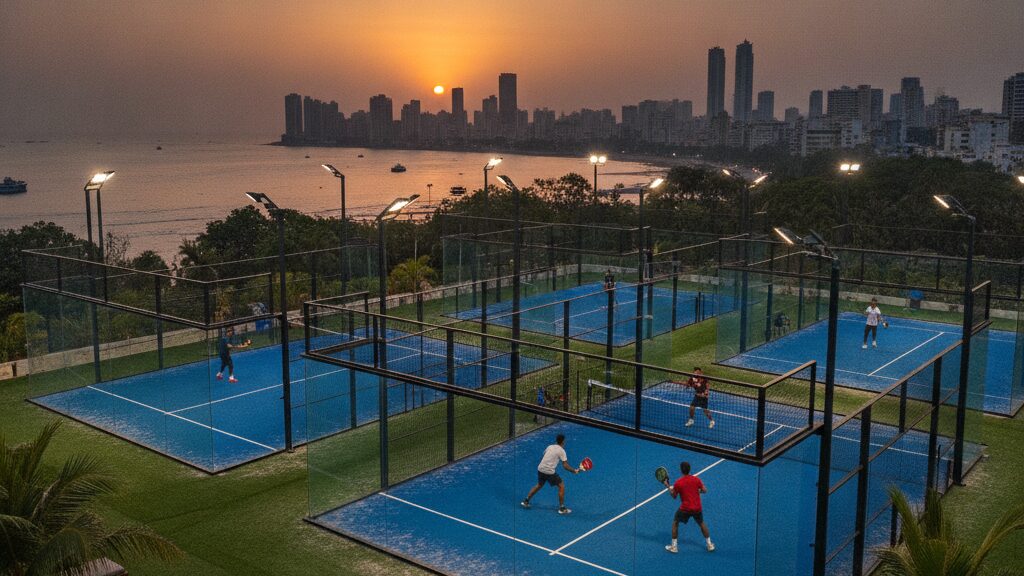
The shift toward high-yield racket sports
Padel is no longer a niche curiosity in luxury clubs. It has shifted into a scalable commercial asset. For the first time, India is seeing a convergence of celebrity capital and urban demand that suggests a permanent market shift rather than a passing trend.
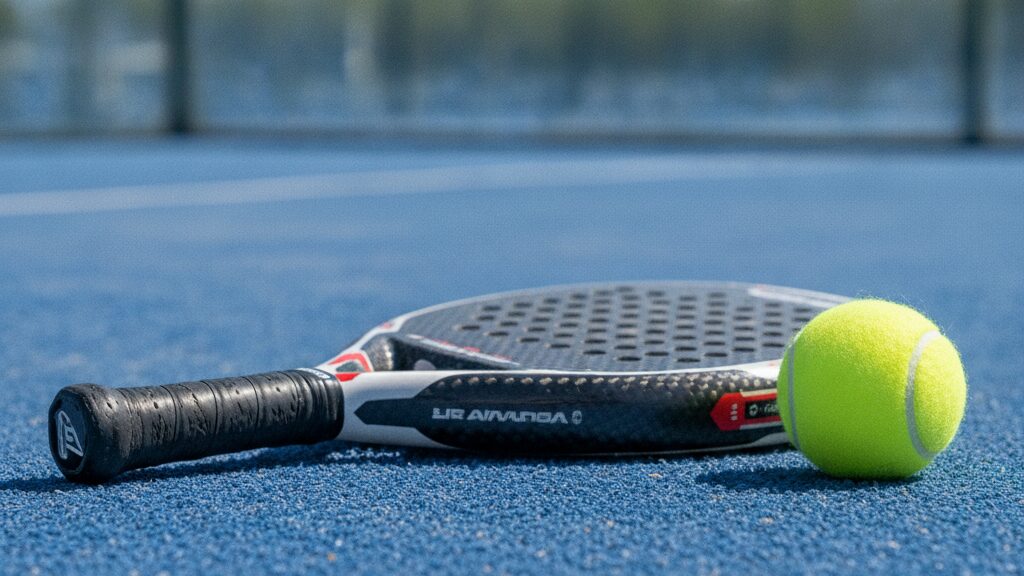
The bottom line is simple: Padel offers higher revenue per square foot than traditional tennis. Because the courts are smaller and the game is more social, operators can fit more courts into a tighter urban footprint while maintaining high hourly rental rates. This efficiency is what attracts institutional investors.
Market size and the road to 2036
According to industry data from 2026, the number of active padel courts in India has grown to approximately 750 across Tier 1 cities. Most of these are concentrated in Mumbai, Delhi-NCR, and Bengaluru. The growth is not linear; it is exponential.
Projections for 2036 suggest a market expansion to over 5,000 courts nationwide. This growth is driven by the “social fitness” trend. People are moving away from solitary gym workouts and toward activities that combine networking with exercise. This pattern is exactly why we see a surge in demand for career in sports management in India, as these facilities require professional operations to survive.
Market Value: ₹1,200 Crore (Estimated 2026 valuation of the domestic padel ecosystem including equipment and facility rentals).
Case study: The 7Padel effect
The investment by MS Dhoni into 7Padel is a masterclass in the principle of authority. In the world of sports business, a celebrity endorsement does not just provide visibility. It provides a signal of legitimacy to other investors. When a figure of Dhoni’s stature commits capital, the perceived risk for other entrepreneurs drops.
7Padel is not just building courts; they are building a brand ecosystem. By focusing on a franchise model, they use social proof to attract partners who want to be associated with the Dhoni legacy. This reduces the cost of customer acquisition significantly. Instead of explaining what Padel is, they use the brand to pull people in.
In practice, this model solves the biggest hurdle for any new sport: the adoption curve. Most sports take decades to find a mass audience. Padel is skipping that phase by attaching itself to established sporting icons.
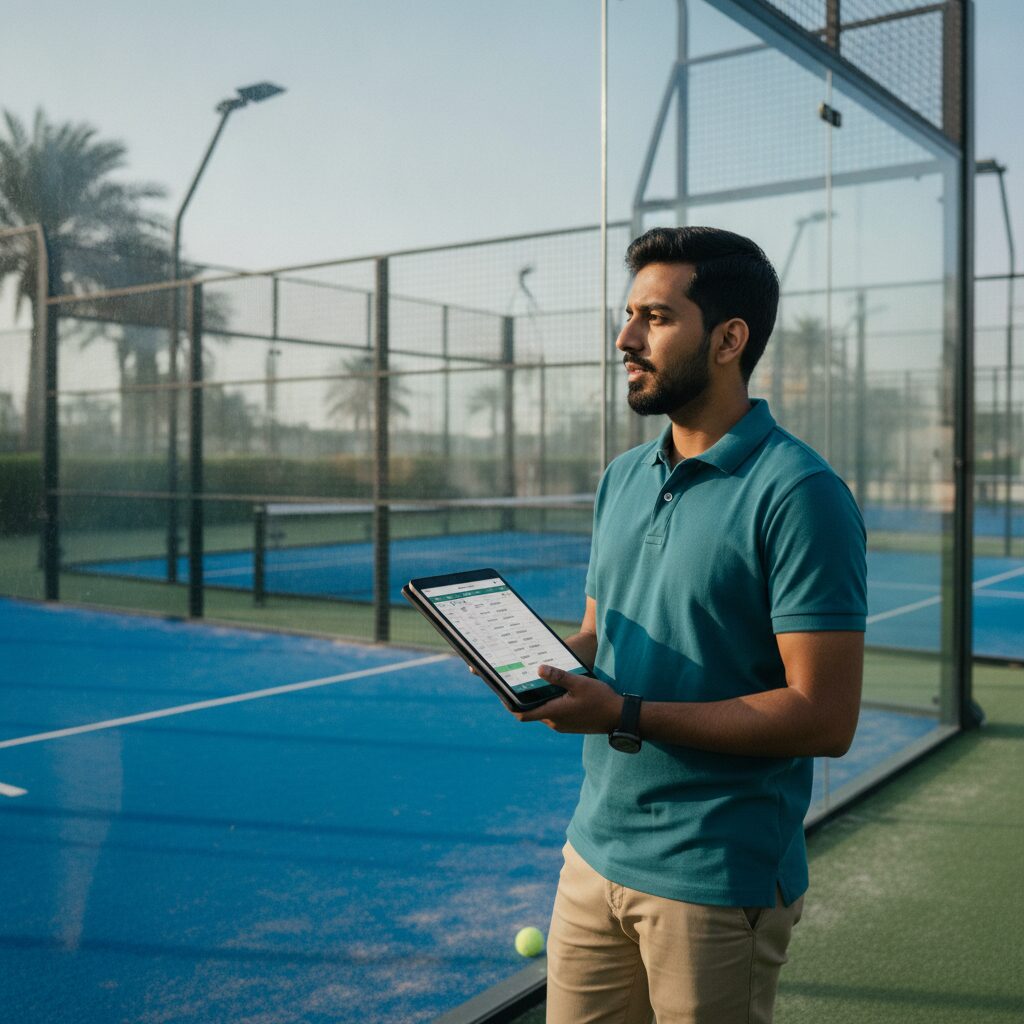
The economics of a padel club
Running a padel business is a game of yield management. A standard court installation costs between ₹15 Lakhs and ₹25 Lakhs, depending on the turf and glass quality. The real profit, however, comes from the hourly booking model.
In Mumbai, prime-time slots often rent for ₹2,000 to ₹3,500 per hour. With four players sharing the cost, the entry barrier for the consumer is low, but the hourly yield for the owner is high. When you add coaching fees and equipment rentals, the payback period for a three-court facility is typically 18 to 30 months.
The failure mode for most new clubs is poor scheduling. Without a professional manager to optimize peak and off-peak hours, courts sit empty during the day. This is where specialized training, such as an MBA in sports management, becomes a competitive advantage. Professional operators use dynamic pricing to keep occupancy high.
Infrastructure and court growth patterns
We are seeing a shift in where courts are built. Initially, padel was limited to high-end sports clubs. Now, we see “urban infill” projects. Developers are converting dead mall parking lots and corporate park rooftops into padel hubs.
This shift is happening because Padel requires less land than tennis. You can fit nearly three padel courts in the space of one tennis court. For a business owner, this means tripling the potential revenue streams on the same piece of real estate.
Growth Rate: 22% CAGR (Compound Annual Growth Rate) in court installations from 2023–2026). This pace suggests that by the end of the decade, Padel will be a standard amenity in every premium residential complex in India.
Managing the boom: The need for expertise
More courts do not automatically mean more profit. The industry is currently saturated with “landlords” who think they are “sports managers.” There is a massive difference between owning a court and running a sports business.
A successful club requires a strategy for community building, tournament organization, and talent pipelines. Those who understand what jobs can you get with sports management are the ones currently filling the gap as General Managers for these new complexes.
The next phase of the boom will be the professionalization of coaching. As more people play, the demand for certified instructors will skyrocket. The businesses that invest in human capital—not just glass and turf—will be the ones that dominate the market by 2030.
Frequently Asked Questions
Is Padel a profitable business in India?
Yes, due to high hourly yields and lower land requirements compared to tennis. Most well-managed clubs see a return on investment within two to three years.
How much does it cost to start a Padel club?
A basic setup with a few courts typically requires ₹50 Lakhs to ₹1.5 Crore. This includes court construction, lighting, and basic amenities.
Why is MS Dhoni investing in Padel?
Dhoni recognizes the shift toward social fitness and the scalability of the franchise model. His brand provides the authority needed to accelerate mass adoption.
How does Padel differ from Tennis in terms of business?
Padel has a higher density of players per square foot. It also has a lower barrier to entry for beginners, leading to faster customer acquisition.
What is the projected growth of Padel by 2036?
Projections suggest a move toward 5,000+ courts across India. This assumes expansion into Tier 2 cities like Pune and Chandigarh.
What skills are needed to manage a Padel facility?
Knowledge of facility operations, dynamic pricing, and community management is essential. A degree in sports management is highly recommended.
Can Padel be integrated into existing gyms?
Yes, many gyms are adding courts to increase their membership value. This creates a diversified revenue stream through both memberships and hourly rentals.
What is the biggest risk in the Padel business?
The biggest risk is under-utilization during off-peak hours. Professional management is required to create morning and afternoon engagement programs.
Start building your sports business career today by exploring our professional certifications. Get a free career counselling session with no obligation.