
What is sports management?
Last Updated: 2026-07-29
Sports management covers the business, operational, and commercial functions that keep athletic organizations and events running. It includes live event operations, sports sponsorship sales, athlete representation, sports facility administration, and legal risk governance across professional leagues and sports federations.
India’s sports ecosystem has shifted from a single-sport focus to a multi-billion-dollar commercial market. Franchise leagues in cricket, kabaddi, football, and badminton generate recurring demand for qualified business managers. According to the FICCI-Grant Thornton Sports Economy Report, India’s sports market is valued at over ₹3.8 lakh crore ($38.84 billion) and is projected to reach ₹7.5 lakh crore ($100 billion) by 2027–2030. This expansion requires structured professional management at every level.
Building a successful career in sports requires a strong understanding of core business principles applied specifically to athletic environments. When you look at how modern leagues operate, match-day execution relies on sports education graduates who understand spectator flow, broadcast timing, sponsorship fulfillment, and emergency compliance.
5 High-growth career opportunities in sports management
The sports industry offers diverse employment paths across public federations, private sports marketing agencies, franchise teams, and facility management groups. Here are five primary career tracks for professionals entering this sector.
1. Sports event management and operations
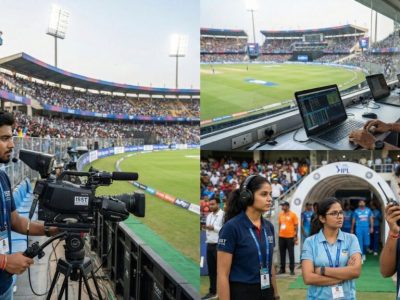
No tournament functions without a dedicated operations team. Event managers handle live match logistics, team travel, accreditation systems, stadium security, ticketing, and broadcast positioning. According to KPMG market studies, live event delivery generates the largest volume of entry-level sports jobs in India.
In practice, event operators coordinate directly with local authorities, broadcast crews, and team staff. Earning a degree through a BBA in Sports Management provides direct practical exposure to live match setups, teaching students how to run operational timelines under strict time constraints.
2. Sports facility and arena administration
Modern sports venues require specialized management teams to maintain playing surfaces, manage spectator amenities, and run non-matchday operations. High-performance facilities like the ISST High Performance Centre show how venue managers combine turf maintenance, athlete safety protocols, and commercial equipment scheduling.
Facility administrators manage vendor contracts, safety audits, and facility leasing for corporate or community events. As private academies and municipal sports complexes multiply across tier-1 and tier-2 Indian cities, structured facility administration has become a stable long-term career path.
3. Sports law, governance, and compliance
Sports law handles contractual agreements, image rights, anti-doping policies, intellectual property, and dispute resolution. Governance specialists work within sports bodies and state associations to enforce organizational constitutions and fair play standards.
With the implementation of the National Sports Governance framework, national sports federations must maintain strict legal and financial standards. Professionals in this sector ensure player contracts, league licensing agreements, and brand sponsorships comply with Indian sports law and international federation mandates.
4. Athlete management and representation
Athlete managers handle the commercial, legal, and operational affairs of professional sports players. Agents negotiate sponsorship deals, manage media appearances, arrange travel, and direct financial advisory teams for athletes.
Building trust with athletes requires expertise in brand alignment and contract negotiation. Graduates who complete a Post Graduate Diploma in Sports Management learn how to structure athlete endorsement deals, protect player intellectual property, and oversee media relations.
5. Sports analytics and digital marketing
Data drives key strategic decisions in performance evaluation and commercial marketing. Data analysts review match telemetry to support technical coaches, while digital specialists track fan engagement data to increase ticket sales and merchandise purchases.
Organizations rely on analysts to interpret complex player performance data. Students interested in this technical niche often enroll in specialized programs such as the Distance Diploma in Sports Analytics (DDSA) or combine management studies with the Masters Programme in Sports Sciences (MPSS) to bridge performance data with tactical decisions.
Sports management career and salary matrix in India
Compensation in the Indian sports sector varies based on practical experience, education level, and organization size. The table below outlines average salary ranges in Indian Rupees (₹) across common career pathways.
| Career Role | Core Responsibilities | Entry-Level Salary (INR / Year) | Mid-Level Salary (INR / Year) |
|---|---|---|---|
| Sports Event Operations Manager | Match-day logistics, venue safety, team travel, broadcast coordination | ₹3.5 Lakhs – ₹5.5 Lakhs | ₹8.0 Lakhs – ₹14.0 Lakhs |
| Sports Marketing Specialist | Sponsorship sales, brand activations, franchise ad inventory management | ₹4.0 Lakhs – ₹6.0 Lakhs | ₹9.0 Lakhs – ₹16.0 Lakhs |
| Facility & Stadium Manager | Arena operations, turf maintenance, vendor control, safety audits | ₹3.2 Lakhs – ₹5.0 Lakhs | ₹7.5 Lakhs – ₹12.0 Lakhs |
| Athlete Representation Manager | Endorsement negotiations, contractual legalities, media relations | ₹4.5 Lakhs – ₹7.0 Lakhs | ₹10.0 Lakhs – ₹20.0+ Lakhs |
| Sports Data Analyst | Match telemetry analysis, fan data tracking, tactical reporting | ₹3.8 Lakhs – ₹5.8 Lakhs | ₹8.5 Lakhs – ₹15.0 Lakhs |
How to start a career in sports management in India
Transitioning from a sports fan to a working professional requires formal sports education and structured field experience. Following a systematic pathway helps aspiring managers establish themselves in the industry.
- Complete academic qualifications: Earn a 10+2 high school diploma or a university degree in any discipline. Strong fundamental skills in communication and problem-solving provide a solid foundation.
- Enroll in specialized sports education: Join a UGC recognized course tailored to sports business, such as a BBA, BSc, or Post Graduate Diploma in Sports Management.
- Gain live exposure during study: Participate in event internships at active league matches, tournaments, and federation fixtures to understand real match-day pressure.
- Build a professional network: Use platforms like the ISST alumni connect network to connect with working tournament directors, agency leads, and federation officers.
The ISST educational methodology
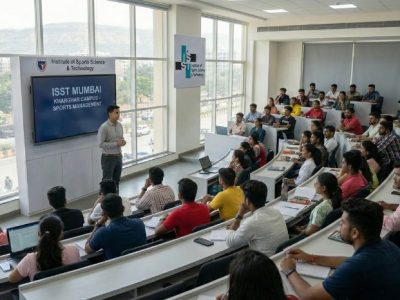
At ISST (Institute of Sports Science & Technology), academic coursework pairs directly with live tournament exposure. Classroom theory provides essential business knowledge, but practical experience on active sports grounds turns students into job-ready professionals.
ISST students complete internships across major sports properties, including the Indian Premier League (IPL), Pro Kabaddi League (PKL), and national sports federations. Understanding the 5 major functions of sports management in real venue conditions prepares graduates to handle live broadcast schedules, crowd control, and sponsor activations confidently.
Frequently Asked Questions
What entry-level jobs are available in sports management in India?
Entry-level graduates typically start as event operations coordinators, sports marketing executives, assistant facility managers, or grassroots league coordinators. These roles focus on live match execution and administrative support.
Is sports management a stable career option in India?
Yes, the expansion of professional franchise leagues and government sports initiatives has created steady demand for trained managers. Organizations require certified professionals to oversee events, sponsorships, and venue operations.
What academic qualification is required for sports management?
Students can join undergraduate programs like BBA in Sports Management after completing 10+2 high school education. College graduates can pursue a Post Graduate Diploma or Master’s degree in Sports Management.
What is the difference between sports management and sports science?
Sports management focuses on the business, commercial, operational, and legal aspects of sports organizations. Sports science focuses on human performance, biomechanics, exercise physiology, and athletic conditioning.
How much do sports managers earn per month in India?
Entry-level sports managers earn between ₹25,000 and ₹45,000 per month. Experienced professionals in mid-to-senior leadership roles earn between ₹70,000 and ₹1,50,000+ per month depending on the organization.
Do I need an athletic background to study sports management?
No, an athletic background is not mandatory. While a passion for sports helps, employers look for business acumen, organizational skills, communications ability, and practical event experience.
What role does sports analytics play in modern sports management?
Sports analytics helps teams evaluate player performance and assists business management teams in tracking fan demographics, ticket sales patterns, and digital content engagement.
How does ISST support practical training for students?
ISST integrates practical internships with academic programs, sending students to work on live tournaments like IPL and PKL. Students also train at the ISST High Performance Centre to gain hands-on venue experience.
Launch Your Professional Career in Sports
Speak with an ISST academic counselor today to find the right classroom or distance learning degree program for your career goals.