The reality of the commentary box
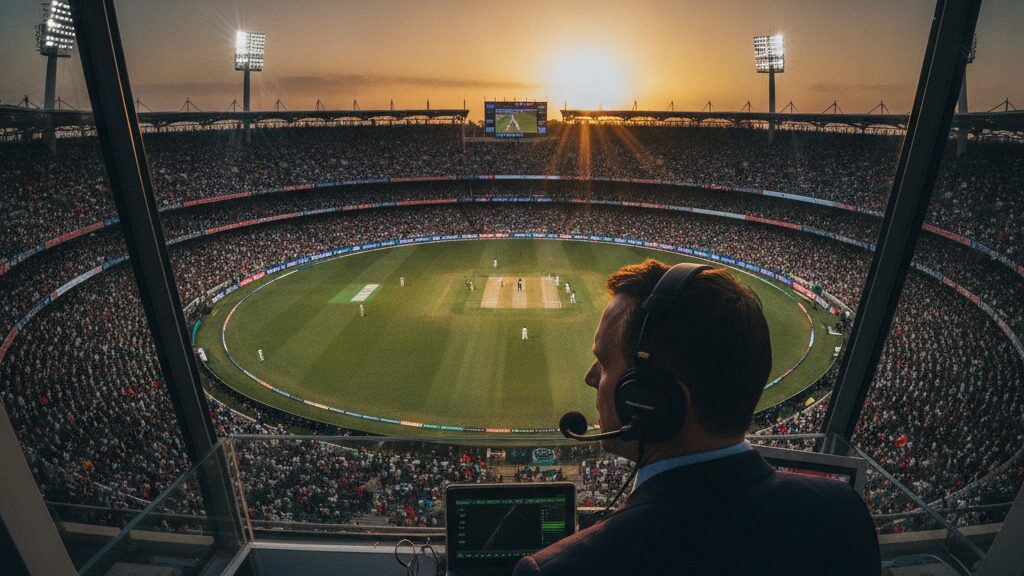
Standing in a commentary box is not about talking over a game. It is about translating the speed of an athlete into a story for millions. In India, the demand for sports commentators has shifted. Networks no longer just want a loud voice; they want analysts who understand the biomechanics of a bowler’s action or the tactical shift in a football manager’s 4-3-3 formation.
To break into this field, you need a mix of technical broadcasting skills and deep domain expertise. Most beginners make the mistake of focusing only on their voice. While clarity matters, the ability to synthesize real-time data into a narrative is what helps you stand out to major networks today.
The different roles in sports broadcasting
Not every person with a microphone does the same job. Understanding these distinctions helps you target your training.
The play-by-play commentator is the primary narrator. Their job is to describe exactly what is happening as it happens. They manage the energy of the broadcast and ensure the viewer never feels lost. This role requires extreme mental agility and a fast speaking rate without losing clarity.
The color commentator provides the ‘why’. Usually a former athlete or a sports sciences expert, they analyze the game. They explain why a particular play worked or why a player is struggling with their form. This is where a degree in sports sciences provides a massive advantage. At the ISST (Institute of Sports Science & Technology), we see that commentators who can cite specific performance metrics often have a distinct advantage in the competitive broadcasting landscape.
Then there are the sideline reporters. They handle the immediate human element—interviews with coaches and breaking news from the dugout. This role is more about journalism and agility than play-by-play narration.
Essential skills for the modern Indian commentator
The tools of the trade have changed. A good voice is now the baseline, not the competitive edge.
Game Intelligence: You must know the rules better than the officials. In practice, this means studying the nuances of the sport. If you are covering cricket, you should not just know the score. You should understand how the dew point in a night match affects the grip of the ball.
Concise Storytelling: You have seconds to make a point before the action changes. Avoid filler words. Instead of saying “It seems as though the player is perhaps struggling,” say “The player is struggling with his footwork.” Short sentences land harder and keep the audience engaged.
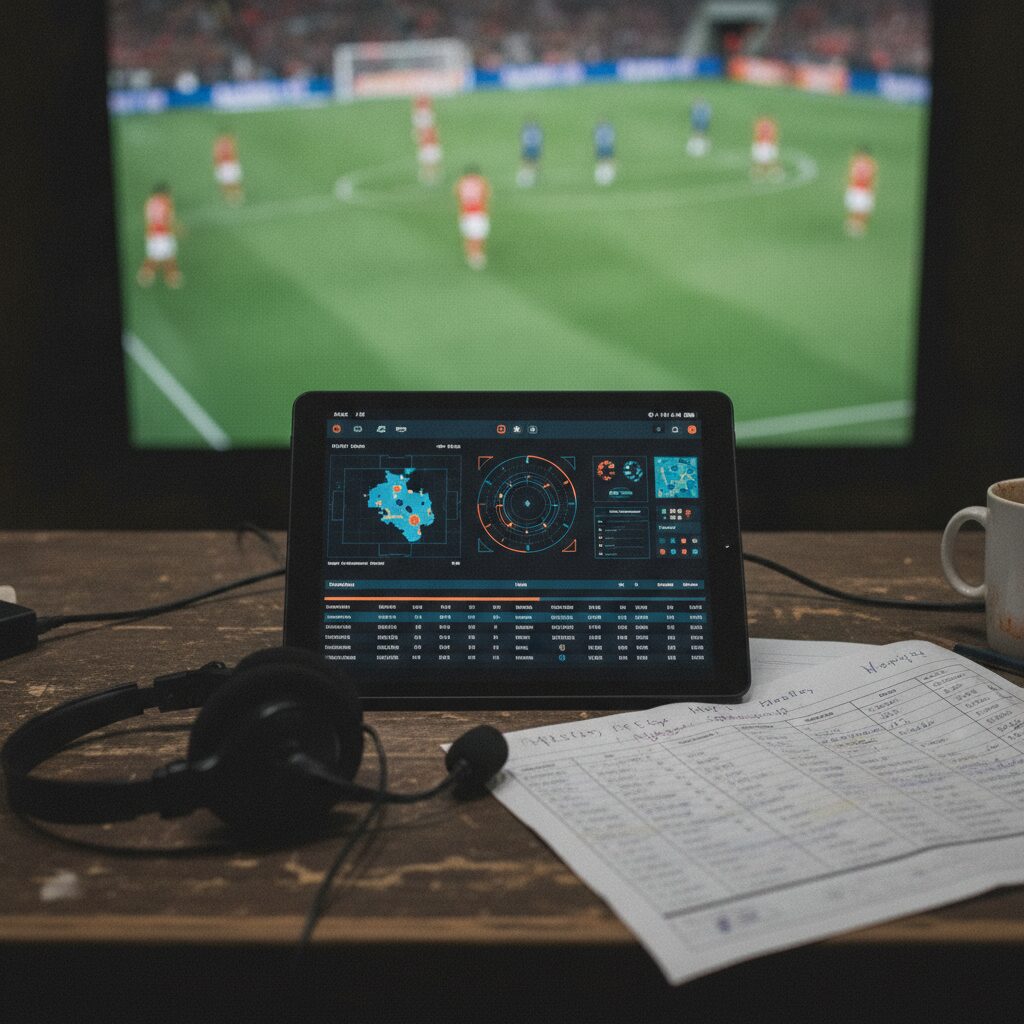
Technical Literacy: Most broadcasting now happens across a hybrid of linear TV and OTT streaming. You need to be comfortable with ear-pieces (IFBs), digital scoreboards, and real-time analytics software. If you can interpret a heat map or a player’s sprint speed on the fly, you become indispensable to the producer.
The educational path to the microphone
Many believe that you only need a degree in journalism to commentate. That is an outdated view. The most successful broadcasters today combine media skills with formal sports education.
A foundation in sports management helps you understand the business side of the league, the contracts, and the organizational pressure on teams. This context adds depth to your commentary. When you talk about a team’s struggle, you can reference their management shifts or financial constraints, making your analysis more authoritative.
For those wanting to excel as color commentators, the sports sciences route is highly recommended. Understanding kinesiology and exercise physiology allows you to explain an injury or a peak performance window with scientific accuracy. This transition from ‘guessing’ to ‘explaining’ is what separates an amateur from a professional.
At ISST, we emphasize that starting a career in sports management provides the structural knowledge needed to navigate the industry’s professional networks. Whether through a BBA, BSc, or a Post Graduate Diploma, formal education gives you a valuable credential that broadcasters trust over a mere portfolio of video clips.
Breaking into the industry in India
You will not be handed a microphone at a major tournament on day one. A sustainable career in sports is built on a series of small, strategic wins.
Start with local leagues: Every city has amateur tournaments, school games, or corporate leagues. Offer to commentate for these to gain experience. The goal is to get a ‘reel’ of your work. Record everything. Edit your best 60 seconds of high-energy play and 60 seconds of deep analysis.
Build a digital presence: Today, your social media feeds and LinkedIn profile are your living resumes. Post short clips of your analysis on current matches. When a big game happens, write a thread analyzing the tactical errors. This proves your practical training to potential employers before they ever hear you speak.
Network through internships: Most networks hire based on trust and referrals. An internship in sports broadcasting or event management provides crucial live exposure and puts you in the same room as the producers. The failure mode for most aspirants is waiting for a job posting to appear. In this industry, opportunities are created for people who are already useful on the ground.
Navigating the shift to OTT and AI
The rise of digital platforms has changed the commentary style. Modern audiences often prefer a more conversational, less formal tone than traditional linear TV.
The Hybrid Approach: Modern commentators frequently switch between a formal broadcast and a ‘fan-room’ style chat. This requires a flexible voice. You must be able to be the authoritative expert one moment and a relatable fan the next.
AI-Assisted Commentary: AI now handles basic stats—instantly telling the viewer that a player has a specific strike rate. Human commentators must focus on the emotional and psychological narrative. AI cannot explain the tension in a player’s eyes or the weight of a legacy. Focus your growth on the elements AI cannot replicate: empathy, irony, and intuition.
For a deeper look at how these platforms are evolving, see our guide on linear TV vs OTT streaming.
Salary and Career Progression
Compensation in Indian sports commentary varies wildly based on your niche, experience, and the broadcasting platform.
Entry-Level/Freelance: Beginners often work on a per-match fee for local or semi-pro leagues. At this stage, the primary goal is gaining live exposure and building a portfolio, rather than generating a primary income.
Mid-Career Professional: Once you become a regular voice for a regional network or a specific sport’s digital wing, you can transition to an annual retainer. Earnings at this level become more stable, reflecting your growing expertise and audience recognition.
Elite Broadcasters: The top tier of commentators—those who lead premier national and international broadcasts—operate on high-value contracts. Their earnings are intrinsically tied to their personal brand, the viewership they attract, and their ability to keep audiences engaged over a long season.
The ISST Advantage for Broadcasters
Purely vocational courses teach you how to talk. A comprehensive approach teaches you what to talk about. By integrating sports management and sciences courses, you build a knowledge base that makes your commentary factual and evidence-based.
Utilizing the ISST High Performance Centre allows aspiring commentators to see athletes in a controlled, scientific environment. This exposure is vital. When you observe how a performance analyst uses data to correct a player’s form, you learn how to describe that process to millions of viewers in three simple sentences.
Furthermore, the ISST alumni connect provides a bridge to professionals already working across premier domestic and international leagues. This network is a powerful route to bypassing the ‘cold email’ phase of your career.
Frequently Asked Questions
Do I need a degree in journalism to be a sports commentator?
No, journalism is helpful but not mandatory. A degree in sports management or sports sciences often provides more valuable domain expertise for modern analysis.
How can I improve my commentary voice?
Record yourself and listen for ‘filler’ words like ‘um’ and ‘basically’. Practice speaking slowly during high-action moments to ensure clarity and impact.
What is the best sport to start commentating in India?
Cricket has the most volume, but emerging sports like Kabaddi and Football have less competition. Starting in niche sports can help you get noticed faster.
Can I become a commentator without playing the sport professionally?
Yes, many top commentators were never pro athletes. They s쳮ded through deep study, analytical skills, and professional broadcasting training.
Is there a specific age limit to start a career in commentary?
There is no age limit. Many professionals transition into commentary after a career in sports administration or coaching.
How do I create a commentary portfolio?
Record your audio over existing match footage with the original commentary muted. Create 60-second ‘highlight reels’ showing different emotional tones.
Do networks hire freelance commentators?
Yes, most networks use a mix of staff and freelancers. Building a strong digital presence and a professional reel is the best way to get freelance calls.
Which is better: play-by-play or color commentary?
Play-by-play is better for those with high energy and quick reflexes. Color commentary is better for those with deep technical and scientific knowledge of the game.
Build your professional sports profile today. Explore our UGC recognized programs to get the credentials the industry demands. Browse ISST courses for free and start your journey to the commentary box.