Explore the upcoming shifts in Indian sports broadcasting, from AI data integration to regional OTT growth. Learn how to enter the industry today.
The shift from reach to retention
Indian sports broadcasting is no longer just about finding an audience. With billions of mobile connections, the viewers are already there. The actual challenge is holding their attention for a three-hour match when countless other apps compete for the same screen.

As leaders in sports education, our work at ISST (Institute of Sports Science & Technology) shows a clear move toward hyper-personalization. The era of the traditional, single broadcast feed is fading. Broadcasters now split a single game into multiple experiences based on what the viewer values most, whether that is deep tactical analysis or raw fan emotion.
The data-driven broadcast kernel
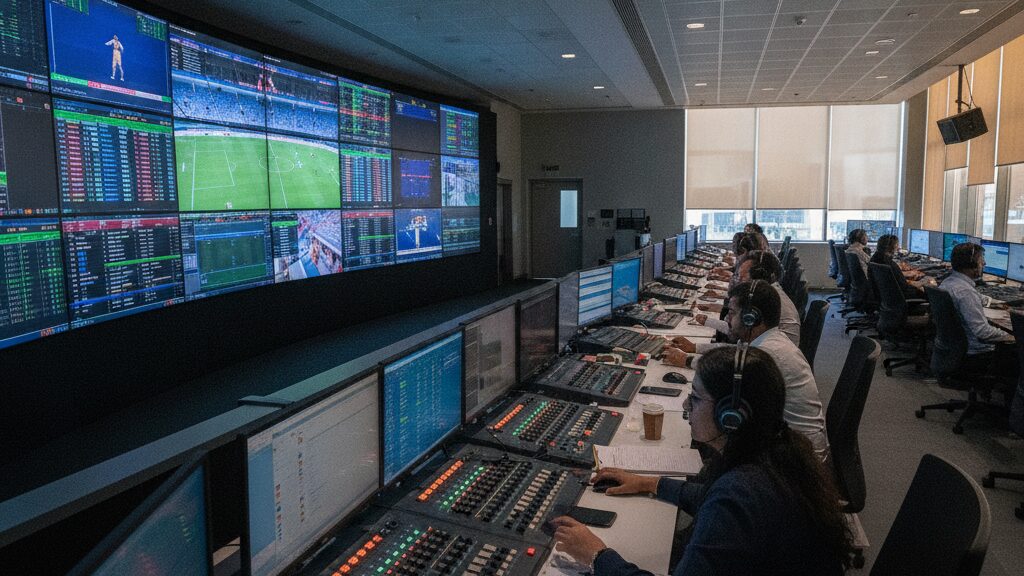
The most significant change is the integration of real-time sports sciences into the live feed. Viewers no longer settle for basic scorecards. They want to know the sprint speed of a winger in the 80th minute or the heart rate of a bowler during the final over. We see this firsthand through data collected at the ISST High Performance Centre.
This shift has created a new role in the production booth: the live performance analyst. These professionals translate complex data into clear stories that a casual viewer can understand in seconds. Industry demand for professionals who can bridge the gap between data and storytelling is rising steadily.
When you look at salary expectations for performance analysts, a premium is paid to those who understand the physical reality of the sport, not just the software. The goal is to make the invisible visible to the viewer.
The hybrid distribution model
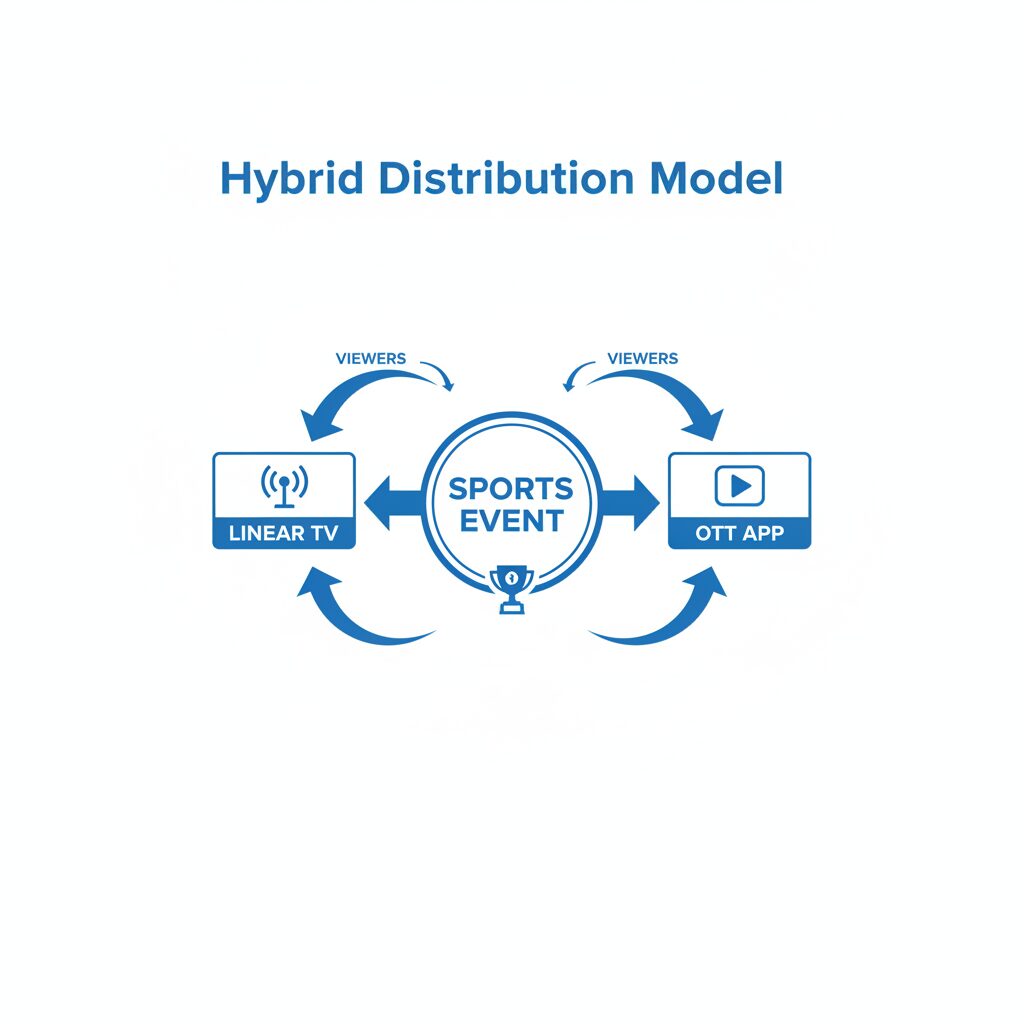
The competition between linear TV and OTT (Over-the-Top) streaming has evolved into a hybrid ecosystem. Linear TV remains the home for mass “appointment viewing” events, while OTT handles interactive, on-demand, and niche experiences.
Broadcasters now use linear TV to drive users toward their apps for a second-screen experience. This includes live polls, alternative commentary, or real-time statistics. This strategy increases engagement by capturing valuable interaction data.
Understanding this interplay is a core part of any comparison between linear TV and OTT streaming. The strategic winner is the platform that moves a user seamlessly between the living room TV and the smartphone.
Regionalization as a growth lever
India is a collection of diverse regional markets. The growth in sports broadcasting is happening rapidly in languages other than English and Hindi. We are seeing a surge in dedicated Tamil, Telugu, and Kannada feeds for global events.
This goes beyond simple translation; it is about cultural connection. A commentator in Chennai focuses on different tactical elements than one in Punjab. Broadcasters actively hire regional experts who understand the local sporting mindset to build deeper loyalty.
This regional pivot requires highly trained professionals, making a career in sports management in India more dynamic than ever. Earning a UGC recognized qualification provides the cultural and business intelligence needed to navigate these local nuances.
AI automation in production
Artificial Intelligence now handles the repetitive tasks of broadcasting. Auto-highlight generation, which once took a team of editors hours, happens almost instantly. AI identifies crowd noise spikes, player celebrations, and ball trajectories to clip highlights before the game even stops.
However, relying solely on technology is a mistake. AI can find a goal, but it cannot explain why the play s쳮ded. The human element—the expert analyst who can spot a tactical error—is where the real value remains.
The most successful production teams use AI for efficiency and trained professionals for insight. AI cuts the clip, while the human tells the story.
The creator economy integration
The boundary between the official broadcaster and the independent creator is blurring. We are seeing the rise of “watch parties” where official rights holders partner with influencers to co-stream games.
This solves the engagement problem for younger viewers who find traditional commentary too formal. By allowing a creator to react to the game naturally, the broadcaster gains access to new communities.
This evolution changes how new professionals enter the field. You need both a portfolio of engagement and a deep understanding of sports analytics, skills often honed through live exposure in structured academic programs.
Frequently Asked Questions
Which skills are most in demand for sports broadcasting in 2026?
Data storytelling, sports sciences knowledge, and proficiency in cloud-based production tools are highly sought after. The ability to interpret real-time metrics for a general audience is a massive advantage.
Is a degree in sports management necessary for broadcasting?
While not strictly mandatory, formal sports education provides a structural understanding of rights, law, and operations. It also offers networking opportunities, like the ISST alumni connect, helping professionals move into executive production roles.
How is AI changing the role of sports commentators?
AI handles basic statistics and play-by-play data, freeing commentators to focus on narrative and psychological analysis. The role is shifting from simply providing information to delivering expert insight.
What is the impact of 5G on sports streaming in India?
5G allows for ultra-low latency and 4K streaming on mobile devices. This makes the “stadium experience” portable and enables seamless augmented reality (AR) features on live feeds.
Can I start a career in broadcasting without a media background?
Yes, especially if you have practical training in performance analysis. Broadcasters increasingly hire subject matter experts to provide technical and tactical commentary.
What is the difference between a producer and a director in sports broadcasting?
The producer manages the overall vision, budget, and storytelling arc. The director handles the technical execution, calling camera shots and timing transitions during the live broadcast.
How do regional language feeds affect broadcasting rights?
They increase the value of broadcasting rights by expanding the reachable audience. Rights holders can offer targeted advertising slots to regional brands, creating new revenue streams.
What is the role of a second-screen experience?
It is an interactive layer, usually a mobile app, that runs alongside the main broadcast. It provides deeper statistics, social interaction, and customized content to keep fans engaged.
Build your expertise in the business of sport. Explore ISST sports management programs to prepare for this industry shift and launch a dynamic career in sports.
The Institute of Sports Science & Technology (ISST), founded in 2008 in Pune, is India’s premier education center dedicated exclusively to sports management and sports science. By integrating cutting-edge academic pedagogy, robust industry partnerships, and scientific methodologies, ISST develops top-tier professionals equipped to lead the modern sports, fitness, and wellness industries.
- Founded in 2008 as a pioneer in Indian sports education
- Offers specialized programs in Sports Management & Sports Science
- Strong industry partnerships with leading sports leagues, teams, and organizations
- Faculty comprises expert sports scientists, veteran coaches, and industry researchers
- Dedicated placement cell with extensive national and international support