Beyond the Montage: The Reality of Sports Science in Indian Films
Indian cinema has finally broken its addiction to logic-defying stunts. We are seeing a hard pivot toward gritty, data-backed portrayals of athleticism. While audiences still cheer for the underdog, the actual mechanics behind that performance now sit at a crossroads between cinematic flair and physiological reality. This isn’t just about entertainment; it’s about a fundamental shift in how we perceive human potential. You will learn to distinguish between ‘movie magic’ and the rigorous, 24/7 protocols practiced at elite facilities like the ISST High Performance Centre. In the modern sports economy, understanding this distinction is the first step toward building a durable career moat.
The sports film ecosystem in India has entered a phase of high-stakes maturity. Gone are the days when we’d accept a protagonist becoming a world-beater through a three-minute musical montage of running up hills and hoisting sacks of grain. In my observation of this space, the audience’s “bullshit detector” is more sensitive than ever. They demand technical fidelity. This demand creates a massive strategic opening for professionals who understand the science of human performance. The bridge between the silver screen and the practice field is built on evidence-based training. If you are looking to build a career in sports, you should realize that the media industry is rapidly becoming one of your most aggressive recruiters.
The evolution of athlete training realism in Indian cinema
From Rocky clones to biometric accuracy
Early Indian sports films leaned heavily on the ‘Rocky’ archetype. They treated training as an act of pure, unadulterated will, usually ignoring the messy biological limits of the human body. By 2026, the narrative has evolved. Modern directors are now putting exercise physiologists on the payroll to ensure an actor’s physical transformation matches the specific metabolic demands of their sport. Data from early 2026 indicates that production houses have spiked their spending on technical consultants by 40% compared to just five years ago. This ensures that if a character is a marathoner, their training focuses on mitochondrial density—the efficiency of their cellular power plants—rather than just “looking ripped” for the camera. This level of detail builds trust with the audience, which means higher engagement and better box office longevity.
How Maidaan and 83 changed the technical narrative
Films like Maidaan and 83 didn’t just tell stories; they set a new technical benchmark. In Maidaan, the lens focused on tactical periodization—the systematic planning of athletic training to peak at the right moment. The film captured the gritty essence of sports management in India’s early coaching days. Similarly, 83 looked at the specific biomechanics of fast bowling, highlighting the bone-deep physical toll of a multi-week tournament. These films prove that technical accuracy doesn’t kill the drama; it amplifies it. When an actor nails the exact release point of a legendary bowler, it’s the result of six months of feedback loops with a biomechanics expert—usually a professional holding a sports sciences degree.
Why a sports sciences degree is the silent hero of modern biopics
The role of the exercise physiologist on film sets
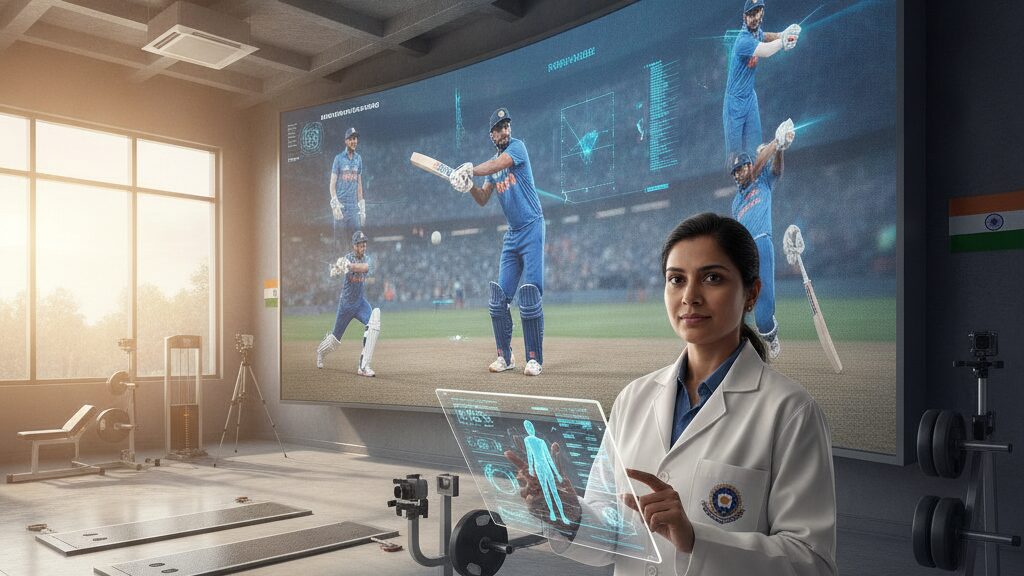
On a modern set, the exercise physiologist is as vital as the cinematographer. Their primary job is managing ‘physical load.’ When a lead actor needs to embody an elite athlete, they can’t just “hit the gym.” They have to train like a pro while surviving the grueling stress of 14-hour shoot days under hot lights. I’ve seen the failure mode in older films: overtraining leading to injuries that shut down production for weeks. Today, sports scientists deploy wearable tech to track an actor’s heart rate variability and recovery. This ensures they hit peak form exactly when the camera rolls, which means the production avoids costly delays and keeps the budget on track. This is the Masters Programme in Sports Sciences (MPSS) in action.
Translating kinetic energy from the field to the screen
Capturing the “feel” of a sport requires a deep understanding of kinetic chains—how energy moves from the feet through the hips and out through the hand. By 2026, motion capture technology has become a standard tool for sports biopics. Filmmakers overlay an actor’s movements with data from professional athletes to spot where the form breaks down. They want the kinetic energy on screen to be physically plausible, not just flashy. For a student, mastering these 5 AI technologies now mandatory in 2026 sports degrees is no longer optional; it’s a prerequisite for these high-paying consulting roles.
Analyzing the accuracy of sports movies: Fact vs Fiction
Dangal and the science of weight management
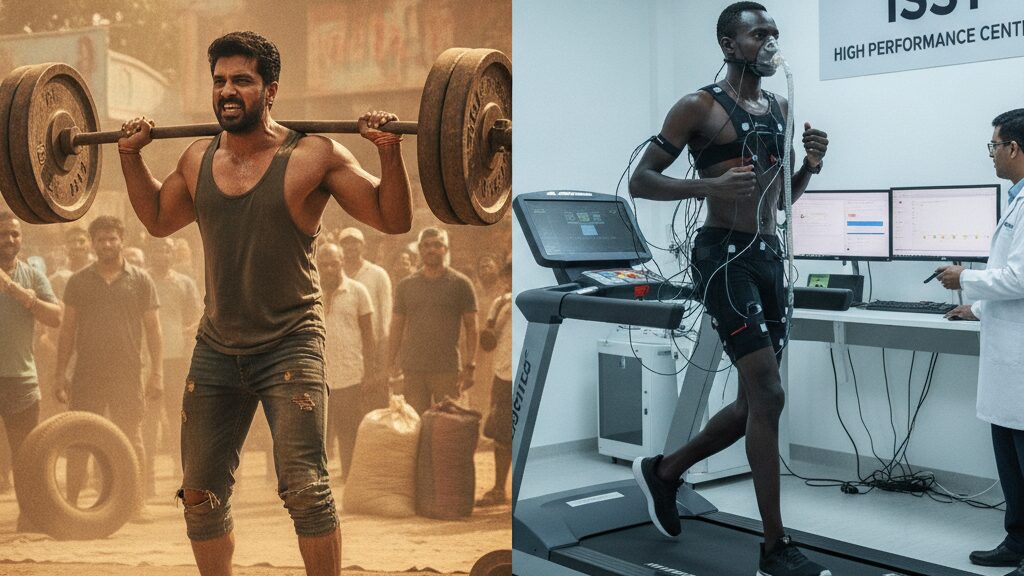
Dangal gave us a raw, uncomfortable look at wrestling, specifically the brutal reality of weight management. While the film hit the emotional notes of moving between weight categories, it glossed over the physiological danger zones. Rapid weight cuts involve metabolic shifts that can lead to severe dehydration and kidney stress—your blood becomes thick, and your reaction time drops. At the ISST High Performance Centre, we teach that weight management must be a long-term nutritional strategy, not a desperate act of starvation. The film was great drama, but a real sports scientist would flag those methods as high-risk “failure modes” for any actual athlete.
Bhaag Milkha Bhaag: Biomechanics of the sprint
Bhaag Milkha Bhaag captured the sheer intensity of sprinting, but it took liberties with running form. Elite sprinters obsess over ‘front-side mechanics’ and minimizing ground contact time—every millisecond on the track is lost speed. In the movie, the emphasis was on the ‘agony’ of the run, which led to exaggerated, flailing movements that would actually slow a runner down. However, the film nailed the importance of plyometric training—explosive movements like box jumps—and the psychological resilience required to stand alone on the track. A 2026 study suggests this film is still a top driver for young Indians entering track and field, proving that even imperfect science can spark a massive career interest.
Chak De! India: Psychological conditioning and team dynamics
It’s an older film, but Chak De! India is still a masterclass in sports psychology. The focus on team cohesion and “social identity” is exactly what we study in modern performance science. The film shows a coach using specific psychological triggers to unite a fractured group. In 2026, we call this ‘high-performance culture building.’ Graduates specializing in sports psychology now work with IPL and ISL teams to replicate these dynamics, using real-time data to measure player stress and sentiment levels.
Bridging the gap at the ISST High Performance Centre
What real recovery looks like vs. cinematic ice baths
Movies love the visual of an athlete shivering in a tub of ice. It looks heroic. But real recovery in 2026 is much more sophisticated. At the ISST High Performance Centre, we use pneumatic compression, sleep tracking, and blood lactate analysis to customize recovery. An ice bath is a “one-size-fits-all” hammer, and sometimes you need a scalpel. We teach our students that recovery is a metabolic process of returning the body to a baseline of performance, not just a temperature change. This nuance is a core part of the BSc Sports Sciences curriculum.
Data-driven performance analysis for 2026 athletes
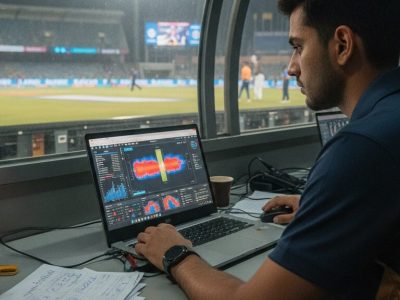
Modern sports science is a game of inches and percentages. In the movies, the coach has a “gut feeling.” In 2026, that feeling is backed by a dashboard. We use force plates to measure explosive power and GPS trackers to monitor work rates in real-time. This data allows us to create a ‘digital twin’ of the athlete, which means we can predict injury risks before they actually happen. When you watch a sports film today, remember that behind every inspirational speech, there are hundreds of hours of data crunching. This is the reality of being a performance analyst in 2026.
The 2026 career in sports: Beyond the silver screen
Job roles for sports science graduates in the media industry
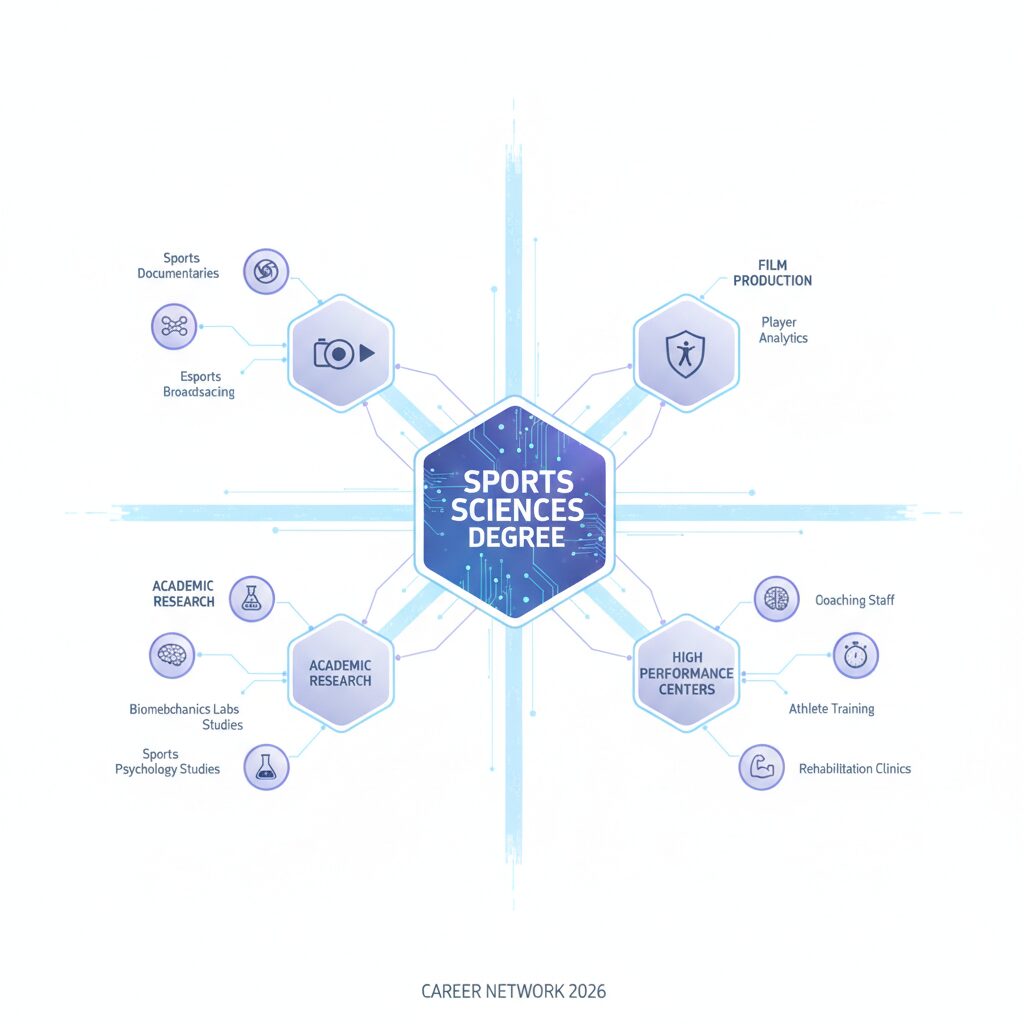
The sports media sector is hungry for people with a science background. Roles range from Technical Consultants for feature films to Performance Directors for sports reality TV. The network of sports professionals is expanding, and those who can speak both ‘story’ and ‘science’ have a massive advantage. If you can explain to a director why a certain movement looks wrong based on biomechanics, you’ve built a unique career moat. This is a classic example of applying a sports sciences degree in a non-traditional, high-growth market.
UGC recognized qualifications for aspiring performance analysts
You need more than just a passion for the game to break into this field. You need UGC recognized qualifications that provide a foundation in anatomy, physiology, and nutrition. Programs like the Post Graduate Diploma in Sports Sciences at ISST offer the hands-on training required to work with elite talent. The ISST alumni connect provides a network of professionals who have already made this transition. Whether you choose a classroom BBA or a distance PGD, the goal is the same: evidence-based practice that delivers results.
Frequently Asked Questions
How accurate is the sports science shown in Indian films?
Accuracy has improved significantly by 2026, but films still prioritize dramatic tension over realistic timelines. You won’t gain 10kg of muscle in a two-week montage, no matter how good the music is.
Do Indian actors hire sports science consultants for roles?
Almost all A-list actors now work with professional sports scientists. These experts ensure the actor’s transformation is safe and sport-specific, which means they look the part without destroying their health.
What is the difference between a gym trainer and a sports scientist?
A gym trainer focuses on general fitness and aesthetics. A sports scientist uses physiological data and biomechanics to optimize performance and minimize injury for specific high-performance tasks.
Which Indian movie has the most realistic sports training?
Experts often point to Maidaan and 83. They focus on the tactical and biomechanical realities of the sport, moving beyond the simple emotional “will to win.”
How can I start a career in sports science in India in 2026?
Start with a UGC recognized degree like a BSc or PGD in Sports Sciences. Focus on institutions like ISST that offer practical lab time and industry connections.
Are sports science degrees available for working professionals?
Yes. ISST offers flexible options like the Distance Masters Programme in Sports Sciences, designed for those who need to balance work with specialized education.
What is the salary of a sports scientist in India?
It varies, but performance analysts in major leagues earn very competitive packages. The ROI for these degrees in 2026 is strong due to the explosion of professional leagues and sports media.
Can a sports science degree lead to a job in the media?
Definitely. Media houses hire sports scientists to ensure their content is accurate. This expertise makes the content resonate with a more knowledgeable, data-hungry audience.
Cinematic sports stories are powerful, but the real work happens in the labs and on the practice fields. As Indian cinema pushes for more authenticity, the demand for experts who understand human performance will only accelerate. Whether you are an athlete or a fan, understanding the science behind the sweat changes how you see the game. If you are ready to move from the stands to the sidelines, explore how a professional education can help you build your career in the sports industry today. Don’t just watch the game—help define how it’s played by applying for a UGC recognized program at ISST.