

Sports data analyst jobs India: The 2026 guide to breaking into the industry
The IPL 2026 auction just proved that data isn’t a side-show anymore. It is the cold, hard foundation of every ₹100-crore decision made under those bright lights. If you spent your weekends tracking player strike rates or wondering why an ISL coach makes a sub in the 70th minute, you already think like an analyst. You just haven’t been paid for it yet. Right now, the Indian sports industry is valued at over ₹15,000 crore. This means the demand for people who turn raw numbers into winning strategies has hit an all-time high. This guide walks through exactly what sports data analyst jobs in India look like today, what you will actually earn, and how to build a portfolio that forces franchise owners to take notice.
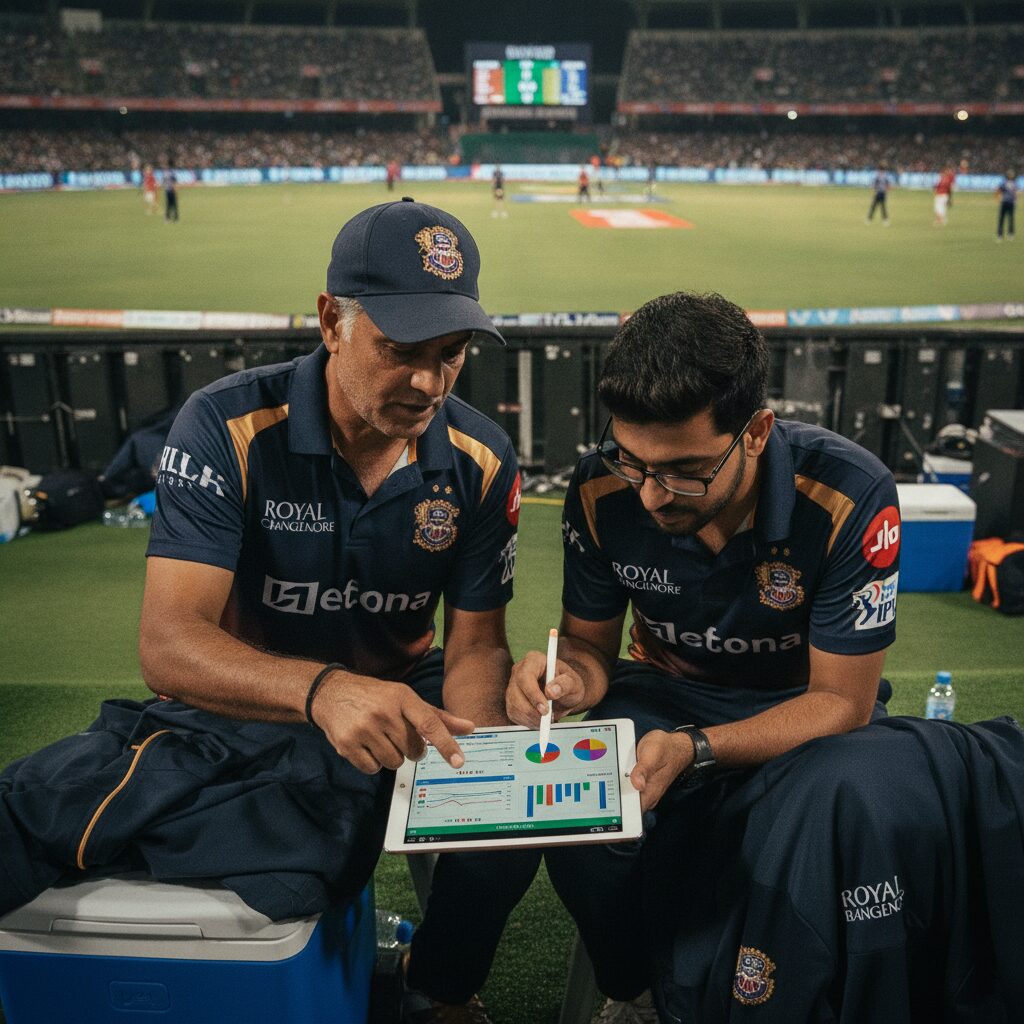
In our 17 years at ISST, we have seen this shift firsthand. Data used to be a luxury for elite teams. Now, even small-town academies in Pune and Nagpur use GPS trackers and video analysis to find the next diamond in the rough. The gap between being a fan and being a professional is smaller than ever. However, it requires a deliberate shift in how you use information. You need to move from watching the game to predicting it, which means trading your jersey for a dashboard.
Sports Data Analyst Salary in India: 2026 Pay Scales & Benchmarks
Let’s talk money. Most blogs give you vague ranges, but we prefer the truth. In May 2026, the pay scale for sports analysts has stabilized into three distinct tiers. Your paycheck depends on whether you work for a tech company, a broadcaster, or a high-stakes franchise.
Entry-level salaries for sports analysts in Pune and Mumbai
A fresh graduate starting in a sports tech firm or a mid-sized academy typically starts between ₹4.5–6.5 LPA. In hubs like Pune and Mumbai, where the cost of living is higher, some franchises offer a slightly higher base to attract top talent. Most of these contracts include a “win bonus” linked to the team’s season success. If you have a solid grasp of Python and SQL, you can command the higher end of this bracket immediately. This technical edge makes you 40% more employable than someone who only knows how to use basic Excel formulas.
Mid-level and Senior roles in IPL and ISL franchises
Once you have survived three seasons, your value spikes. A lead performance analyst for an IPL or ISL team can earn ₹14–20 LPA. Senior roles, especially those involving predictive modeling for player auctions, now reach ₹25–38 LPA. These roles are often seasonal contracts, but the monthly payout is significant. Teams pay for your ability to reduce their risk during high-stakes transfers, which means your salary is essentially an insurance policy against bad investments.
The impact of freelancing and consulting for SAI-HPC
There is a massive, growing market for independent consultants. The Sports Authority of India (SAI) High Performance Centres (HPC) often hire specialists for specific Olympic cycles. A freelance analyst working with three or four individual track athletes can make ₹1.2–1.8 lakh per month. This path requires a bulletproof reputation. Social proof is your biggest asset here. When one athlete wins a gold medal using your workload data, five more will call you by the next morning.
How to Land Sports Data Analyst Jobs in IPL and ISL Franchises
Working in an IPL dugout is the dream. But the real work happens in a quiet room months before the first ball is bowled. Data scientists in the IPL are not just looking at averages. They are looking at ‘match-ups’—how a specific left-arm pacer fares against a specific batter in the 17th over under humidity levels above 80% in Chennai. That is the level of detail required to win in 2026.
The role of analysts during the auction and pre-season
During the auction, you are the most important person in the room. You provide the ‘walk-away’ price for every player. If a player’s price exceeds their projected value, the data tells the owner to stop bidding, which means you save the franchise from a ₹10-crore mistake. Pre-season is about survival. You track heart rate variability and sprint distances to ensure players don’t snap a hamstring before the playoffs. According to ISST internal data, teams that used predictive injury modeling in 2025 saw a 22% decrease in mid-season player replacements.
How to Build a Sports Analytics Portfolio That Gets You Hired
Franchise owners and Head of Performance roles don’t care about your degree as much as they care about your proof of work. A portfolio is your evidence that you can solve real-world sporting problems.
Start by identifying a specific problem. Instead of a generic ‘IPL Analysis,’ try ‘Optimizing Death Over Bowling Rotations for RCB based on Venue Humidity.’ This specificity shows you understand the nuances of the game.
- Public Repositories: Host your code on GitHub. Ensure your README files explain the ‘Why’ behind your analysis, not just the ‘How.’
- Kaggle Competitions: Participate in sports-related data challenges. Even if you don’t win, documenting your approach to a complex dataset proves your rigor.
- Write Case Studies: Publish your findings on Medium or LinkedIn. Explain how your data-driven insight would have changed a specific match outcome. This demonstrates your ability to communicate complex data to non-technical stakeholders.
- Volunteer for Local Academies: Offer to analyze data for a local club or academy in Pune or Mumbai. Real-world data, even from a small scale, is infinitely more valuable than cleaned synthetic datasets.

Where to Find Sports Data Analyst Jobs in India: Beyond the IPL
While the IPL is the most visible employer, the sports data ecosystem in India has diversified significantly by 2026. Expanding your search increases your odds of landing a role.
- Sports Tech Startups: Companies building wearable tech, AI-driven scouting tools, and fan engagement platforms are hiring aggressively.
- Broadcasting Giants: Networks like Star Sports and JioCinema require real-time data analysts to power their on-screen graphics and storytelling during live broadcasts.
- Government Bodies: The Sports Authority of India (SAI) and various state-level sports ministries are investing in High-Performance Centres (HPC) that require full-time data specialists.
- Corporate Wellness & Health-Tech: Large corporations are integrating sports science into employee wellness programs, creating roles for analysts who can track biometric data at scale.
- International Scouting Agencies: Agencies that bridge the gap between Indian talent and global leagues (like the Big Bash or Major League Cricket) need analysts to identify undervalued players.
Daily responsibilities: From dugout data to post-match reports
On match days, the pressure is physical. You are providing live feedback to the coaching staff. You might notice a pattern in the opposition’s field placements that the coach missed from the boundary. Post-match, you produce reports that break down the ‘why’ behind the ‘what.’ It is not about blaming players. It is about identifying the one percent shifts that change the next game’s outcome. You must be able to explain complex stats to a coach who might have played 100 Tests and hates computers. If you can’t explain a ‘z-score’ in plain cricket terms, you will be out of a job by the second week.

Essential skills for sports data analyst jobs in India
You don’t need to be a math genius, but you do need to be comfortable with numbers. The toolkit for 2026 is specific. If you are still only using basic spreadsheets, you are already falling behind the competition.
Technical toolkit: Python, SQL, and Tableau for Indian sport
Python is the standard for data cleaning. SQL is what you use to talk to massive databases of historical player stats. Tableau or PowerBI is how you show your findings to the owners. Most teams now use custom dashboards that visualize data in real-time. They want to see a heat map of where a striker takes their shots, not a boring list of coordinates. Learning these tools is a small commitment that leads to massive career gains. Think of it as training for your brain the way an athlete trains their body—the reps you do now determine the trophy you lift later.
Why game knowledge beats pure coding every time
Here is a truth most techies hate: a great coder who doesn’t understand the nuance of the game is a liability. You need to know why a bowler changes their length on a crumbling pitch in Kanpur. The data only tells you what happened; your game knowledge tells you why it happened. We tell our students to spend as much time on the field as they do in the lab. This dual expertise makes you indispensable, which means you become the bridge between the locker room and the boardroom.
Choosing the right sports analytics courses in 2026
The market is flooded with certificates. Honestly, most are not worth the PDF they are sent in. You need a program that connects you to the actual industry. Look for courses that offer practical work with real data from Indian leagues, not generic datasets from ten years ago.
University degrees vs. industry-led certifications
A standard BCom or BSc is a good start, but it lacks the sports context. Industry-led certifications from institutes like ISST are designed by people who actually work in the IPL and ISL. These programs focus on practical takeaways. You learn how to use the specific software that teams use right now. Our sports management programmes now include dedicated modules on performance tracking and data visualization so you can hit the ground running on day one.
What to look for: Placement records and alumni in major leagues
Before you pay any fees, look at the placement record. Where are the alumni? If an institute can’t show you graduates working in the BCCI, SAI, or top-tier franchises, look elsewhere. Authority in this field is built on results. At ISST, we have placed over 2,000 students in the industry since 2008. That network is what gets you your first internship. It is much easier to get hired when the person hiring you is an ISST alumnus who already trusts the quality of your training.
Where to find sports data analyst jobs in India right now
The jobs aren’t just with the teams. The ecosystem is much larger than the dugout.
Start with sports tech companies like Sportradar and Genius Sports. They provide data to betting markets, media houses, and teams, and they are almost always hiring. Then look at broadcasters like Star Sports and Viacom18. They need analysts to create the graphics that keep millions of viewers glued to their screens. Finally, don’t ignore the government sector. The TOPS scheme and SAI are investing heavily in data to prepare for the 2028 and 2032 Olympics. This is the most stable path for those seeking a sports scientist salary in India.
Frequently Asked Questions
What is the starting salary for a sports data analyst in India?
A fresh analyst can expect between ₹4.5–6.5 LPA in 2026. This fluctuates based on your technical skills and whether you are based in a sports hub like Mumbai or Bangalore.
Do I need a degree in math to work in sports analytics?
No, a math degree isn’t mandatory. However, you must be comfortable with statistics and willing to learn coding languages like Python to process large data sets.
How do I get an internship with an IPL team in 2026?
Internships are rarely found on public job boards. Most are filled through direct networking or via specialized sports education institutes that have established franchise tie-ups.
Which are the best sports analytics courses in India for 2026?
Look for programs with hands-on training using industry tools. ISST offers specialized diplomas that are recognized by major Indian sports bodies and teams.
Is there a career in sports data for retired athletes?
Absolutely. Retired athletes make excellent analysts because they understand the game intuitively. They just need to bridge the technical gap with a short-term course to learn the software.
Can I work remotely as a sports data analyst?
Many tech companies offer remote roles, but team-based roles usually require you to be on-site during the season and training camps to provide immediate feedback.
What is the most important software for a sports analyst?
Python is the most versatile for analysis, but knowing Tableau for data visualization is what often gets you noticed by the decision-makers who sign the checks.
How is sports analytics different from sports management?
Management focuses on operations, sponsorship, and marketing. Analytics focuses specifically on using data to improve on-field performance and player recruitment.
The gap between being a fan and being a professional analyst is smaller than it used to be, but you have to be willing to cross it. It requires a deliberate shift in how you use data. Whether you are a 12th-standard student planning your future or a professional looking for a career change, the opportunities in 2026 are real and growing. At ISST, we have spent 17 years helping students bridge this gap with practical, no-nonsense training. If you are ready to move from the stands to the strategy room, book a counselling session with us today and let’s map out your path into Indian sports. Start your career in the sports industry today with a free consultation.
Essential Skills for Sports Data Analyst Jobs in India (2026 Roadmap)
To secure high-paying sports data analyst jobs in India, you need a hybrid skill set that blends deep athletic domain knowledge with advanced computational tools. In 2026, ‘knowing Excel’ is the bare minimum; the industry now demands predictive capabilities.
- Programming Languages: Python is the industry standard for data manipulation (Pandas, NumPy) and machine learning (Scikit-learn). R remains vital for deep statistical analysis and academic research in sports science.
- Database Management: You must be proficient in SQL to query massive player databases. Understanding NoSQL (like MongoDB) is increasingly important for handling unstructured real-time match data.
- Data Visualization: The ability to turn a spreadsheet into a story is what gets you noticed by coaches. Master Tableau, Power BI, or Python libraries like Plotly and Seaborn to create intuitive dashboards.
- Domain-Specific Knowledge: You need to understand Expected Goals (xG) in football, Win Probability Added (WPA) in cricket, and workload management metrics (ACWR) to ensure your data is actionable.
- AI & Machine Learning: Familiarity with neural networks for injury prediction and computer vision for automated player tracking is now a high-priority requirement for top-tier franchises.