
The 2026 Roadmap to a Career in Sports Management India
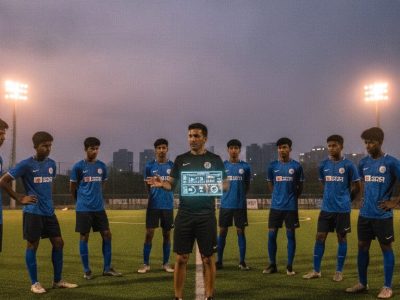
By June 2026, the Indian sports economy has moved well beyond the era of experimental leagues and “passion projects.” Data from the first quarter of this year shows the industry is now a ₹18,500 crore powerhouse, driven by a 22% year-on-year growth in multi-sport sponsorship. If you are looking to start a career in sports management India, you are no longer entering a niche hobbyist market. You are entering a mature corporate sector that demands the same professional rigor as venture capital or high-end consulting.
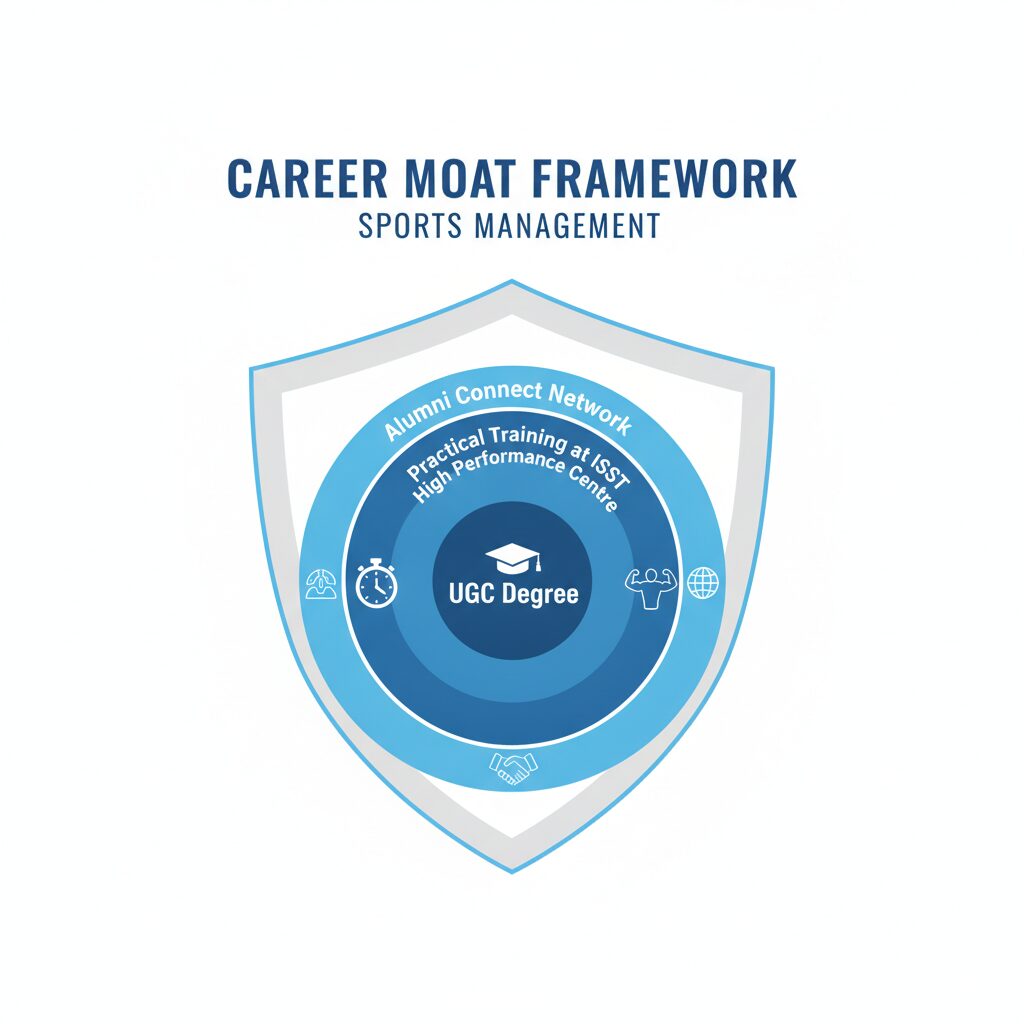
In my observations at ISST (Institute of Sports Science & Technology), the most successful professionals today are those who treat their career as a high-growth startup. They focus on building a competitive advantage through specialized education and an aggressive, intentional network. This guide breaks down the shift from being a spectator to becoming an executive. We will examine why a UGC recognized sports degree is your essential entry ticket and how the ISST High Performance Centre provides the necessary live exposure to thrive in this high-stakes environment.
The Professional Reality of a Career in Sports Management India
Moving Beyond the Fan Perspective
Many candidates enter this field because they love the “vibe” of a stadium. That is a strategic mistake. In practice, sports management is about the business of the game, not the action on the pitch. When you manage a franchise, your Sunday afternoon is spent tracking gate receipts, coordinating frantic broadcast logistics, and managing player hospitality—all while staring at a monitor, not the grass. The failure mode for many early-career aspirants is the inability to separate their passion for a team from the technical requirements of the role.
The industry looks for people who understand the mechanics of revenue. According to a 2026 industry report, 64% of sports organizations in India now prioritize candidates with a background in digital fan engagement and operational efficiency over general management skills. This means you must be comfortable with pivot tables, legal contracts, and complex vendor management. You can read more about this in our analysis of sports management reality 2026.
Current Economic Drivers in Indian Sports
Three factors are pushing the Indian market toward a ₹25,000 crore valuation by 2030. First, the growth of tier-2 and tier-3 city leagues has created a massive demand for regional operations managers who can scale local events on tight budgets. Second, the integration of real-time betting integrity and performance data has birthed a new category of technical roles. Third, the government bid for the 2036 Olympics has triggered a surge in infrastructure spending and high-performance training needs.
Look at the numbers. The Indian Premier League (IPL) remains the anchor, but the proliferation of leagues in Kabaddi, Football, and even Kho-Kho has decentralized the job market. You no longer need to be in Mumbai or Delhi to find a high-paying role. However, the competition has scaled alongside the opportunities. You need more than a generic degree to stand out; you need a specific, defensible skill set.
Why a UGC Recognized Sports Degree is the Foundation
Understanding Academic Accreditation in 2026
In the early 2020s, a weekend certificate was often enough to get an internship. By June 2026, the hiring standards have tightened significantly. Most major sports federations and private franchises now mandate a **UGC recognized sports degree** for any mid-to-senior level position. This accreditation ensures your education meets national standards, which means you won’t be filtered out by HR algorithms when applying for roles in government-backed initiatives like Khelo India or international bodies.
At ISST, we have seen that students with a formal degree progress 40% faster into managerial roles compared to those with unaccredited diplomas. A recognized degree provides the legal and academic standing required for further specialization, whether you are pursuing an MBA in Sports Management or transitioning into sports law. It is the bedrock of your professional identity.
BBA vs BSc in Sports Sciences: Choosing Your Track
Choosing the right academic path is a strategic bet on your future self. If your interest lies in the boardroom—marketing, sponsorship, and league operations—the BBA in Sports Management is the logical choice. It focuses on the commercial side: how to sell a brand and how to run a stadium profitably.
Conversely, if you are drawn to the biological and technical aspects of athlete performance, a BSc in Sports Sciences is the move. This track covers kinesiology, biomechanics, and nutrition. In 2026, the gap between management and science is narrowing. Managers who understand sports science are better at negotiating player contracts, while scientists who understand management are better at running high-performance centers. If you are unsure of the eligibility for the science track, check our Distance BSc Sports Science Eligibility 2026 guide.
The ISST Career Guide: From Classroom to Stadium
Live Exposure and Practical Training Roles
Theory is the map, but practice is the actual terrain. The ISST curriculum is built on the principle of immediate application. We do not just teach you how a league works; we put you inside one. Through our partnerships, students gain access to internships with the IPL, ISL, and various state-level associations. This **practical training** is where you build your professional reputation.
At the **ISST High Performance Centre**, students observe how elite athletes are managed from a scientific and logistical standpoint. You might spend a week tracking the recovery protocols of a national-level pacer or managing the scheduling for a multi-city tournament. These are not just observations; they are trial runs. Employers in 2026 value the ‘proof of work’ found in these internships more than any grade point average. It shows you can handle the pressure when a live broadcast is three minutes away and the power fluctuates.
The Value of the ISST Alumni Connect Network
In the professional world, your network is your most valuable asset. The **ISST alumni connect** program serves as a private talent pool for the industry. Our graduates are currently positioned in leading organizations like Hudl, Fanatic Sports, and various IPL franchises. When a new role opens in a top-tier league, it is often filled through these internal channels before it ever hits a public job board.
By joining this community, you gain access to mentorship from people who have already navigated the challenges you will face. This network intelligence allows you to avoid common career traps and identify emerging opportunities faster than the general market. It is an iterative process of learning, applying, and networking.
High-Demand Sports Industry Jobs in 2026
League Operations and Franchise Management
League operations is the engine room. These professionals handle the heavy lifting: venue procurement, travel logistics, security protocols, and broadcast coordination. In 2026, this role has become increasingly complex due to decentralized fan zones and multi-city formats. A manager here must be a master of the checklist. If a single bus is late or a floodlight fails, the financial losses can reach millions of rupees per hour. This role demands high emotional intelligence and the ability to solve problems in real-time.
Sports Data Analytics and Performance Tracking
Data is the new scoreboard. Analysts today use Python and SQL to interpret wearable technology data, helping coaches decide when to rest a player or how to optimize a bowling run-up. According to data from 2026, the demand for performance analysts in India has grown by 35% since last year. This is no longer just about tracking scores; it is about predictive modeling. If you have a knack for numbers, this is one of the highest-paying entry points into the industry. You can see the full breakdown in our 2026 ROI guide for performance analysts.
Digital Media and Sports Content Strategy
With the shift from linear TV to OTT platforms, sports teams are now essentially media houses. Every franchise needs a team to manage live social feeds, athlete branding, and fan loyalty programs. This role requires a mix of creative storytelling and technical SEO knowledge. By mid-2026, fan engagement is no longer seasonal; it is a year-round digital operation that requires constant content production to keep the sponsors happy.
Salary Expectations and Financial Growth
Entry-Level Compensation in Major Indian Metros
In Mumbai, Bengaluru, and Pune, an entry-level professional with a UGC recognized degree can expect a starting salary ranging from ₹4,50,000 to ₹7,00,000 per annum. Those entering specialized technical roles like data analytics or sports law often start at the higher end of that bracket. While these numbers might seem modest compared to some IT roles, the growth curve in sports is significantly steeper for those who can deliver results.
Scaling to Executive Roles in Domestic Leagues
Once you move into mid-management—typically after 4 to 6 years—salaries often jump to the ₹12,00,000 to ₹20,00,000 range. Senior executives in major leagues or heads of high-performance centers can earn upwards of ₹40,00,000 annually, plus performance-linked bonuses. The key to reaching these levels is a consistent record of operational success and a deep network of industry contacts. For those currently working in other sectors, a Distance PGD in Sports Management is an effective way to pivot without pausing your current income.
Frequently Asked Questions
Is sports management a stable career in India in 2026?
Yes, the industry has matured with multi-year broadcasting deals and government infrastructure projects. Stability is highest in league operations and scientific performance roles which are now essential to team success.
What is the average starting salary for sports management graduates in INR?
Fresh graduates typically earn between ₹4.5 lakh and ₹7 lakh annually in major metros. Specialized roles in analytics or law can command higher starting figures because of the technical skill gap.
Do I need to be an athlete to start a career in sports management?
No. Most management roles prioritize business acumen, data literacy, and operational skills over athletic ability. However, understanding the athlete’s mindset helps you negotiate better contracts and manage performance cycles.
Which UGC recognized sports degree is best for league operations?
A BBA in Sports Management or a Post Graduate Diploma is ideal for operations. These programs focus on the commercial and logistical aspects of running a league effectively.
How does ISST help with placements in the Indian sports industry?
ISST provides access to the Alumni Connect network and offers internships with major franchises like the IPL and ISL. These placements act as a three-month interview, often leading to full-time roles.
Can I switch to sports management from a corporate background?
Absolutely. Many professionals use a PG Diploma to translate their existing skills in finance or marketing into the sports context. The industry values diverse corporate experience because it brings much-needed structure.
What are the top skills needed for sports management in 2026?
High-demand skills include data analytics, digital fan engagement, vendor management, and sports law. Proficiency in tools like SQL or Tableau is increasingly valuable for performance roles.
Is a distance degree in sports management valid for jobs?
Yes, as long as the degree is UGC recognized, it is valid for both private sector jobs and government sports initiatives. It is a popular choice for working professionals who want to transition careers.
The transition from a sports enthusiast to a sports executive requires more than passion; it demands a structured education and live exposure. As the Indian market matures in 2026, the demand for qualified professionals at the ISST High Performance Centre and beyond continues to grow. If you are ready to professionalize your interest in sports, explore our UGC recognized programs today.
Start your career in sports management today by booking a counseling session with our experts. No commitment is required to explore your professional options.