Explore the 10 richest athletes in the world 2026 by net worth. Discover how Jordan, Woods, Ronaldo, and Messi built their billion-dollar business empires.
Wealth is not income. Income is the price you get for selling your hours. Wealth is the collection of assets that keep earning while you sleep. When we look at the richest athletes in the world in 2026, we aren’t just ranking who sweated hardest during their prime. We’re looking at who owned the most after the final whistle blew and the stadium lights went dark.
Most athletes play a zero-sum game, trading physical health and youth for a paycheck that stops the day they stop playing. A small number of them played a different game entirely. They built brands, negotiated for equity instead of cash, and understood that real leverage sits in the boardroom rather than the locker room. At the Institute Of Sports Sciences (ISST), we teach students to look past the jersey and see the machinery behind these fortunes. It isn’t trivia. It’s a practical blueprint for how the modern business of sport actually works.
Historical Benchmark: The Richest Athlete in History vs 2026 Billionaires
Michael Jordan and Tiger Woods look like the ceiling of what a human being can earn through sport. They aren’t close to the real record. That belongs to Gaius Appuleius Diocles, a Roman charioteer from the second century AD. He never had a Nike deal or a social media following. He had a team of horses, twenty-four years of racing at the Circus Maximus, and a crowd that couldn’t get enough of it.
An inscription erected in Rome in 146 AD records his career earnings at 35,863,120 sesterces. Peter Struck, a classicist at the University of Pennsylvania, calculated what that sum would represent in today’s economy, given the size of the Roman Empire’s finances at the time, and arrived at a figure of roughly $15 billion. By his estimate, that was enough to feed the entire city of Rome for a year, or fund the Roman army at its peak strength for a fifth of a year. The lesson holds up two thousand years later: sport has always been a high-leverage attention business. The technology moved from wooden chariots to carbon-fiber F1 cars, but a crowd’s attention has always been the real currency.
Official 10 Richest Athletes in the World 2026 (Net Worth Leaderboard)
Modern money moves fast, accelerated by the “Saudi effect” and private equity firms buying into sports franchises at record valuations. But for all the attention on paydays, only a handful of athletes in history have actually crossed into billionaire net worth, as opposed to billionaire career earnings, which is a very different number. As of 2026, seven athletes hold that distinction: a mix of basketball legends, golf icons, tennis and football stars who turned their names into standalone businesses.
| Rank | Athlete | Sport | Estimated Net Worth (2026) |
|---|---|---|---|
| 1 | Michael Jordan | Basketball | ~$3.5 Billion |
| 2 | Tiger Woods | Golf | ~$2 Billion |
| 3 | Magic Johnson | Basketball | ~$1.5 Billion |
| 4 | LeBron James | Basketball | ~$1.4 Billion |
| 5 | Cristiano Ronaldo | Football | ~$1.3 Billion |
| 6 | Roger Federer | Tennis | ~$1.2 Billion |
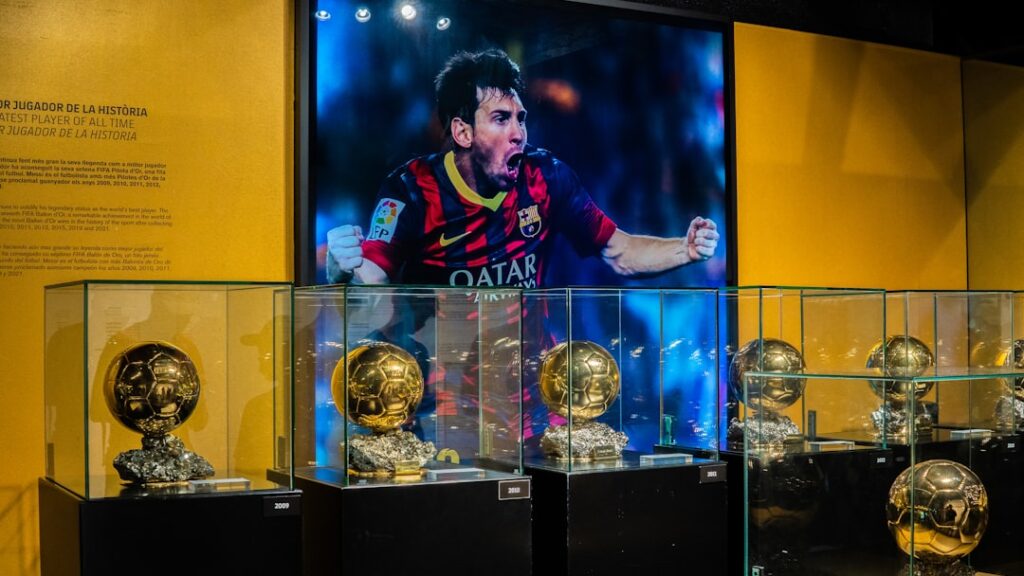
| 7 | Lionel Messi | Football | ~$1.1 Billion |
These figures move constantly. A franchise sale, a new equity stake, or a licensing deal can shift someone’s ranking within a quarter, and different research firms land on different numbers depending on how they value private business stakes. Treat the table as a snapshot of where things stand broadly, not a precise leaderboard.

Completing the Top 10: The Multi-Hundred Million Dollar Titans
While the exclusive billionaire bracket commands headline attention, any definitive list of the 10 richest athletes in the world 2026 must account for the commercial powerhouses who sit right on the edge of the ten-figure club, alongside historical outliers whose business acumen created massive empires.
- Ion Țiriac (~$2.1 Billion): Often overlooked because his prime was in 1970s tennis and ice hockey, the Romanian athlete-turned-financier was technically the first sports figure to surpass $1 billion in net worth through post-communist banking, insurance, and the Mutua Madrid Open.
- 8. Floyd Mayweather Jr. (~$700 Million): By pioneering the ‘Mayweather Promotions’ operational model, Mayweather bypassed traditional boxing promoters to retain up to 80% of pay-per-view grosses, creating the template for athlete self-promotion and lucrative real estate holdings.
- 9. David Beckham (~$550 Million): Beckham’s MLS contract clause in 2007 allowing him to purchase an expansion team for $25 million culminated in co-owning Inter Miami CF—now valued above $1 billion, proving the immense ROI of franchise equity over straight salary.
- 10. Michael Schumacher (~$600 Million): Formula 1’s initial commercial pioneer dominated licensing rights and shell-sponsor guarantees long before current driver salary caps, establishing an enduring family investment trust.
Net Worth vs. Annual Earnings: The 2026 Sports Compensation Shift
To accurately evaluate the financial hierarchy of elite sports, one must separate cumulative asset valuation from single-season cash flow. In 2026, annual athlete compensation reached unprecedented levels, propelled by state-backed sovereign funds, the expansion of the Saudi Pro League, and record-shattering broadcast renewals.
For instance, Cristiano Ronaldo’s record annual income of $300 million and Jon Rahm’s guaranteed LIV Golf purses represent extraordinary liquidity. However, high annual income does not immediately translate to top-tier net worth without aggressive asset diversification. The athletes leading the 10 richest athletes in the world 2026 leaderboard distinguished themselves by converting liquid earnings into non-depreciating assets: minority stakes in professional franchises, commercial property developments, and private equity venture funds.
Understanding this transition from salaried earner to equity partner is fundamental for professionals managing talent portfolios and negotiating franchise contracts across modern leagues.

1. Michael Jordan (~$3.5 Billion)
Jordan is the north star for the athlete-businessmen we study in our sports management courses. He didn’t just take a salary from the Bulls, he took a royalty from Nike. Back in 1984, he signed a deal that gave him a cut of every Air Jordan sold. He used the NBA as a fifteen-year marketing campaign for a product line he partially owned, then added to that fortune in 2023 by selling his majority stake in the Charlotte Hornets. He didn’t work for Nike. He partnered with it, and that’s the difference between a salary and a business.
2. Tiger Woods (~$2 Billion)
Golf rewards longevity, which is a real financial advantage for anyone with a long-term plan. Woods has been the face of global golf for three decades, and tournament prize money is a small fraction of his total wealth, most of it built through decades as the face of Nike, Rolex, and other major brands. He stayed relevant across generations, and that relevance let his wealth compound while plenty of his peers faded out of the spotlight.
3. Cristiano Ronaldo (~$1.3 Billion)
Ronaldo represents the new era of sports wealth, where the athlete functions as a media platform in their own right. It’s worth separating two numbers people often mix up: Ronaldo is consistently the highest-paid athlete in the world by annual earnings, around $300 million in a single year from his Al-Nassr contract and endorsements combined. His actual net worth is a smaller, different figure, since a high salary and an accumulated fortune aren’t the same thing. He crossed into billionaire territory on the back of that income plus a social media reach north of 900 million followers, making him one of the few athletes whose earning power now depends as much on his platform as his performance on the pitch.
The Gap Between Salary and Equity
Why do some athletes go broke within five years of retirement while others become billionaires? It comes down to the difference between renting time and owning output. Salary is linear. You play one game, you get paid once. Equity is exponential. You build a brand today, and it pays you for the next fifty years. It’s the difference between being the labor and being the owner.
That trend keeps accelerating. Athletes are no longer satisfied with endorsement checks. They want cap table positions, investing in sports tech startups, beverage companies, and stakes in other sports teams. This shift requires professional guidance, which means the demand for sports managers has never been higher. If you’re looking at the scope of sports management in India, this is exactly where the high-paying jobs are: managing the investment portfolios and brand equity of the next generation of stars.
The Indian Context: Where are the Billionaire Cricketers?
Virat Kohli and MS Dhoni have net worths that place them among the wealthiest people in India, but neither has cracked the global list of athlete billionaires yet. Part of that is simply the rupee-to-dollar gap between domestic cricket deals and the global dollar market that the NBA, European football, and F1 operate in. The IPL’s own valuation has climbed sharply in recent years, and as it keeps growing, the case for an eventual Indian athlete billionaire gets stronger, though a specific timeline is genuinely hard to call.
Indian athletes are increasingly following the Jordan model: launching their own brands, like Kohli’s One8 or Dhoni’s Seven, instead of only appearing in someone else’s commercials. That shift from celebrity to owner is exactly what we focus on in our sports management career guide. It’s about building something that outlasts an injury or a dip in form.
How Sports Management Professionals Build These Fortunes
None of the athletes on this list managed their money in a vacuum. Behind every billionaire athlete is a team of sports management experts, lawyers, and brand strategists handling three things in particular.
Intellectual Property (IP) Licensing: Turning a human name into a logo that can be sold on shoes, clothes, or energy drinks, which lets the business scale in a way a physical body simply cannot.
Strategic Equity: Instead of taking a ₹5 crore fee for an ad, a smart manager negotiates a 5% stake in the company instead. If that company eventually sells for ₹500 crore, the athlete’s stake is worth ₹25 crore, five times the original fee for essentially the same deal.
Tax and Jurisdiction Management: Managing earnings across multiple countries to keep as much of it as legally possible. It’s a technical, high-skill job that requires a solid foundation in sports science and management, protecting the money rather than just chasing more of it.
Frequently Asked Questions
Who is the richest athlete of all time adjusted for inflation?
Gaius Appuleius Diocles, a Roman charioteer, earned the equivalent of roughly $15 billion in today’s economy over a 24-year career. His earnings came from prize money at the Circus Maximus, recorded in a Roman inscription from 146 AD and calculated by a University of Pennsylvania classicist using the scale of the empire’s overall economy at the time.
Is Michael Jordan a billionaire?
Yes, with a net worth estimated around $3.5 billion or higher depending on the source. The bulk of it comes from Jordan Brand royalties, with a significant boost from his 2023 sale of his majority stake in the Charlotte Hornets.
How much does Virat Kohli earn in 2026?
Kohli’s net worth is estimated at roughly ₹1,100 to 1,200 crore in 2026. His income comes from a mix of his IPL contract with Royal Challengers Bengaluru, brand endorsements, and business ventures like One8.
Why are golfers so rich compared to other athletes?
Golfers have longer careers and total control over their sponsorship space. Unlike team sports, they don’t have to share jersey space with team sponsors, which means they can charge much higher individual endorsement rates.
What is the difference between net worth and career earnings?
Career earnings are the total money made before taxes, agent fees, and lifestyle spending. Net worth is the actual value of all assets owned minus any debts. Many athletes have high earnings but low net worth due to poor management, which is exactly why the highest-paid athlete in a given year is rarely the same person as the richest athlete by net worth.
Can a sports management degree help me work with these athletes?
Yes, a degree provides the foundation in sports law, marketing, and finance needed to manage professional careers. Many ISST alumni now work in these high-stakes roles, managing the brands of top athletes.
Who is the richest female athlete in 2026?
Serena Williams, with a net worth estimated around $400 million, built through her tennis career and her venture capital firm, Serena Ventures. Worth noting: even the richest female athlete sits well below any of the seven male billionaires on this list, and no woman appeared on the 2026 highest-paid athletes rankings at all, a real and still-unclosed gap in how men’s and women’s sports get valued commercially.
How does the IPL affect athlete net worth in India?
The IPL provides a large, liquid cash injection for players every season. That capital regularly gets used to seed private businesses that build long-term wealth well beyond what a playing contract alone would provide.
Take Control of the Sports Business
The sports industry isn’t just about who wins on Sunday anymore. It’s about who owns the rights to the game on Monday. The athletes on this list got there by understanding the business machinery behind the talent, not just the talent itself.
If you want to be more than a spectator, the path usually starts with the right foundation. Whether you’re a 12th-pass student or a graduate looking to pivot, professional education is how you get from watching the business of sport to working inside it.
Check out our post-graduate programs or book a counselling session at ISST to find your place in this growing industry.
The Institute of Sports Science & Technology (ISST), founded in 2008 in Pune, is India’s premier education center dedicated exclusively to sports management and sports science. By integrating cutting-edge academic pedagogy, robust industry partnerships, and scientific methodologies, ISST develops top-tier professionals equipped to lead the modern sports, fitness, and wellness industries.
- Founded in 2008 as a pioneer in Indian sports education
- Offers specialized programs in Sports Management & Sports Science
- Strong industry partnerships with leading sports leagues, teams, and organizations
- Faculty comprises expert sports scientists, veteran coaches, and industry researchers
- Dedicated placement cell with extensive national and international support