
The math is broken. Or maybe it’s fixed.

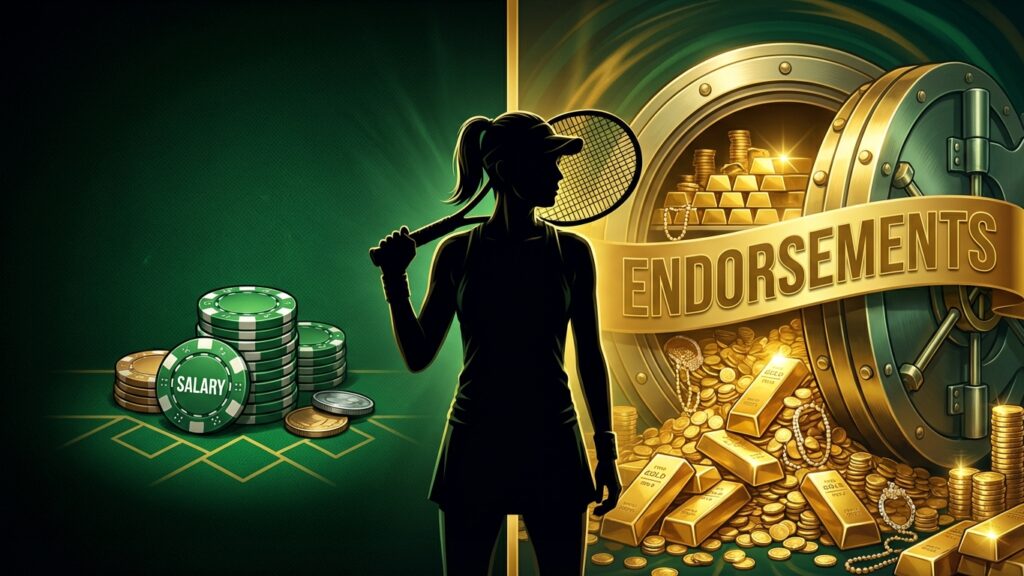
If you look at the pay stubs of the top male athletes, you see massive contracts. Hundreds of millions guaranteed. The salary is the main course. Endorsements are just gravy.
Switch the gender. The equation inverts.
For the highest-paid female athletes, the salary is a rounding error. It is the appetizer. The endorsement deal is the feast. This isn’t just a wage gap issue. It is a fundamental difference in how value is captured in the sports economy.
We are witnessing an arbitrage opportunity.
Brands have realized that female athletes offer higher engagement per dollar than their male counterparts. While leagues are constrained by collective bargaining agreements and revenue splits, the free market of sponsorship is unlimited. That is where the real wealth is being built.
In our analysis at the Institute Of Sports Sciences, ISST, we track these shifts. To understand the macro view of athlete wealth, you should first read our breakdown of the Richest Athletes in the World: The Billionaire Blueprint (2026). That creates the context. Now, we look specifically at the female economy.
The 90/10 Split: Why Endorsements Dominate Female Athlete Earnings
Look at the top 10 highest-paid female athletes. Nearly every single one of them makes over 80% of their income off the field. Some push 95%.
Take Gu Ailing (Eileen Gu). A freestyle skier. Her prize money is respectable. Her endorsement portfolio? Astronomical. Luxury brands, tech giants, beverages. They don’t care about the ski slope. They care about the story.
Why is this happening?
- Salary Caps: Leagues like the WNBA have hard caps. The max salary is a fraction of an NBA minimum contract.
- Marketability: Female athletes often dominate social media engagement metrics. High trust. High relatability.
- Longevity: An endorsement contract can outlast a knee injury. A salary cannot.
This creates a unique career path. You don’t just train to win. You train to be a media entity.
2026 Earnings Breakdown: Highest Paid Female Athletes (Salary vs. Endorsements)
To understand the arbitrage, we must look at the hard numbers. While exact contracts are often private, our 2026 projections based on market valuations and league disclosures reveal a staggering disparity between on-court earnings and brand equity.
| Athlete | Primary Sport | Est. Total Earnings | Salary/Prize (Approx) | Endorsements (Approx) | Endorsement % |
|---|---|---|---|---|---|
| Coco Gauff | Tennis | $45M+ | $8M | $37M | 82% |
| Iga Świątek | Tennis | $38M+ | $7M | $31M | 81% |
| Caitlin Clark | Basketball | $32M+ | $76K | $31.9M | 99% |
| Eileen Gu | Skiing | $25M+ | $2M | $23M | 92% |
| Simone Biles | Gymnastics | $18M+ | $1M | $17M | 94% |
As the data shows, the ‘salary’ component for non-tennis athletes is often negligible. In the case of basketball and gymnastics, the salary serves primarily as a professional credential—a ‘license to operate’—while the endorsement portfolio acts as the actual wealth generator.

Tennis Salaries vs Endorsements: A Case Study in Income Equality
Tennis is the exception that proves the rule. It is the only major global sport where prize money for women is comparable to men at the Grand Slam level.
Coco Gauff and Iga Świątek routinely top the lists. Why? Because they get paid on both sides. They win millions on the court. Then they sign eight-figure deals with New Balance, Rolex, or On Running.
But even here, the ratio leans toward endorsements. Naomi Osaka set the blueprint. She barely played in 2022/2023 due to mental health breaks and pregnancy, yet she remained one of the highest earners. Her wealth was decoupled from her labor. That is the goal of every smart athlete.
The Wealth Ratio (Tennis)
On-Court: 30%
Off-Court: 70%
Compare this to a generic Premier League soccer player, where the ratio is often 90% salary, 10% endorsements. The female tennis player is a business owner. The male soccer player is a highly paid employee.
The Caitlin Clark Paradigm
This is where it gets interesting.
Caitlin Clark entered the WNBA with a rookie salary of roughly $76,000. The internet exploded. People were outraged. How could a superstar make a mid-level manager’s salary?
They missed the point.
Her Nike deal is reportedly worth $28 million over eight years. That is $3.5 million a year. Plus deals with Gatorade, State Farm, and others.
Her salary is irrelevant. It is a ticket to the game. It allows her to be on television, which allows her to sell shoes. The WNBA provides the platform; the corporations provide the liquidity.
If you want to understand how salaries like these are structured and why the caps exist, you need to study the backend. Our Bachelor in Sports Management covers the mechanics of salary caps and collective bargaining.
Global Shifts: Women’s Cricket and Football Wealth Dynamics
While the US market is dominated by the WNBA and NIL deals, the global landscape is shifting. In India and the UK, women’s cricket is experiencing a similar ‘Clark-effect.’ The rise of professional leagues has created a new tier of athletes who are leveraging their on-field performance to secure massive domestic endorsements.
- Cricket: The professionalization of the women’s game has moved the needle from ‘stipends’ to ‘salaries,’ but the real growth is in brand partnerships with fintech and lifestyle companies.
- Football (Soccer): With the growth of the WSL and NWSL, we are seeing a hybrid model where salaries are rising faster than in basketball, though endorsements still provide the primary leap into the ‘ultra-high-net-worth’ category.
This diversification of income streams is why modern athletes are no longer just players; they are diversifying their portfolios into venture capital and real estate, treating their peak earning years as a seed round for lifelong wealth.
Gymnastics and the NIL Explosion
For a long time, gymnasts were poor until the Olympics, and sometimes poor after.
Name, Image, and Likeness (NIL) changed the physics of the sport. Olivia Dunne (LSU) became a multi-millionaire without ever turning “pro” in the traditional sense. She monetized her audience while competing in college.
Simone Biles is another case. She redefined what a gymnast’s portfolio looks like. She partnered with Athleta, leaving Nike, to have equity and creative control. She isn’t just wearing the logo. She is helping shape the brand.
This is the future. Equity over cash. Partnership over sponsorship.
Soccer: The Next Frontier
Women’s soccer is growing. Fast. But the money is still lopsided.
Alexia Putellas. Sam Kerr. Alex Morgan (recently retired). The salaries are climbing—some hitting the $500k-$1M range depending on the club and league. But the endorsement deals from Nike, Adidas, and Visa dwarf those numbers.
We are seeing more investment in the infrastructure of women’s football. This creates jobs not just for athletes, but for managers, physios, and agents. If you are looking to enter this sector, check our guide on Sports Management Salaries to see where the administrative growth lies.
The Brand Equity Multiplier
Why do brands pay female athletes so much relative to their salaries?
Safety and Storytelling.
Brands want safe bets. They want clean images. They want inspiration. Female athletes, historically, have had to work harder to build their personal narratives to get attention. This makes them better at social media. Better at connecting.
When a brand sponsors a male NBA superstar, they are one of fifty logos. When they sponsor a top female golfer or tennis player, they often get exclusivity and higher visibility.
Key Takeaways for Future Agents
- Don’t chase the salary. Negotiate the rights to image and likeness.
- Build the platform. An athlete without an audience is just an employee. An athlete with an audience is a media company.
- Understand the rules. Regulations change. Look at the eligibility criteria for Khelo India or NCAA rules. Knowing the legal framework is how you protect the money.
The Gap is Closing (Slowly)
Will salaries ever catch up?
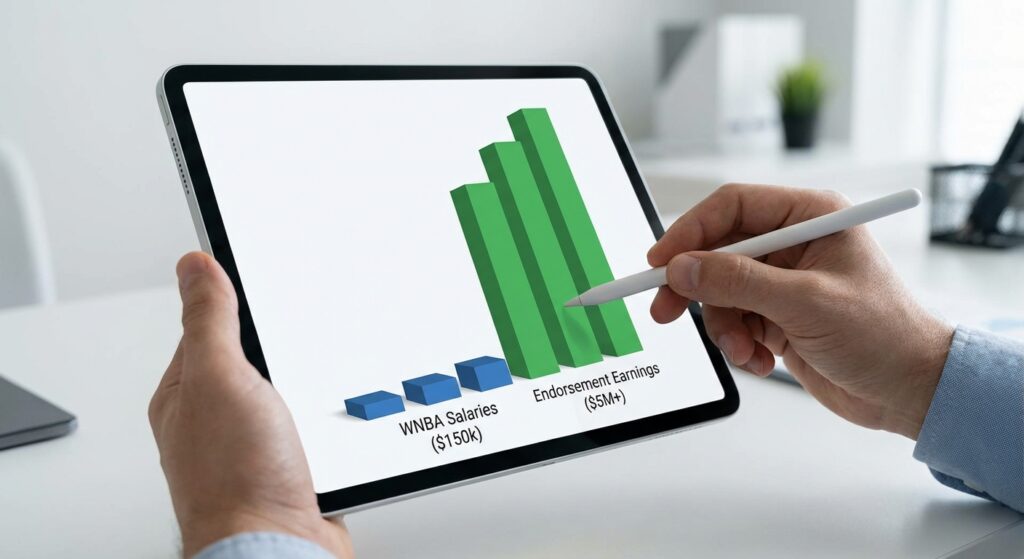
Maybe. As TV rights deals for the WNBA and NWSL explode, salaries will rise. But the ceiling for endorsements is infinite. The ceiling for salary is capped by revenue.
Smart athletes know this. They use the sport to build the brand. Then they use the brand to build the empire.
If you are interested in the financial architecture of sports careers, particularly for those exiting the game, read our analysis on Richest Retired Athletes Net Worth Breakdown. It shows what happens when the salary stops completely, but the checks keep coming.
Frequently Asked Questions
Who is the highest-paid female athlete of all time?
Serena Williams holds the crown for career earnings, combining prize money and massive endorsement deals over two decades. Her venture capital firm, Serena Ventures, continues to build her wealth post-retirement.
Why do female tennis players earn more than other female athletes?
Tennis has a global tour with massive TV distribution and mixed-gender tournaments (Grand Slams) that offer equal prize money. The individual nature of the sport also makes stars more recognizable to brands.
How does NIL impact female athlete earnings?
NIL allows collegiate athletes to sign endorsement deals without losing eligibility. This has disproportionately benefited female gymnasts and basketball players with large social media followings.
Do WNBA players make money from jersey sales?
Yes, they receive a portion of revenue, but it is small compared to their base salary or private endorsements. The collective bargaining agreement dictates the exact split.
What is the average salary in the WNBA vs NBA?
The average WNBA salary hovers around $100,000, while the NBA average is over $10 million. This disparity drives female players to prioritize overseas contracts and endorsements.
Can endorsement deals exceed salary caps?
Yes, endorsement deals are third-party contracts and are not subject to league salary caps. There is no limit on how much a sponsor can pay an athlete.
Which brands spend the most on female athletes?
Nike, Adidas, Gatorade, and luxury watchmakers like Rolex are the biggest spenders. Recently, beauty and fashion brands have aggressively entered the market.
Is the gender pay gap narrowing in sports?
Yes, specifically in prize money for major events and improved collective bargaining agreements in soccer and basketball. However, the gap remains significant in base salaries.
The Final Play
The game has changed. Earning power is no longer defined by what the team owner pays you. It is defined by the attention you command.
At the Institute Of Sports Sciences, ISST, we teach the business behind the game. Whether you want to manage the next tennis superstar or structure complex sponsorship deals, you need the right toolkit.
Don’t just watch the game. Manage it. Explore our Sports Management Degrees today and position yourself at the intersection of sports and wealth.