The 2026 Roadmap for a Career Change to Sports in India
Most people think the window for a sports career closes the moment you stop playing competitive cricket or football. That is a myth. In 2026, the Indian sports industry is a ₹15,000+ crore engine powered more by managers and scientists than just athletes. If you are sitting in a BCom or Engineering job feeling stuck, here is the truth: your corporate skills are actually in high demand in the IPL, ISL, and PKL dugouts. You just need a bridge.
This guide walks through exactly how to pivot, the educational pathways available, and the salary reality of the current market. We have seen it happen for 17 years. Engineers become lead performance analysts for SAI. BCom graduates become IPL operations heads. The path exists. You just need to know where to step first.
Why 2026 is the Best Time for Sports Industry Jobs for Non-Athletes
Beyond the Boundary: The Rise of Professional Management
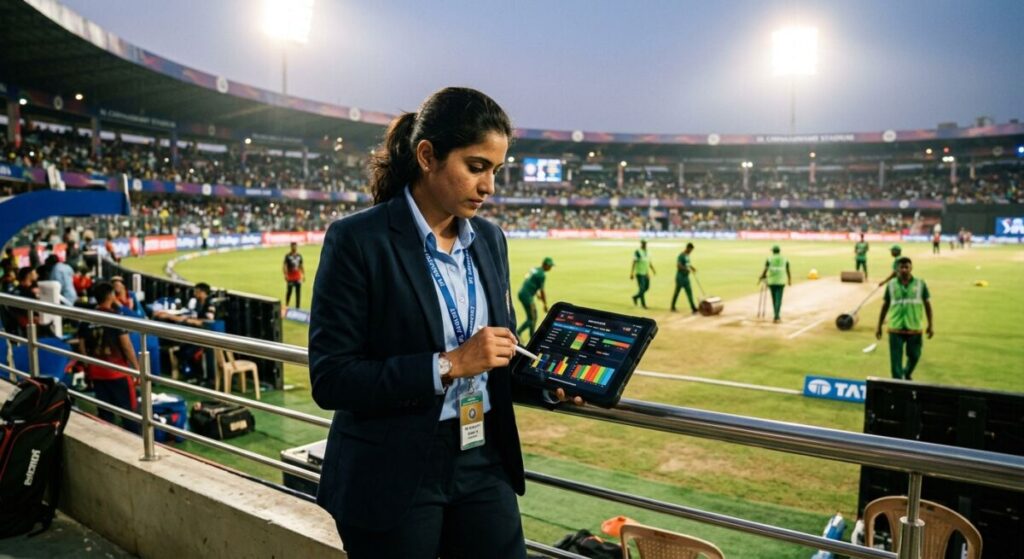
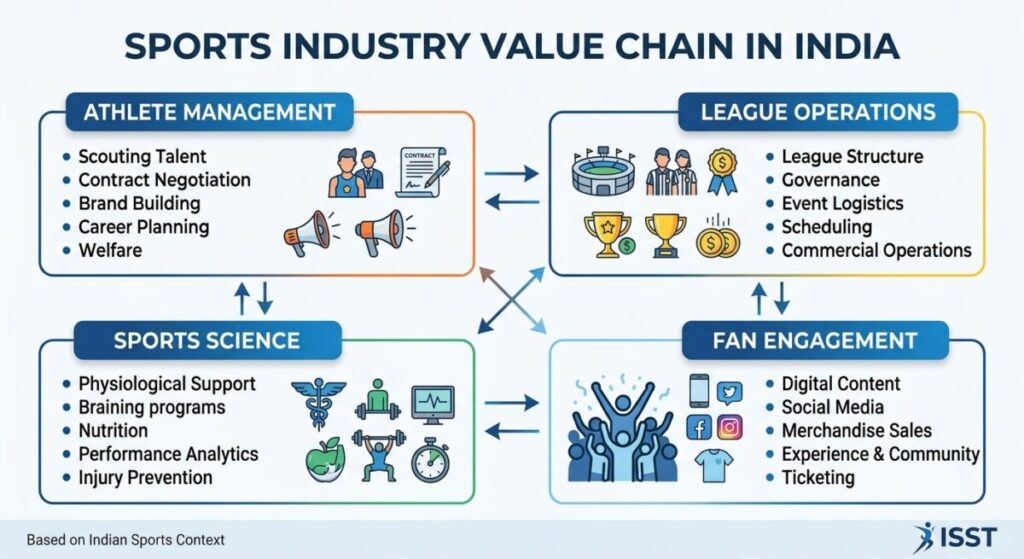
Think about the industry structure. Ten years ago, sports in India was run by enthusiasts and former players. Today, it is a sophisticated value chain. Every franchise is a business entity requiring strategic positioning and operational efficiency. And here is the secret: teams now prefer professionals who understand data over those who only understand the game.
Why? Because the stakes are higher. A single bad auction strategy in the IPL or PKL can cost a franchise crores. They need people who can build models, manage supply chains, and handle high-pressure logistics. If you have spent three years in a corporate office, you already have the discipline they want. You just lack the sports-specific context.
The ‘IPL Effect’ on Non-Playing Roles
The Indian Premier League (IPL) changed the DNA of Indian sport. It created a demand for roles that did not exist in 2008. We are talking about player auction analysts, digital content strategists, and fan engagement managers. But it did not stop there. The ISL (football) and PKL (kabaddi) followed the same blueprint.
By April 2026, the ecosystem has expanded into 26 different sports under the Khelo India umbrella. This growth requires a massive influx of professional talent. The industry is no longer looking for ‘fans’. It is looking for specialists who can apply business logic to athletic performance. This is your entry point.
The Science Pivot: Sports Science for Graduates from Other Fields
Can a BSc or BTech Graduate Move into Sports Science?
Yes. And you should. Many believe you need a medical degree to enter sports science. In reality, the 2026 market desperately needs people with a background in physics, biology, or even data science. Sports science is essentially the study of human efficiency. If you understand mechanics or data, you are already halfway there.
Transitioning into this field usually requires a sports science degree in India or a specialized postgraduate diploma. This qualification acts as your credential in a room full of coaches. It proves you understand load management, injury prevention, and recovery protocols.
High Performance Centres (HPC) and the Need for Analysts
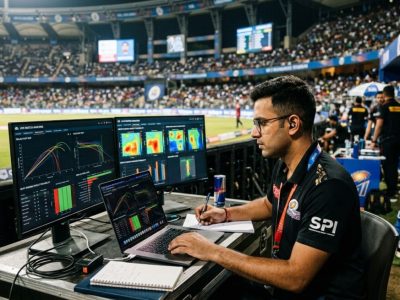
Look at the Sports Authority of India (SAI) and their High Performance Centres. They are currently hiring analysts at record rates. These roles do not require you to run 100 meters in 11 seconds. They require you to use performance analyst tools to track those who do.
If you can take raw data from a wearable GPS tracker and turn it into a training recommendation, you are valuable. This is where engineers thrive. You are essentially debugging a human athlete instead of a piece of software. It is the same logic, just a different pitch.
Bridging the Skill Gap: Choosing a Postgraduate Diploma in Sports Science India
UGC-Recognized vs. Industry-First Certifications
When you decide to make the jump, the type of paper you hold matters. In India, parents often worry about the validity of a degree. Does it open real doors? A UGC-recognized degree or diploma is the gold standard for long-term security. It ensures your education is valid for government roles and higher studies abroad.
But industry-first certifications matter for the IPL and private sector. At ISST, we focus on both. You need the academic weight of a postgraduate diploma in sports management combined with practical exposure. Look for programs that offer internships with actual teams. Theory is fine, but seeing how a dugout operates during a rain delay is where the real learning happens.
What to Look for in a 2026 Curriculum
Don’t settle for a syllabus from 2020. A 2026 curriculum must include:
- AI and Machine Learning in player scouting
- Sports law and contract management for Indian leagues
- Digital fan monetization strategies
- High-performance nutrition and recovery science
If the course does not mention the CII Sports Business Awards or the latest TOPS scheme updates, it is outdated. You are paying for a bridge to the future, not a history lesson.
The Money Talk: Salary Expectations After a Career Change
Entry-Level vs. Mid-Senior Transitions (₹3 LPA to ₹15+ LPA)
Let’s be honest about the numbers. If you are starting fresh after a PG diploma, expect a starting salary between ₹3–5 LPA. This is the ‘learning tax’. You are building your network.
However, if you are transitioning from a mid-senior corporate role—say, a Marketing Manager with 7 years of experience—you don’t start at the bottom. You enter as a Senior Manager in a franchise or a sports agency. Here, salaries range from ₹12–18 LPA. The industry values your ‘outside’ experience because it brings a professional rigour that is often missing. For more details, check our guide on sports management salary in India.
ROI on a Sports Management Degree in 2026
Is it worth the investment? Think about it this way. The cost of a solid PG diploma is often recovered within the first 18 months of employment. But the real Return on Investment (ROI) is not just the monthly credit. It is the access.
One internship at a BCCI-affiliated unit or an ISL club can put you in front of decision-makers you would never meet otherwise. In sports, who you know is how you grow. In our 17 years, we have seen that the ISST placement record is built on these very connections. You are buying a seat at the table.
Frequently Asked Questions
Is it possible to change career to sports at 30 in India?
Absolutely, as teams value the professional maturity and management experience that 30-year-olds bring from other industries. You just need a specialized diploma to translate your existing skills into the sports context.
Do I need to be a state-level player to work in the IPL?
No, the majority of staff in an IPL franchise, from operations to marketing, have never played professional cricket. They are hired for their technical expertise in management, law, and science.
What is the salary for sports management freshers in India 2026?
Freshers can expect to start between ₹3–5 LPA in academies or agencies. This figure scales rapidly to ₹8–10 LPA once you have 2-3 years of league experience.
Which postgraduate diploma in sports science is best for non-medical graduates?
A program that focuses on performance analysis and load management is ideal for non-medical backgrounds. Ensure the course is industry-aligned and offers practical training in HPC environments.
Are there distance education options for sports management in India?
Yes, distance education is a great way for working professionals to transition without quitting their current jobs. It allows you to build a foundation while maintaining your current financial stability.
Will my corporate experience count in the sports industry?
Yes, skills in finance, digital marketing, and logistics are highly transferable and often in short supply in sports organizations. You are not starting from zero; you are specializing.
Are sports jobs stable in India?
With the government’s push through Khelo India and the year-round league calendar, the industry has become highly stable. It is now a recognized professional sector with formal career paths.
How do I get an internship in an IPL team?
Most IPL internships are secured through reputable institutes that have existing partnerships with franchises. Building a network during your diploma is the most reliable way to get in.
Conclusion
Switching careers is never about starting from zero; it is about moving your existing expertise to a pitch where you actually enjoy the game. In our 17 years at ISST, we have seen BCom graduates become IPL operations heads and engineers become lead performance analysts for SAI. The Indian sports ecosystem is no longer a hobby—it is a high-stakes business looking for professional talent.
If you are ready to stop watching from the stands and get into the dugout, the first step is building the right foundation. The industry is ready for you. Are you ready for it? Book a counselling session today to map your transition and join the 2,000+ alumni already changing the game.