Ten years ago, telling your parents you wanted to work in sports meant one thing: play for India or find a ‘real’ job. That era is over. The Indian sports industry is now a ₹15,000+ crore giant, growing at 15% year-on-year. And it needs managers. Not just fans, but professionals who understand the business behind the boundary line.
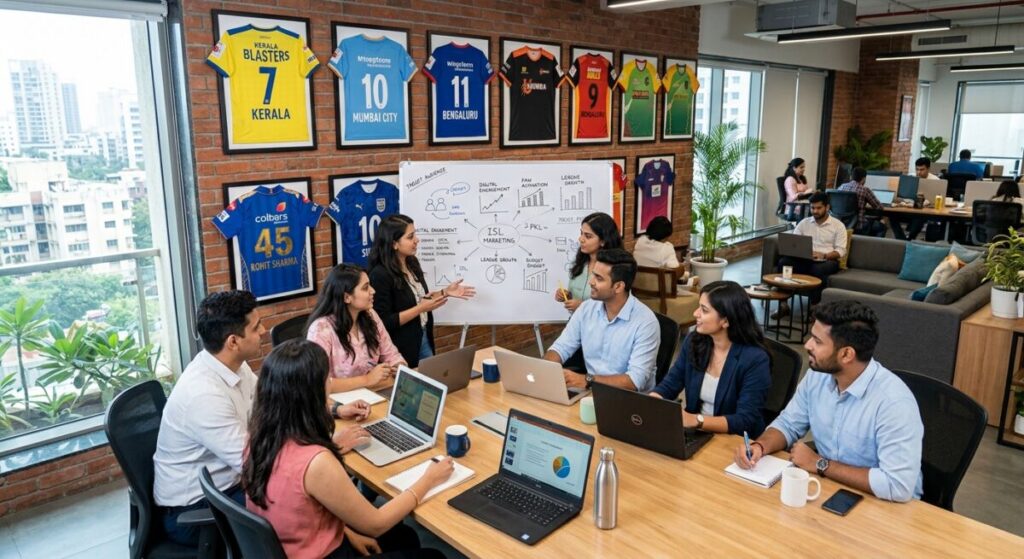
If you are a 12th pass student in Pune or a BCom graduate in Mumbai wondering if this path pays the bills, here is the short answer: Yes. But it is not a get-rich-quick scheme. It is a merit-based industry where your network and specialized skills determine your bank balance. At ISST, we have spent 17 years watching 2,000+ alumni enter this field. We know the exact numbers.
Average sports management salary in India: Breaking down the brackets
Most people get confused by generic salary data. They see high US salaries and think it translates directly. It doesn’t. You need to look at the Indian context—IPL auctions, PKL franchises, and the SAI-HPC structure. Let’s look at the actual CTC you can expect at different stages of your career.
Entry-level CTC for freshers
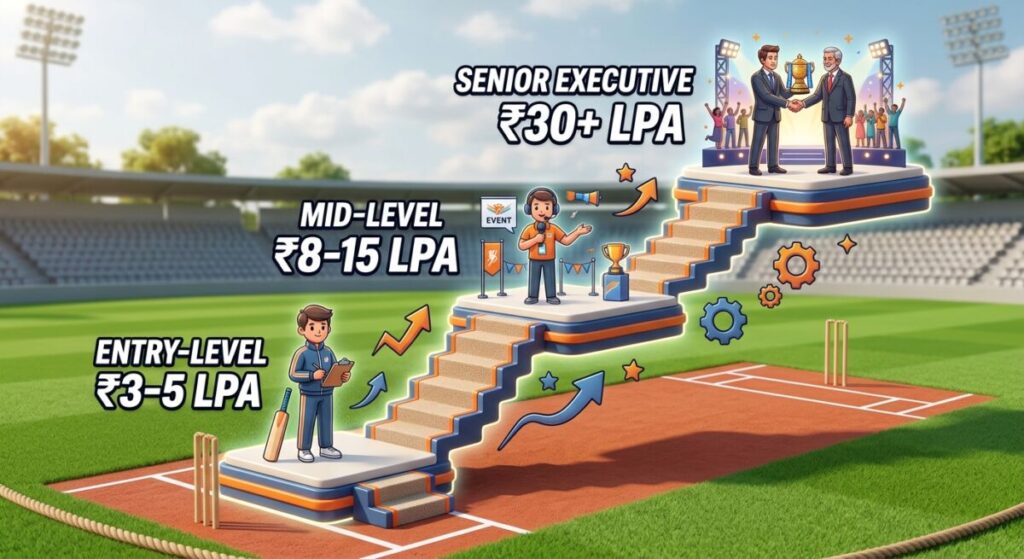
Starting out is about building your resume, not just your savings. A fresher with a Bachelor in Sports Management can expect to start between ₹3–5 LPA. This usually involves roles in operations, grassroots coaching management, or junior marketing roles in sports academies. If you land an internship in an IPL team or a major agency like IMG-Reliance (Rise Worldwide), your stipend might be small, but the jump to your first full-time role will be much higher. Think of this as your ‘rookie season’. You are learning how the industry actually breathes.
Mid-level management and specialized roles
After 3–6 years in the game, the numbers change. This is where you specialize. Are you good at data? Logistics? Sponsorship sales? A mid-level manager in a professional league or a Tier-1 sports marketing agency earns between ₹8–15 LPA. At this stage, you aren’t just executing tasks. You are managing teams and budgets. You are the person making sure the team bus reaches the stadium on time or the brand logo is perfectly placed for the TV cameras during the ISL finals.
Senior executives and franchise heads
The ceiling? There isn’t one. Senior professionals like a CEO of an IPL franchise, a Head of Operations for a national league, or a Senior VP at a sports agency can command ₹30–70 LPA and beyond. These roles often include performance bonuses tied to team revenue or league success. At the very top, salaries in Indian sport rival those in mainstream tech or finance. But getting here requires more than just a degree. It requires a track record of winning off the field.
Salary by industry segment: IPL, ISL, and SAI
Where you work matters as much as what you do. The pay structure in a private franchise is worlds apart from a government body like the Sports Authority of India (SAI).
Franchise Management (IPL/PKL/ISL) pay scales
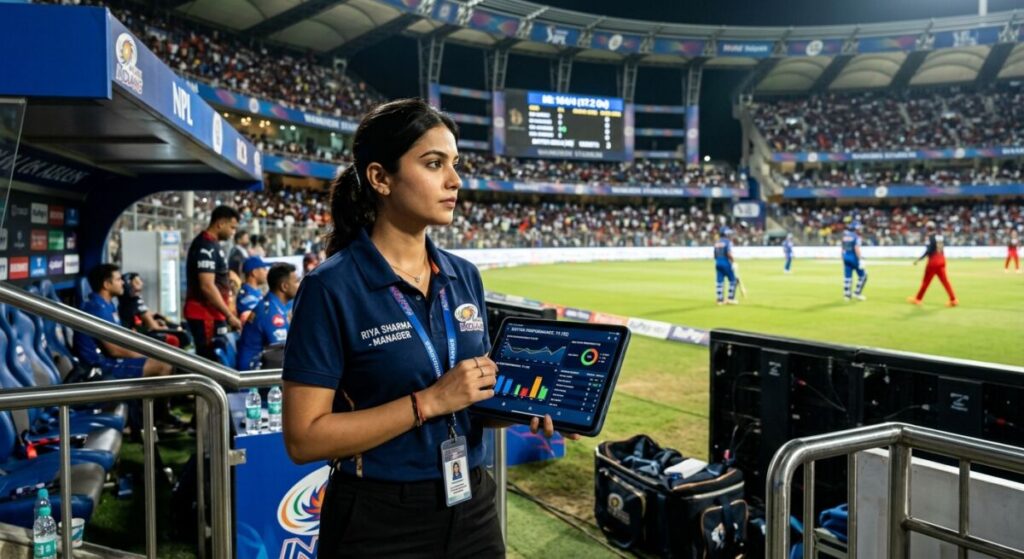
Working for a franchise like Mumbai Indians or Bengaluru FC is high-pressure and high-reward. The IPL is the gold standard. Salaries here are the highest because the stakes are the highest. A Logistics Manager for an IPL team might earn in two months what a local academy manager earns in a year. But remember: the work is seasonal. You might work 18-hour days for three months and then focus on strategy and player auctions for the rest of the year. Pay here typically starts at ₹6 LPA for junior staff and scales rapidly based on the number of seasons you have under your belt.
Sports Authority of India (SAI) and Government roles
Government roles offer something franchises don’t: stability. With the push for Khelo India and the TOPS scheme, the government is hiring professional sports managers and high-performance directors. These roles are often on a contract basis with competitive pay. A High Performance Manager at a SAI centre can earn between ₹1–2 lakh per month. It is a different kind of prestige. You are building the foundation of Indian Olympic success.
Sports Marketing Agencies and Talent Management
Think about the people managing Neeraj Chopra or P.V. Sindhu. These are talent management agencies. They make money when the athlete makes money. If you are in sponsorship sales, your salary is often a base + commission. This is the most lucrative path for ‘hustlers’. If you can bring a ₹5 crore sponsor to a league, your value is immense. Many of our alumni at ISST find this to be the fastest way to hit the ₹10 LPA mark.
Highest-paying sports management jobs in India
Not all roles are created equal. If your goal is the highest possible sports management salary in India, you need to aim for these three areas.
Operations and Logistics Manager
India is a massive country. Moving a squad of 30 players, 20 staff, and tons of equipment from Chennai to Delhi for a Tuesday night game is a nightmare. If you can solve that nightmare, you get paid well. Operations heads are the unsung heroes of the PKL and ISL. They are the first to arrive and the last to leave. The pay reflects that responsibility.
Sports Data Analyst
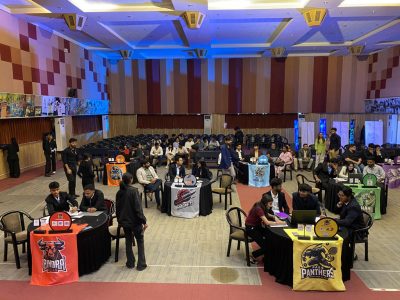
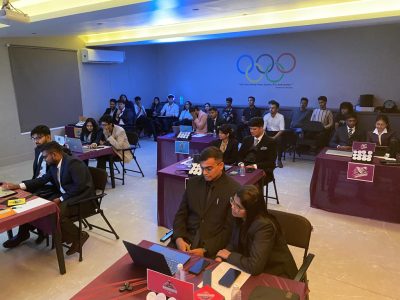
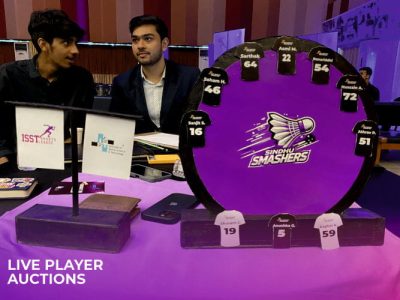
The PKL auction room is now run by laptops, not just gut feel. Teams are desperate for analysts who can break down player performance using numbers. If you know how to use data to prove that a specific raider is better in the last 5 minutes of a match, franchises will fight for you. This is a technical role that demands a mix of sports knowledge and analytical tools. Pay for skilled analysts starts higher than average, often around ₹7–8 LPA even for those with limited experience but high technical proficiency.
Sponsorship and Brand Manager
Sport in India runs on brand money. Brands want to know how their ₹50 crore investment in an IPL team is working. Brand managers bridge that gap. They manage relationships between the franchise and the sponsors. It requires polished communication and a deep understanding of ROI. It is a corporate role set in a stadium.
Sports management scope in India: Beyond the locker room
The scope isn’t limited to the big leagues. We are seeing a massive rise in grassroots initiatives. From the Reliance Foundation to Tata Football Academy, corporate India is investing in the ‘long game’. This has created a demand for Regional Managers and Program Heads across Tier-2 and Tier-3 cities. Pune, for instance, has become a hub for sports science and management education, providing a steady stream of talent to these programs.
Then there is E-sports. It is the new frontier. India has over 400 million gamers. Managing an E-sports team requires the same logistics, sponsorship, and marketing skills as traditional sport, but with a digital twist. The pay scales here are still evolving, but they are already competing with traditional sports management roles.
ROI Check: Sports management course fees in India vs. Salary
Let’s be honest. Education is an investment. You want to know when you will break even. Sports management course fees in India vary wildly. A top-tier program at ISST or similar institutes might cost you between ₹2.5–5 lakhs depending on the duration and specialization.
If you start at ₹4 LPA, you recover your tuition fee in less than 18 months. But that is the wrong way to look at it. The real ROI is the network. In sports, who you know gets you into the room; what you know keeps you there. Our placement records show that students who take internships seriously during their course often secure jobs before they even graduate. That is the ultimate ‘payback’.
Factors that boost your CTC in Indian sport
Why does one graduate earn ₹4 LPA while another from the same batch gets ₹7 LPA? It usually comes down to two things.
Location: Mumbai vs. Delhi vs. Pune job markets
Mumbai is the headquarters of Indian sport. The BCCI is there. The major agencies are there. Salaries in Mumbai are typically 20% higher to adjust for the cost of living and the concentration of wealth. Delhi is the hub for government roles and federation work. Pune is the academic and high-performance capital. At ISST, we encourage students to look at the Mumbai-Pune corridor as the heartbeat of their early career. This is where the decisions are made.
Technical skills: From SAP to sports analytics
Being a fan is not a skill. Knowing how to manage a budget on Excel is. Knowing how to use athlete management software is. If you can show a franchise that you understand the 5 key functions of sports management and have the technical tools to execute them, your value doubles. Don’t just study the game. Study the tools that run the game.
Frequently Asked Questions
- Is sports management a good career in India? Yes, it is a sunrise industry with a ₹15,000 crore market size and massive demand for professionals in leagues like IPL and ISL.
- What is the starting salary of a sports manager in an IPL team? Freshers in IPL operations or marketing roles typically start around ₹5–7 LPA, though this varies by franchise.
- Do I need a sports background to earn a high salary in sports management? No, while a sports background helps, the industry values management skills like finance, marketing, and logistics more than playing experience.
- Can a BCom graduate switch to a high-paying sports management role? Absolutely, a commerce background is highly valued for roles in sports finance, sponsorship sales, and franchise operations.
- What are the typical sports management course fees in India? Fees generally range from ₹2.5 to ₹6 lakhs for comprehensive degree or diploma programs at reputed institutes like ISST.
- Does location impact sports management salaries in India? Yes, Mumbai and Delhi offer the highest pay scales due to the concentration of corporate offices and sports federations.
- What role does networking play in sports management pay? Networking is critical; most high-paying senior roles are filled through industry connections and proven track records.
- Are government jobs in sports management well-paid? Yes, roles in SAI and Khelo India for professional consultants can pay between ₹12–24 LPA based on expertise.
The bottom line is simple: the sports industry is professionalizing faster than the workforce can keep up. If you are waiting for a ‘safe’ time to enter, that time is now. At ISST, we have seen over 2,000 alumni move from classrooms into active roles in the Indian sports ecosystem. The salary potential is there, but it requires the right foundation and a network that gets you into the room. Ready to stop watching from the stands and start managing the game? Let’s talk about which programme fits your career goals.