

Wealth is not income. Income is how much time you sell. Wealth is assets that earn while you sleep. When we look at the richest athletes in the world, we aren’t looking at who sweated the most. We are looking at who owned the most.

Most athletes play a zero-sum game. They trade cartilage and time for cash. But the titans? The ones who top the inflation-adjusted lists? They played a positive-sum game. They built brands. They took equity. They understood that the real game starts when the whistle blows.
If you want to understand the sports industry, stop looking at the scoreboard. Look at the cap table. In our work at the Institute Of Sports Sciences (ISST), we teach students to see the invisible machinery behind the athlete. This isn’t just trivia. It’s the blueprint for financial freedom in sports.
The $15 Billion Charioteer
You think Michael Jordan is the ceiling? He isn’t even close.
Meet Gaius Appuleius Diocles. A Roman charioteer from the second century. He didn’t have Nike. He didn’t have Gatorade. He had horses and a crowd that craved violence. Over a 24-year career, he earned 35,863,120 sesterces.
Adjusted for inflation? That is roughly $15 billion today.
He earned enough to feed the entire city of Rome for a year. Why does this matter? Because it proves that sports has always been a high-leverage activity. The technology changes—from chariots to sneakers—but the economics remain the same. The superstar captures the attention. Attention is the currency of the world.
The Modern Titans: Inflation-Adjusted Rankings
Modern money is softer than Roman gold. But the numbers still tell a story. When we adjust for inflation, the list of the richest athletes shifts dramatically. It penalizes the new and honors the enduring.
Here is the reality of lifetime earnings, adjusted for 2026 purchasing power.
1. Michael Jordan ($3.75 Billion+)
Jordan is the prototype. He didn’t just take a salary. He took a royalty. In 1984, he signed a deal with Nike that gave him a percentage of every shoe sold. That was the leverage. He used media (NBA games) to drive product sales, and he owned a piece of the upside.
The Insight: Specific knowledge is found by pursuing your genuine curiosity and passion rather than whatever is hot right now. Jordan played basketball because he had to. The money followed the obsession.
For a deeper breakdown of his strategy, read our guide on the Richest Athletes in the World: The Billionaire Blueprint (2026).
2. Tiger Woods ($2.6 Billion)
Golf is a game of longevity. Tiger played longer and won more. But his wealth came from remaining the face of a sport for three decades. He stayed relevant. Relevance is a compounding asset.
Unlike team sports, golf allows for individual capitalization. You are the franchise. Tiger understood this better than anyone.
3. Arnold Palmer ($1.8 Billion)
Palmer invented the modern sports endorsement model. Before him, athletes were workers. After him, they were billboards. He didn’t just play golf; he designed courses, sold iced tea, and licensed his name. He turned a name into a logo. A logo scales. A human does not.
If you are interested in how retired pros sustain this wealth, check our analysis on Richest Retired Athletes Net Worth Breakdown.
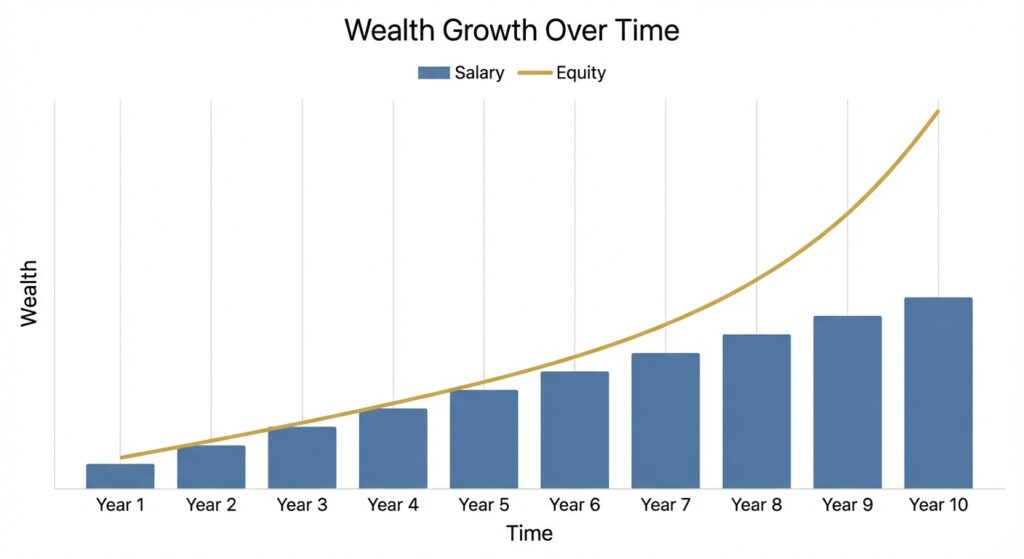
The Difference Between Salary and Equity
Why do some athletes go broke while others become billionaires? It is the difference between renting your time and owning your output.
Salary is linear. You play one game, you get paid once.
Equity is exponential. You build a brand one day, and it pays you for fifty years.
The highest-paid female athletes are currently waking up to this arbitrage. As we discussed in Highest Paid Female Athletes: Endorsements vs Salary, the gap is closing because they are demanding ownership, not just paychecks.
The Role of Sports Management
None of these athletes did it alone. Behind every Jordan, there is a David Falk. Behind every Tiger, there is a team of strategists.
This is the unseen layer of the sports world. It is not about throwing a ball. It is about contract law, brand management, and asset allocation. This is what we teach. You don’t need to be 6’6″ to dominate this industry. You just need to understand the rules.
If you have specific knowledge in business, apply it to sports. That is a rare combination. Rare skills command high prices.
Start your journey here: Bachelor in Sports Management: Your Launchpad to the Multi-Billion Dollar Sports Industry.
The Next Generation of Wealth
Who is next? Look for the athletes who are bypassing traditional media. They are starting their own production companies. They are investing in tech startups. They are becoming venture capitalists while they are still in the locker room.
The future belongs to the athlete-investor. The line between ‘player’ and ‘owner’ is blurring. Eventually, it will disappear.
Frequently Asked Questions
Who is the richest athlete of all time adjusted for inflation?
Gaius Appuleius Diocles, a Roman charioteer, is estimated to have earned the equivalent of $15 billion in today’s currency. His earnings dwarfed modern superstars due to the sheer economic scale of Roman spectacle.
Does Michael Jordan make more money now than when he played?
Yes, significantly more. Jordan earns vastly more annually from his Nike royalties and business interests today than he ever did from his NBA player salary.
How is inflation adjustment calculated for athletes?
Economists use the Consumer Price Index (CPI) to adjust historical earnings to current purchasing power. This levels the playing field between eras.
Are endorsement deals better than salaries?
For the top 1%, yes. Endorsements and equity deals scale without limits, whereas salaries are capped by salary caps and contract lengths.
Which sport produces the richest athletes?
Historically, individual sports like Golf, Tennis, and Boxing produce high net-worth individuals because the athlete keeps the revenue without splitting it with a team owner.
What is the difference between net worth and lifetime earnings?
Lifetime earnings are the total gross income over a career. Net worth is what remains after taxes, spending, and investment returns.
Why are there no billionaire female athletes yet?
The historical pay gap and lower media valuation restricted early earnings. However, stars like Serena Williams are closing this gap through venture capital and business ownership.
Can you study to become a sports wealth manager?
Absolutely. Degrees in sports management cover finance, marketing, and law, preparing you to manage athlete careers. Check out our Sports Management Courses in Mumbai.
Master the Game Behind the Game
Understanding the richest athletes in the world isn’t about envy. It is about studying success. It is about recognizing patterns.
The sports industry is waiting for people who can see these patterns. Do you want to be a spectator, or do you want to be the architect?
Get the specific knowledge you need.
Explore our programs at the Institute Of Sports Sciences (ISST) and position yourself at the intersection of passion and profit.